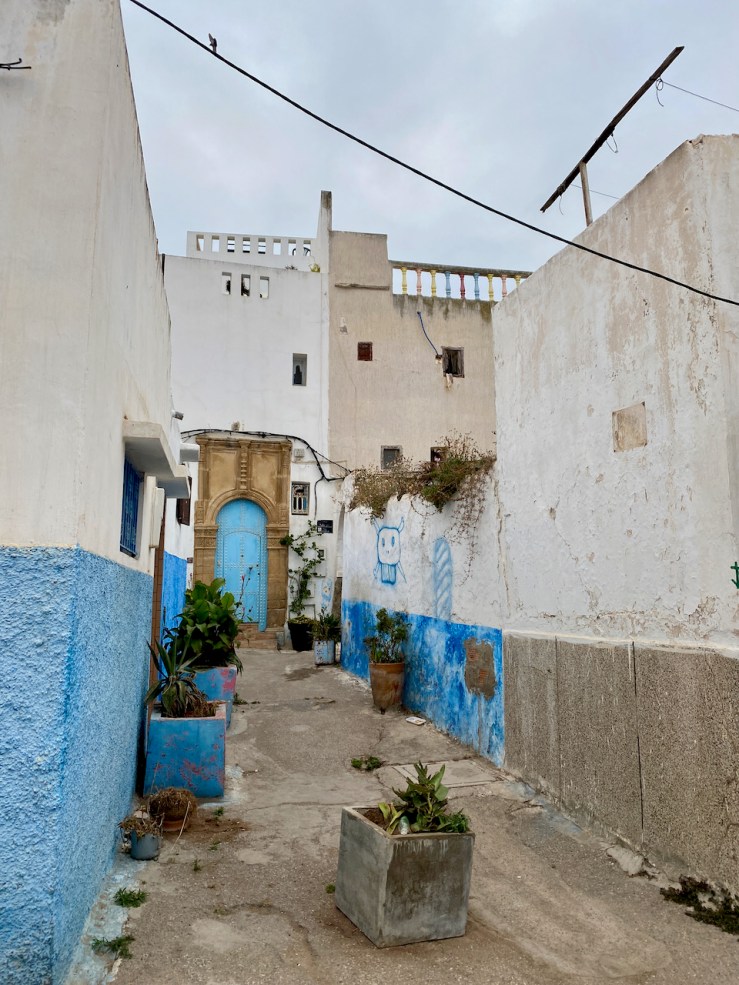
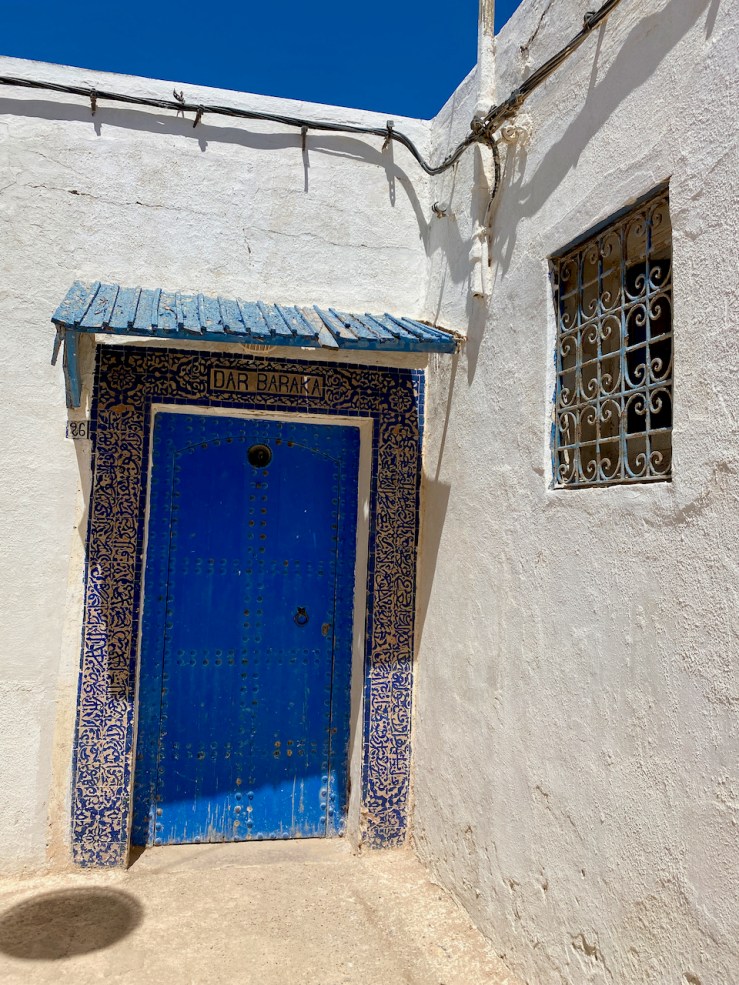
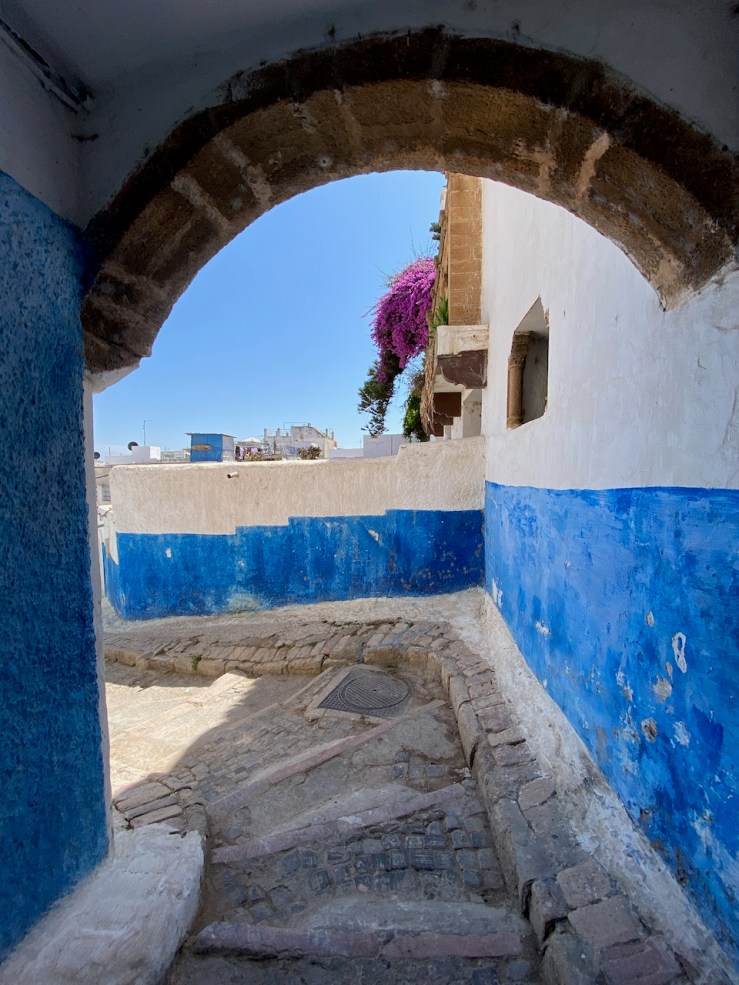
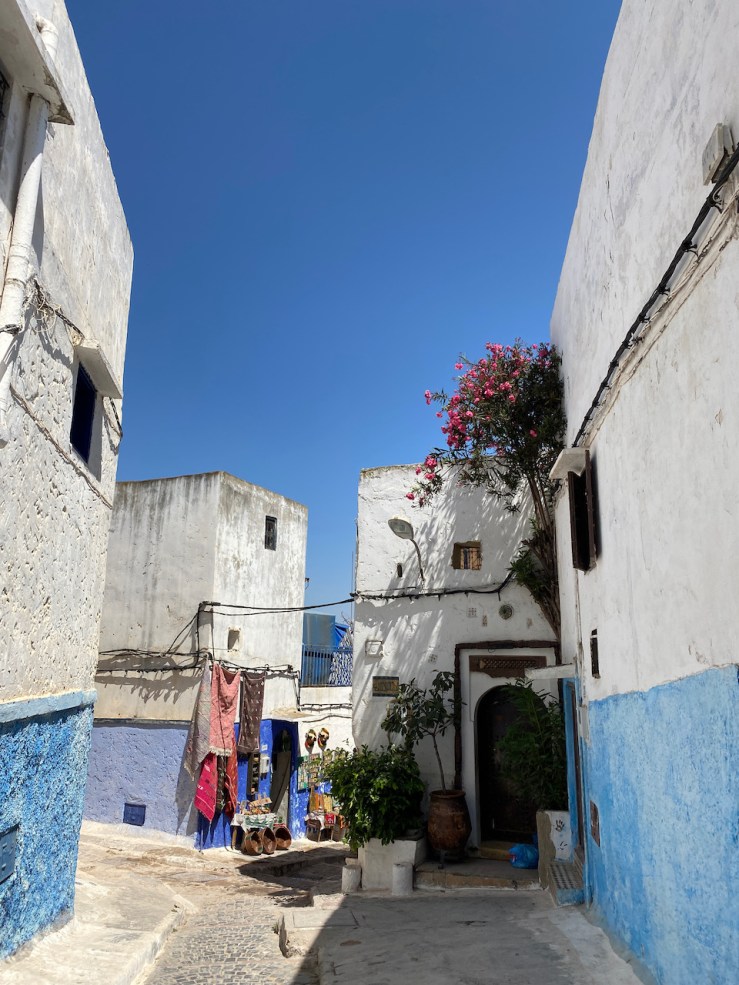
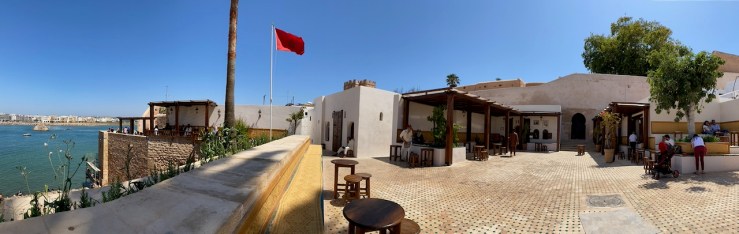
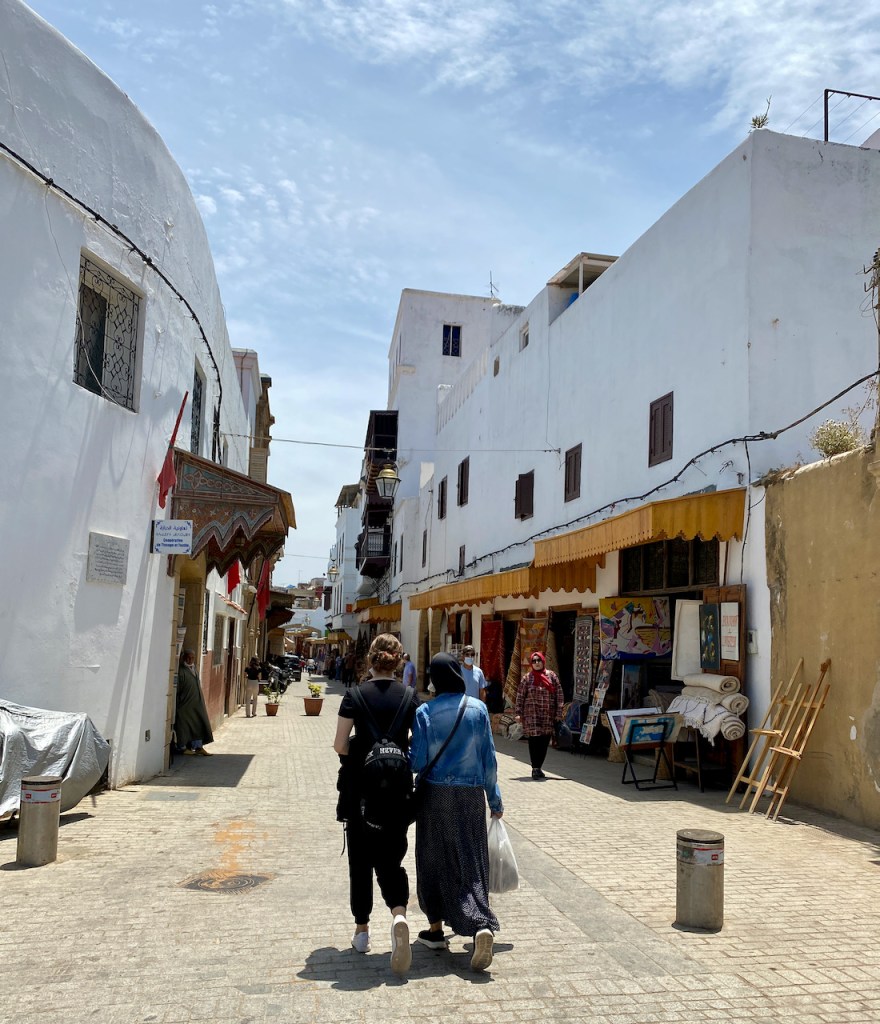
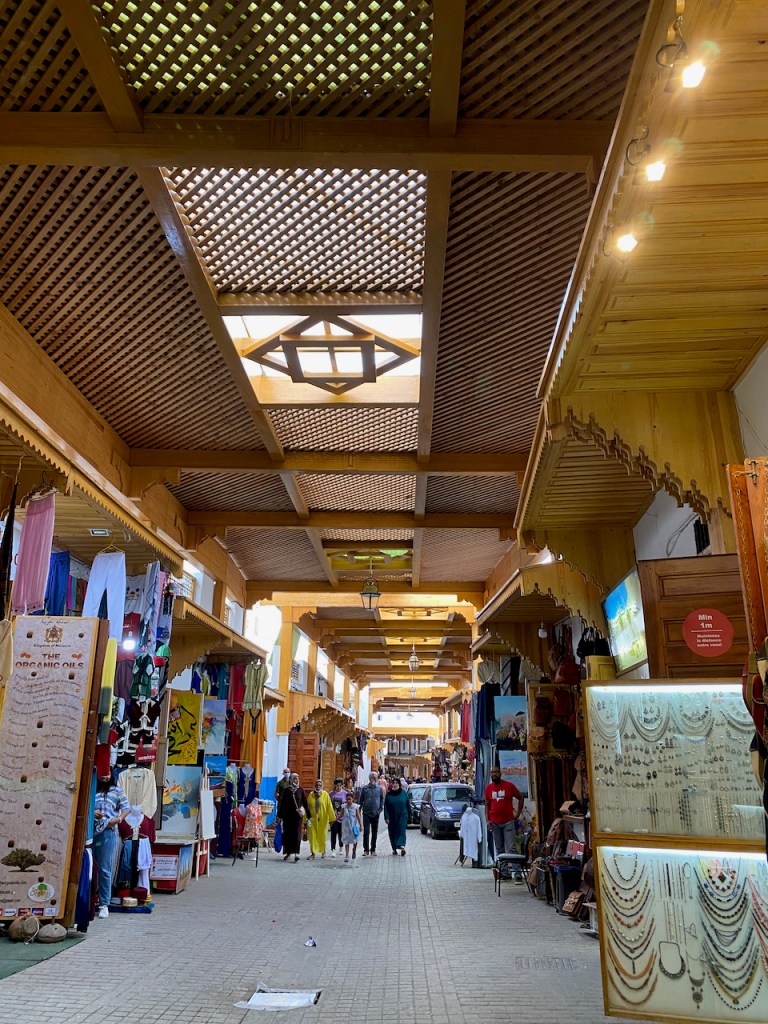
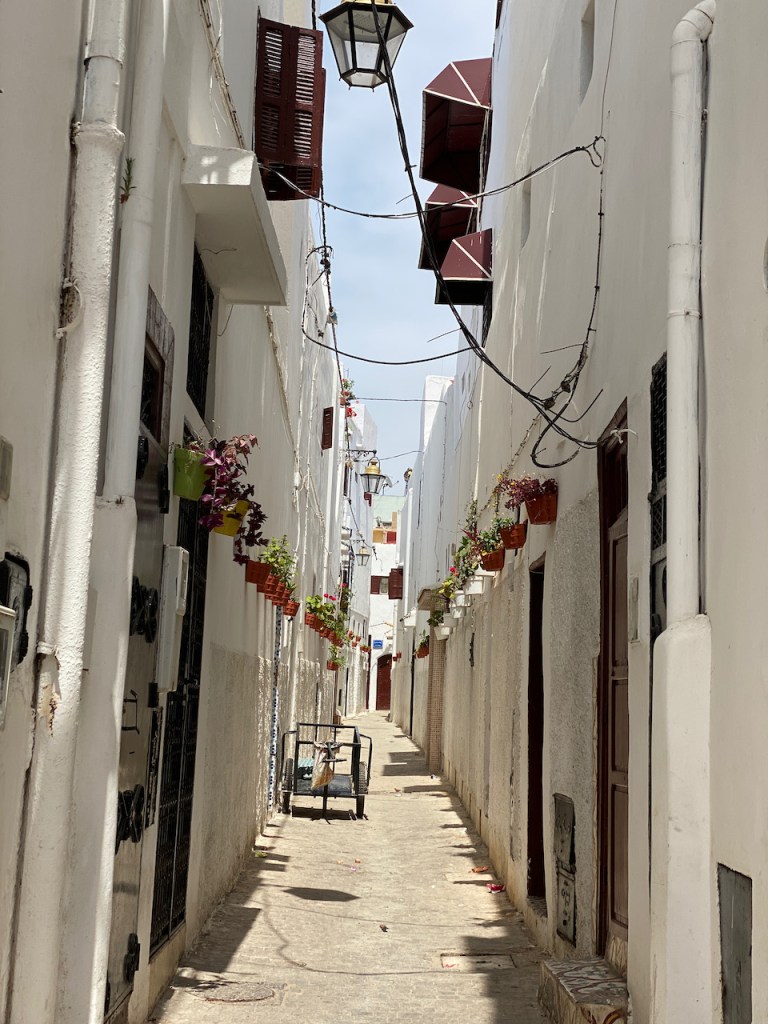
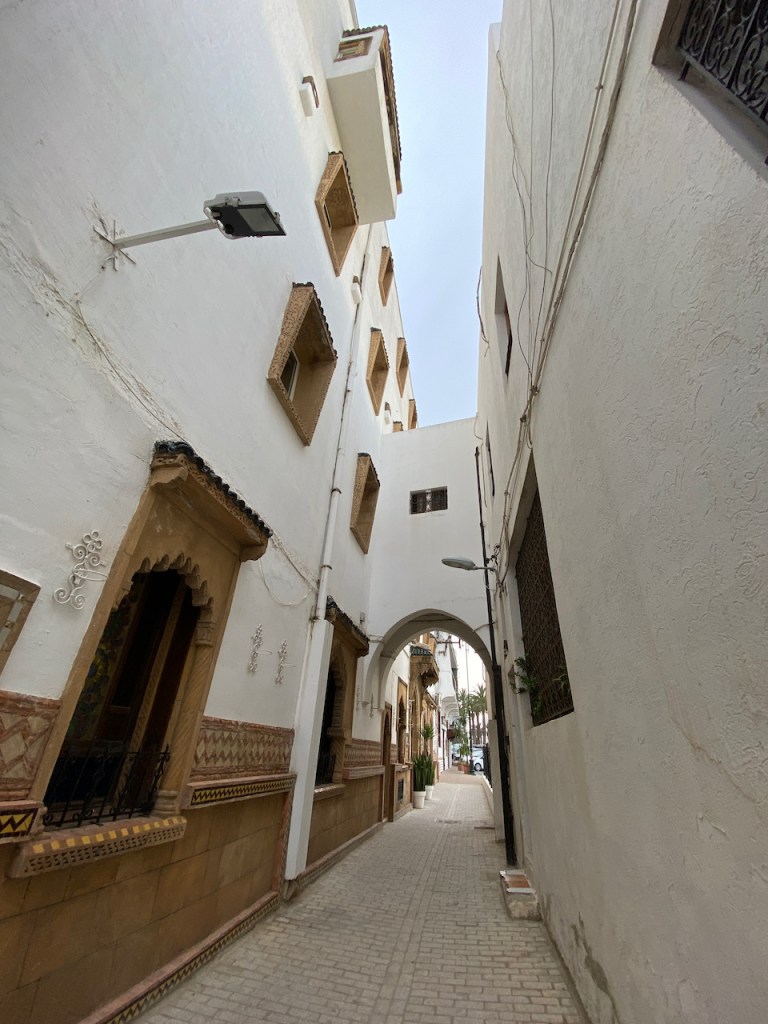
These are mainly street images of the oldest part of Rabat, called Oudaya, that sits on the highest point in town overlooking the beach, and some of the outer edges of the medina with old style architecture that I love. The photos with blue in the walls are all part of Oudaya. I’ve only taken a couple photos of the interior parts of the medina, mostly the new wood work in the part that is a bit more touristy. They are doing renovations in other parts. Chellah is a Roman ruin that was later inhabited by Moroccan royalty. An Asturian colleague (Asturias is the northernmost province of Spain, just west of the Basque country, where I was lucky enough to spend a couple months with a wonderful family when I was a teen) recommended visiting it, but it is closed for renovations. A young tour guide, Hussein, gave me a tour of the grounds. He knew all the plant and animal names in English, which he’d learned from his father, who was (and maybe still is) also a tour guide. The site has tons of storks nesting in eucalyptus trees they have rearranged for their nests.
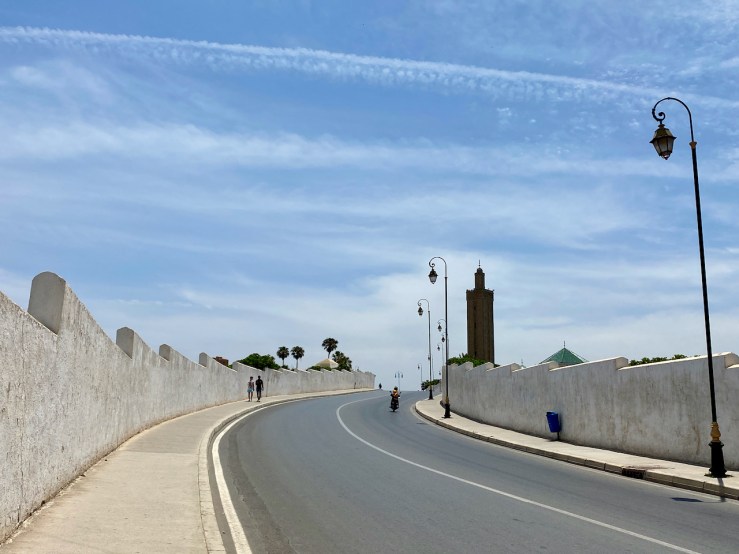
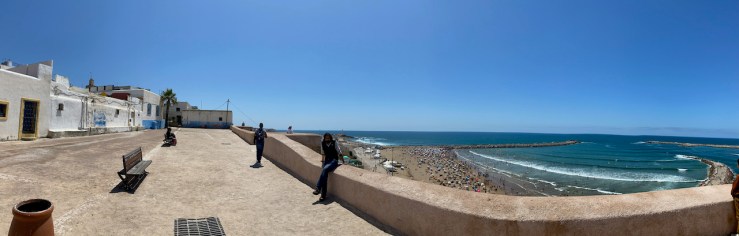
I was trying to capture the birds of prey that are tiny specks above the closest street lamp. This is the road up to Oudaya from the beach.My first venture to the medina, I asked a mom and her daughter for directions, and they suggested I join them (as they were headed there). They skirted around the northern edge to take me to the older part of the medina and were so happy to show me this view of the beach in Sale (across the river) just near the eastern entrance to the medina. And they encouraged me to visit Oudaya another day.
Oudaya is just to the left, across the street and farther up the hill.
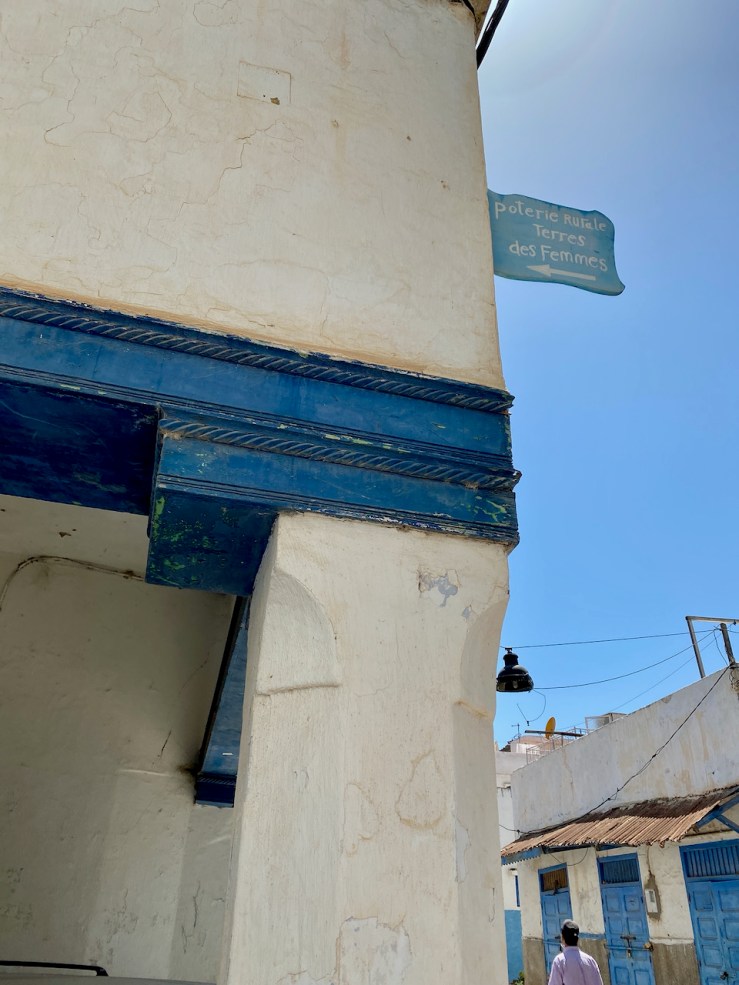
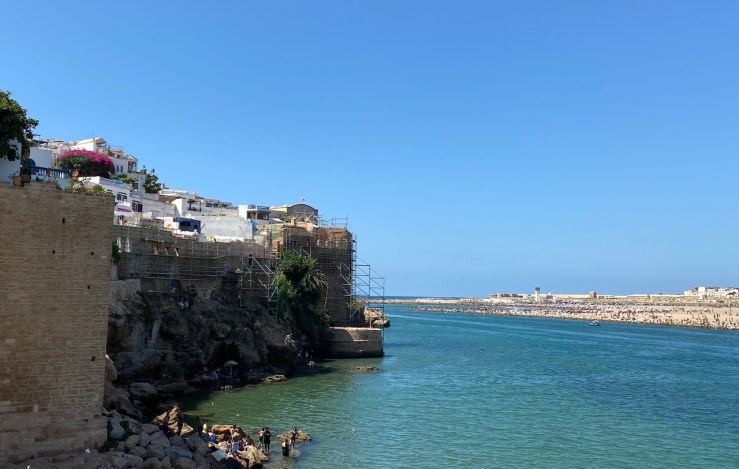
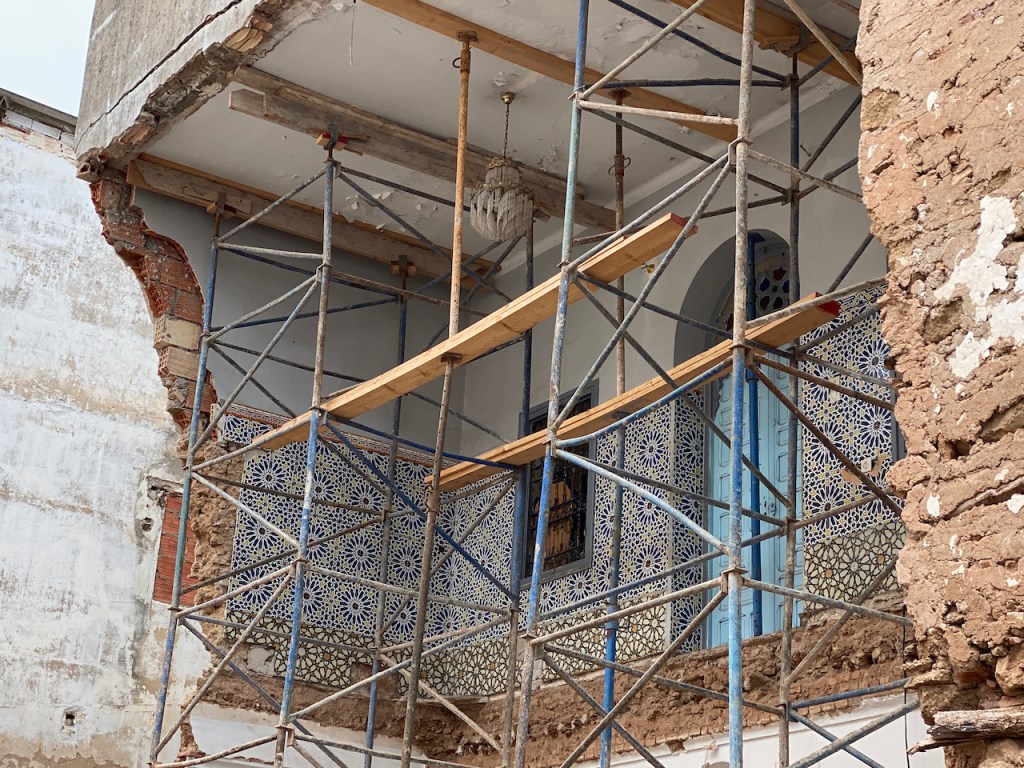
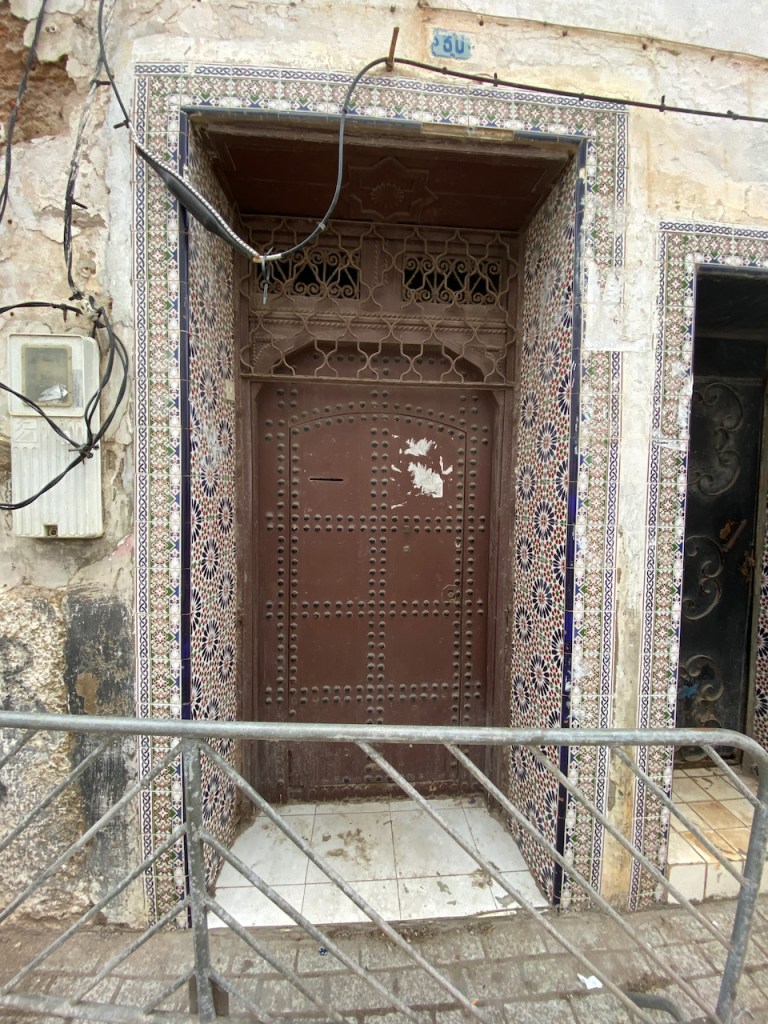
Oudaya. The door below is just to the left of the entryway here.Oudaya reminds me a lot of an older part of Tunis called Sidi Bou Said.A lot of people visit Oudaya to walk to the far northeastern corner for this beach overlook.Not sure what to make of the graffiti.Dar Baraka means House of Blessings.I followed this sign that says “rural pottery earth of women,” thinking there would be a shop. Many other folks were taking the path, as well, which led down a long hill to a beautiful cafe where the waiters wore traditional clothing and served teas in lovely colored glass, along with lots of sweets, if you wanted them. The only way out was back up the hill. I didn’t find the earth of women pottery, except along the walk.You’ve seen sleeping beauty before, but now in context.View from the cafe of the Bou Regreg River flowing into the Atlantic Ocean.This is back at the entrance to the old medina, where the mom and daughter led me. This is the more touristy part of the medina and sadly was pretty empty. They are ready for more people to visit!All the woodwork is new and very beautiful craftsmanship. The city is full of artisans. The less touristy part of the medina was a lot more croweded…Friends who know fossils encouraged me to be on the lookout in Morocco. Hope to make it to the mountains to see where some of these may have come from.Not sure if they are renovating or salvaging. I imagine that preservation is not easy, In Tunisia, friends lived in the medina and even if right above a noisy walkway, the homes were quiet inside. The thick adobe walls make it really comfortable all year round–cooler than outside in summer and warmer than outside in winter. Newer construction–rebar and cement–was not nearly as nice and it was usually warmer outside in winter. Many medina homes also have large interior courtyards filled with plants where women would sit to do chores like clothes washing or shucking peas while children played.This is on the northern edge of the medina.Chellah, the ancient Roman site, is south along the Bou Regreg River, home to a lot of birds. The interior is closed for another 2 months at least for renovation, and has been closed for more than a year.Hussein, my tour guide around the grounds.White storks. No doubt there are much better photos online…We walked down the valley behind Chellah past these young folks (below) enjoying the pool supplied by ancient Roman waterworks, to the hill opposite. From there you could see tons more white stork nests within the fortress wall. Closer to the river were trees filled with ibis, though too far for me to see well or capture a nice photo.









 Wild Bee Plantings