Today we had a food tour at the market after visiting an artisanal arts center.
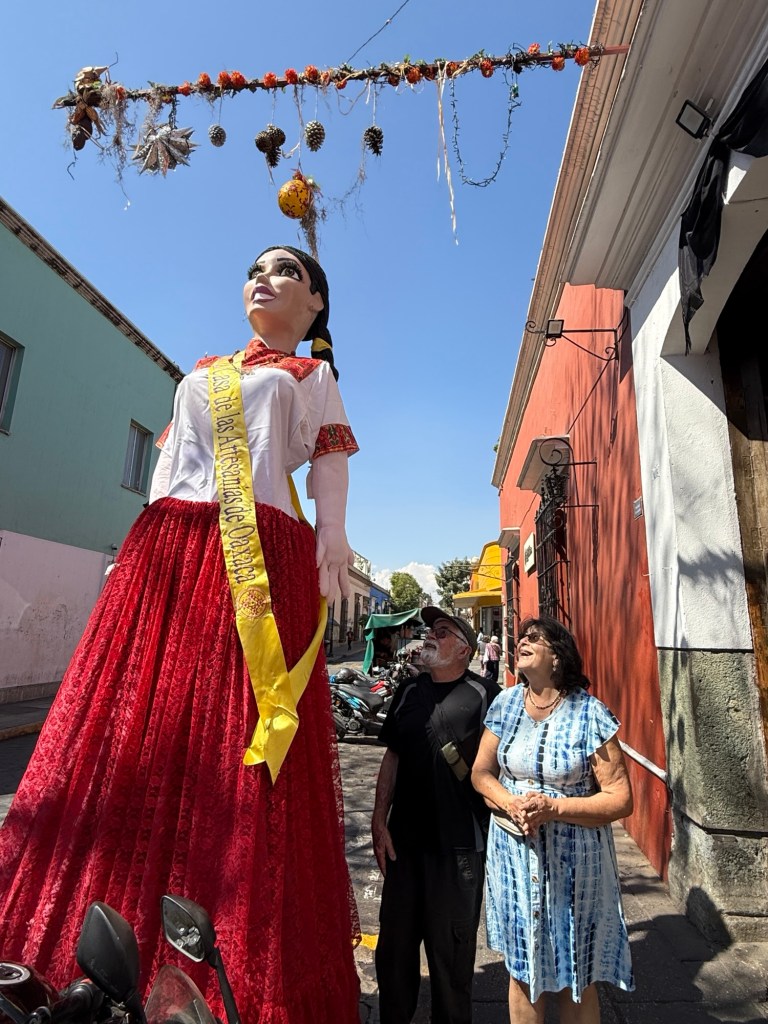
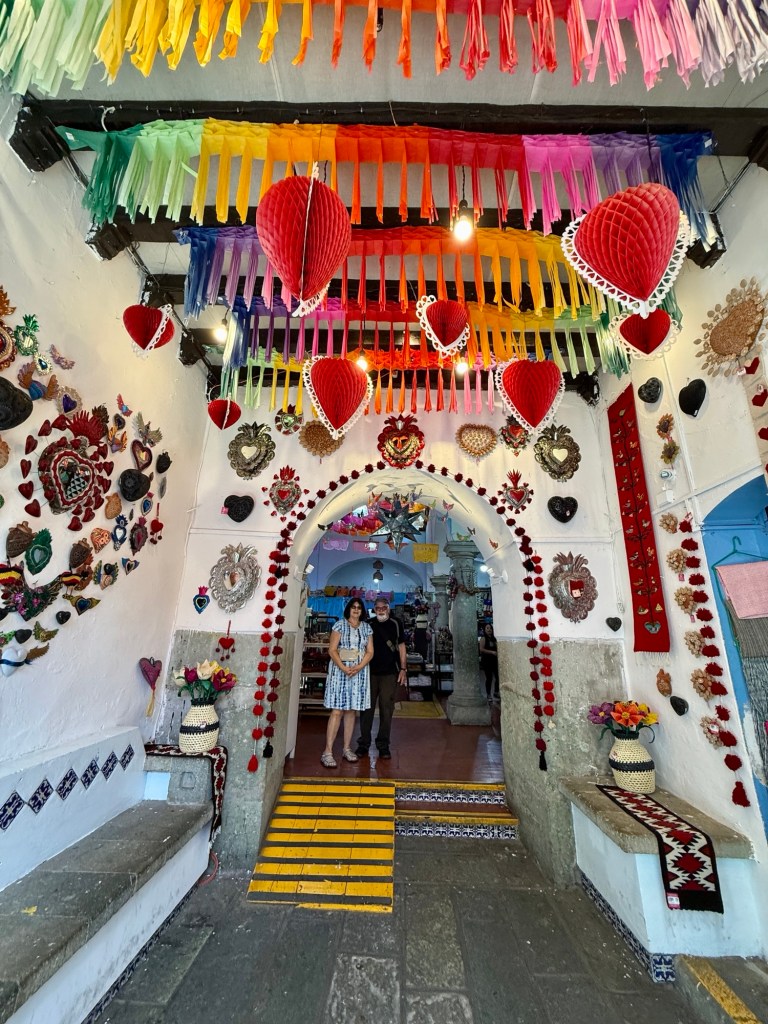
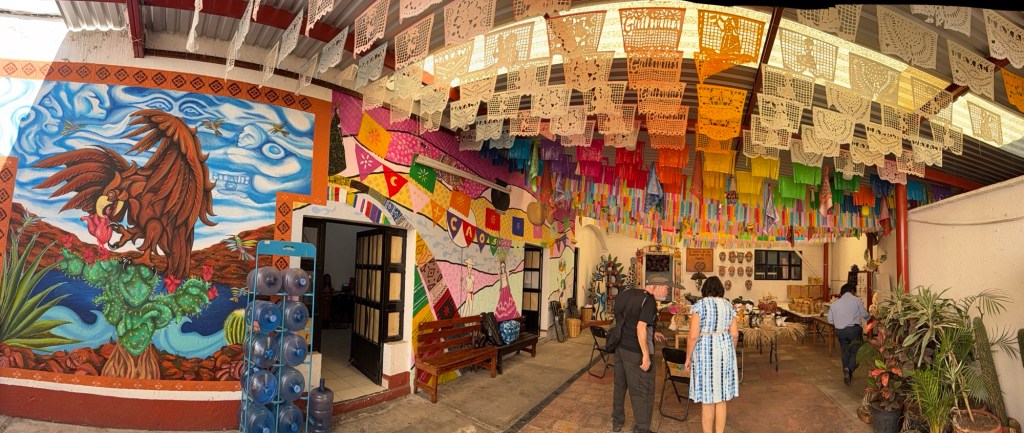
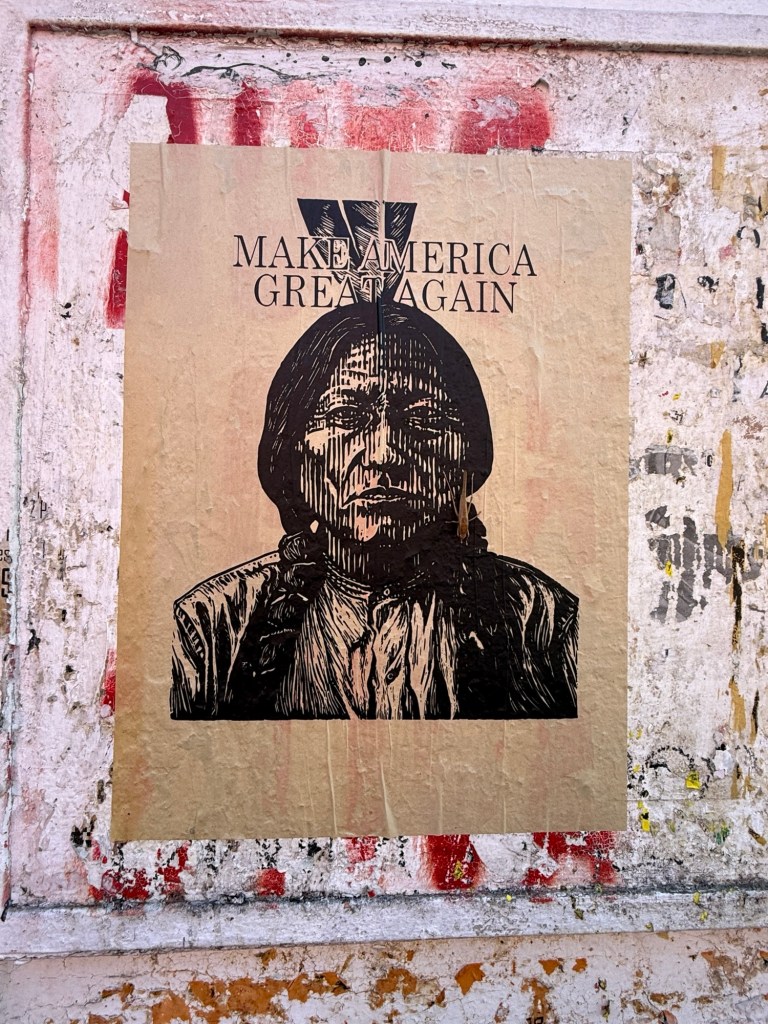
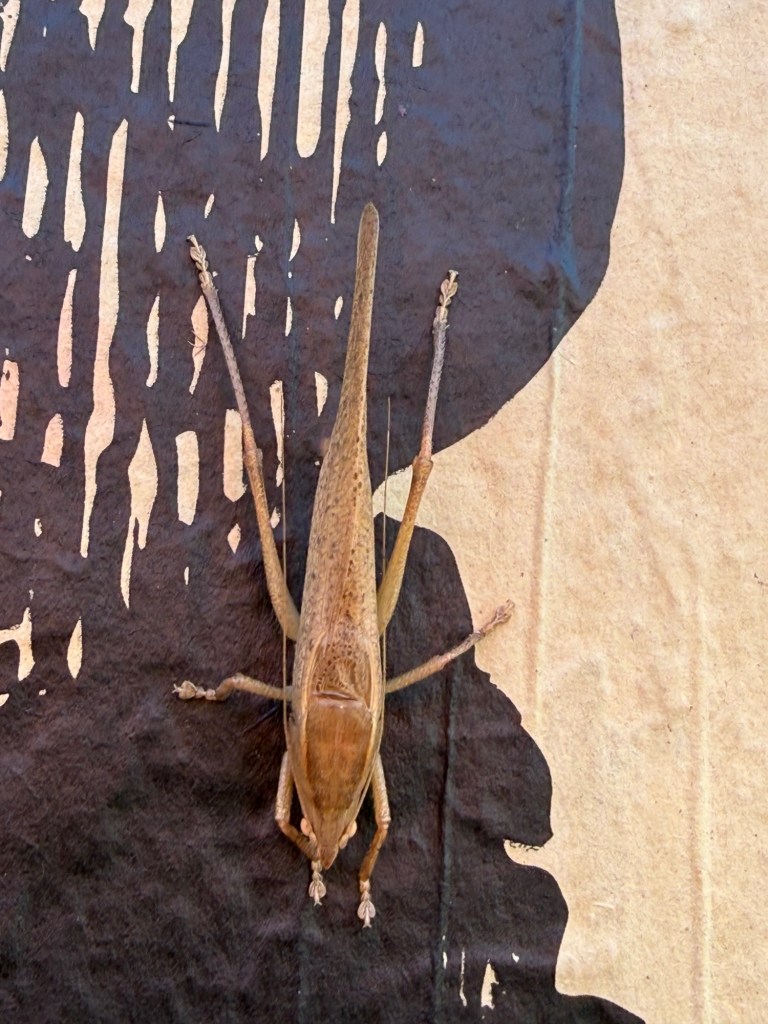
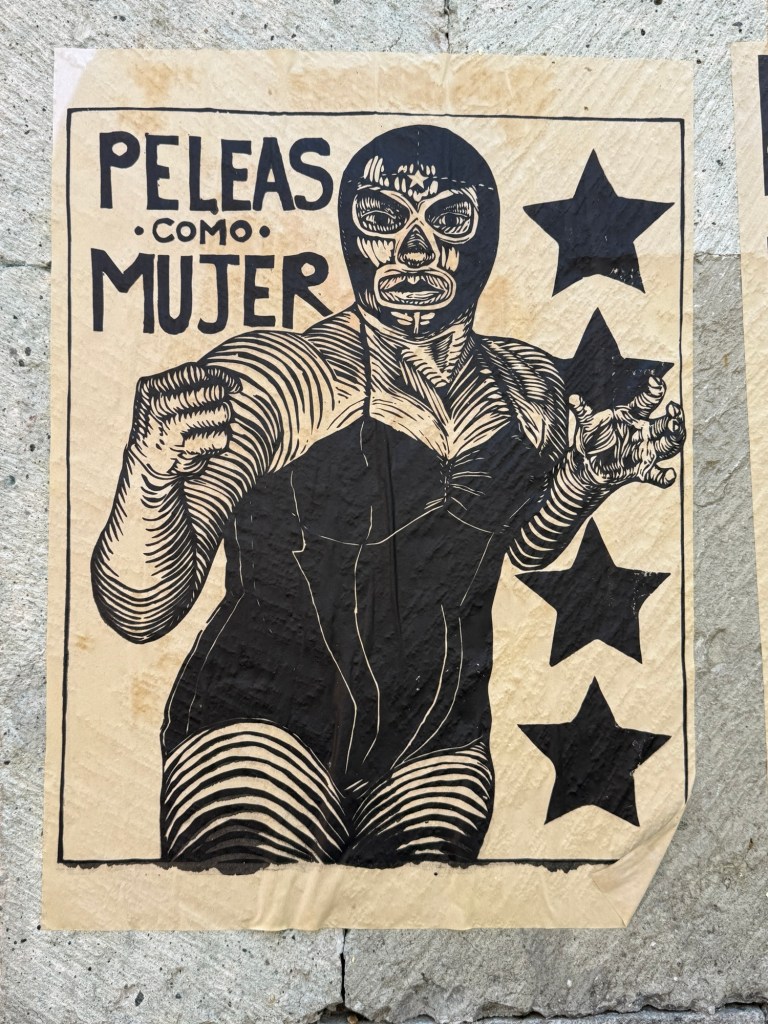
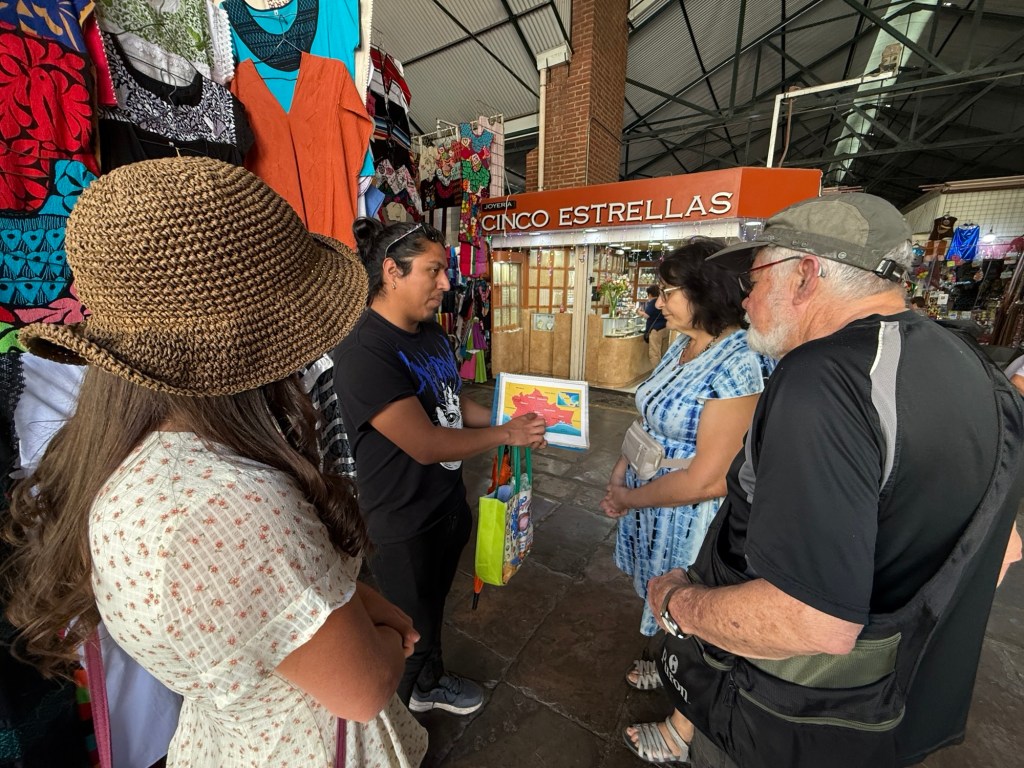
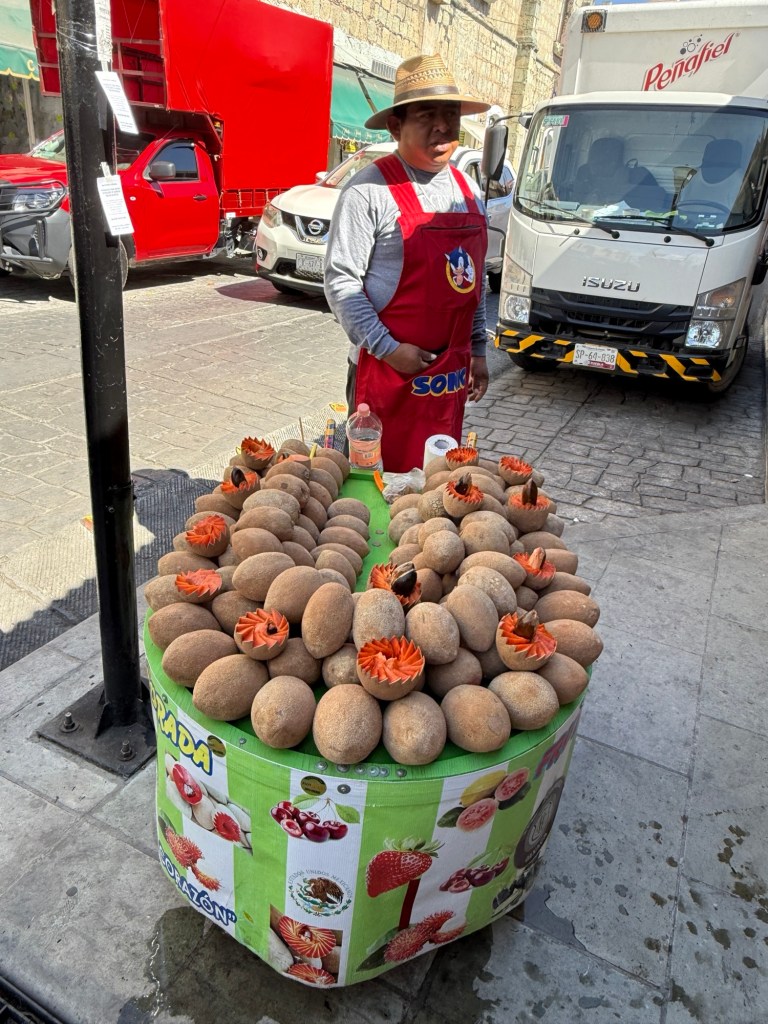
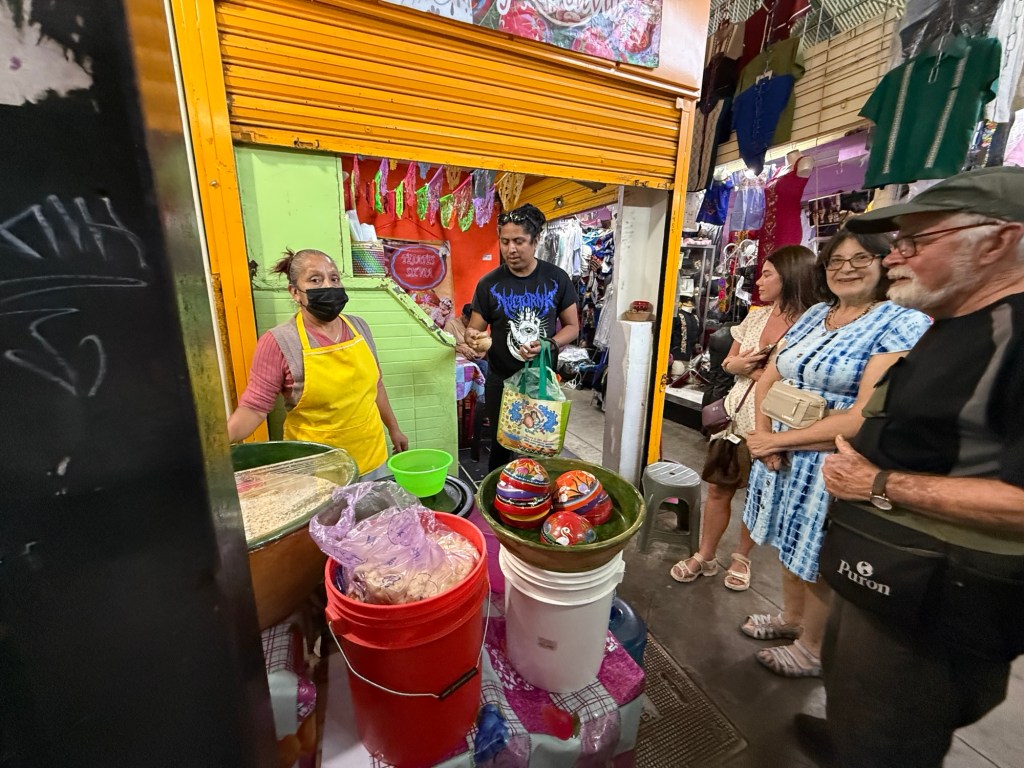
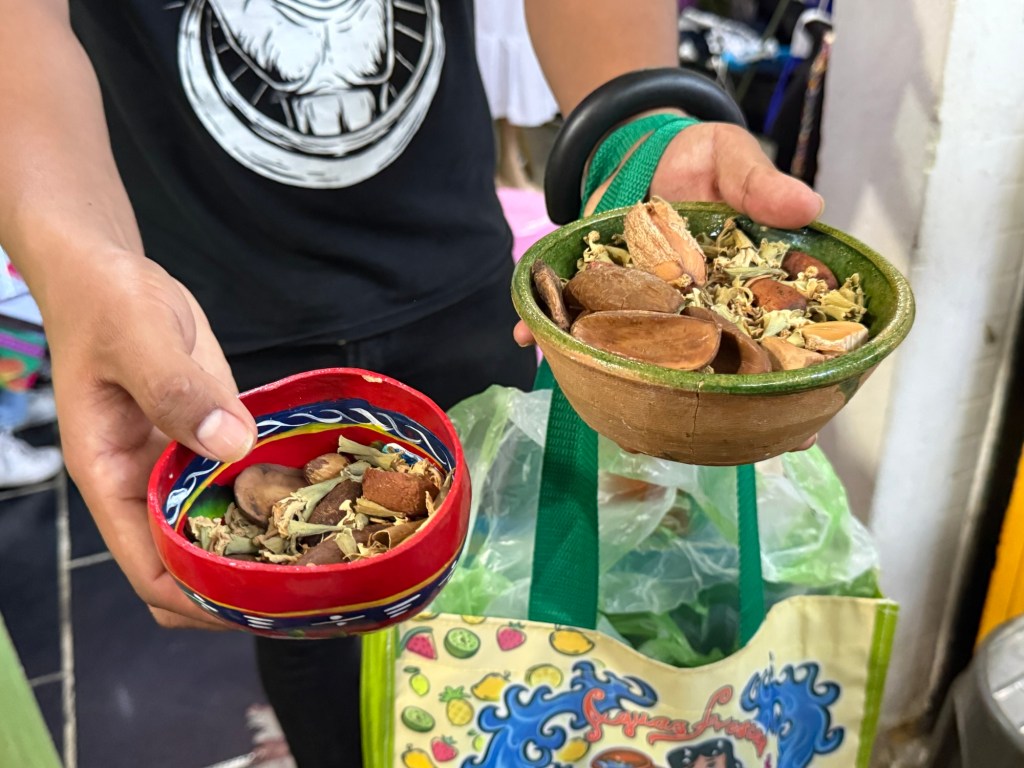
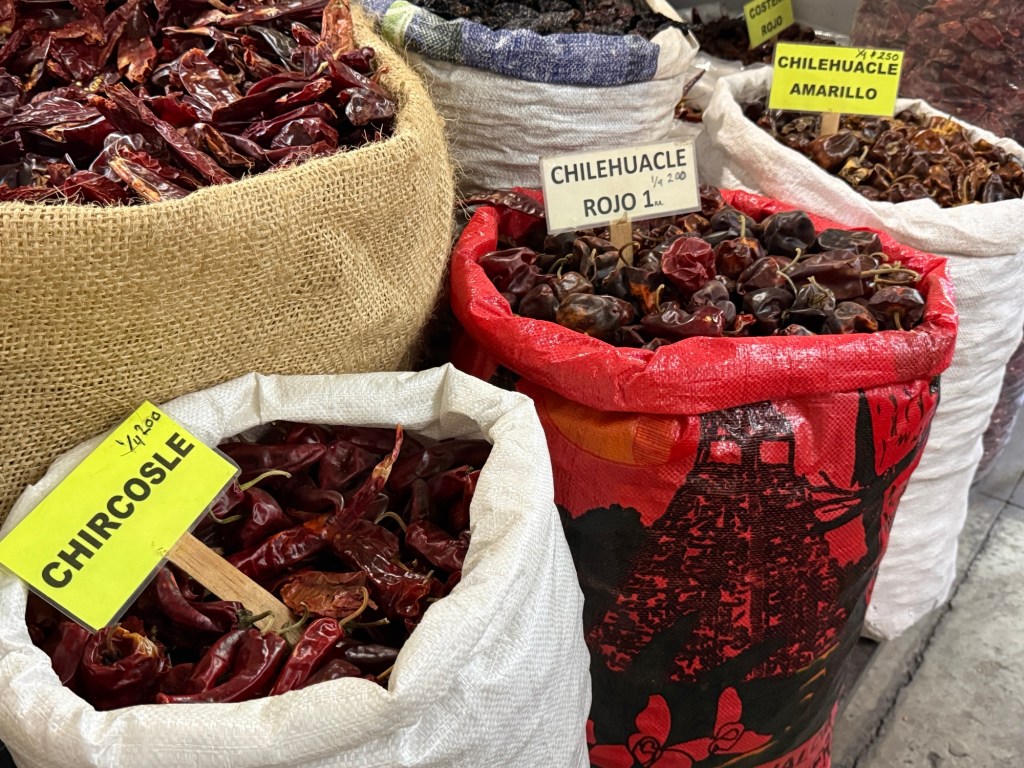
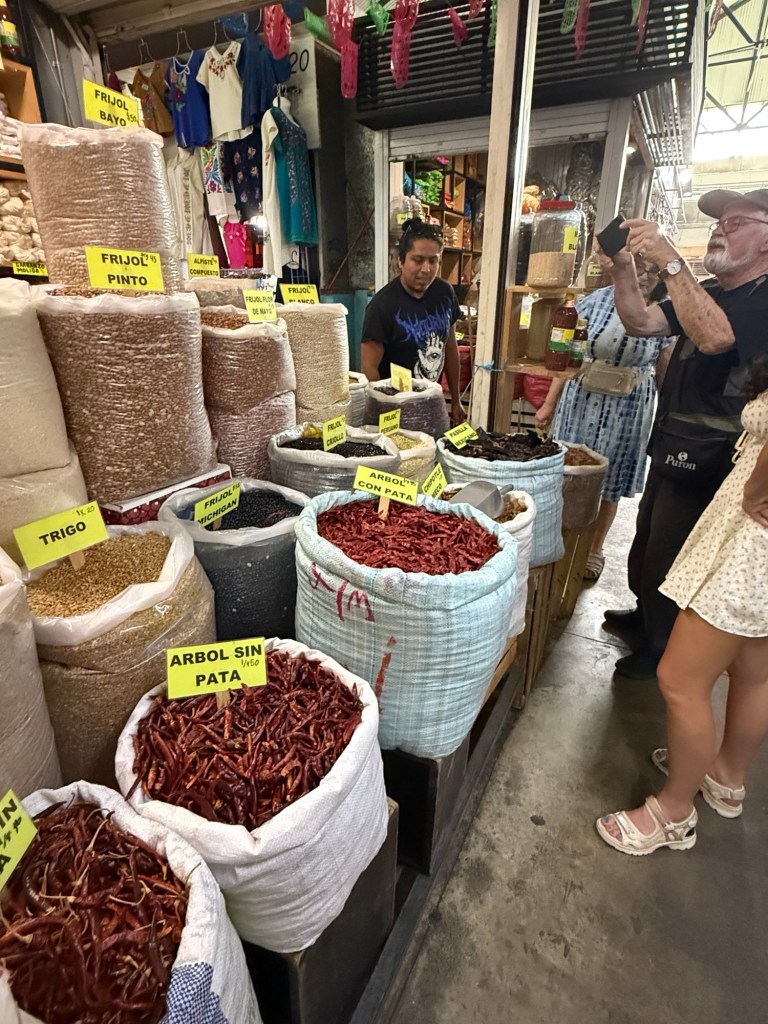
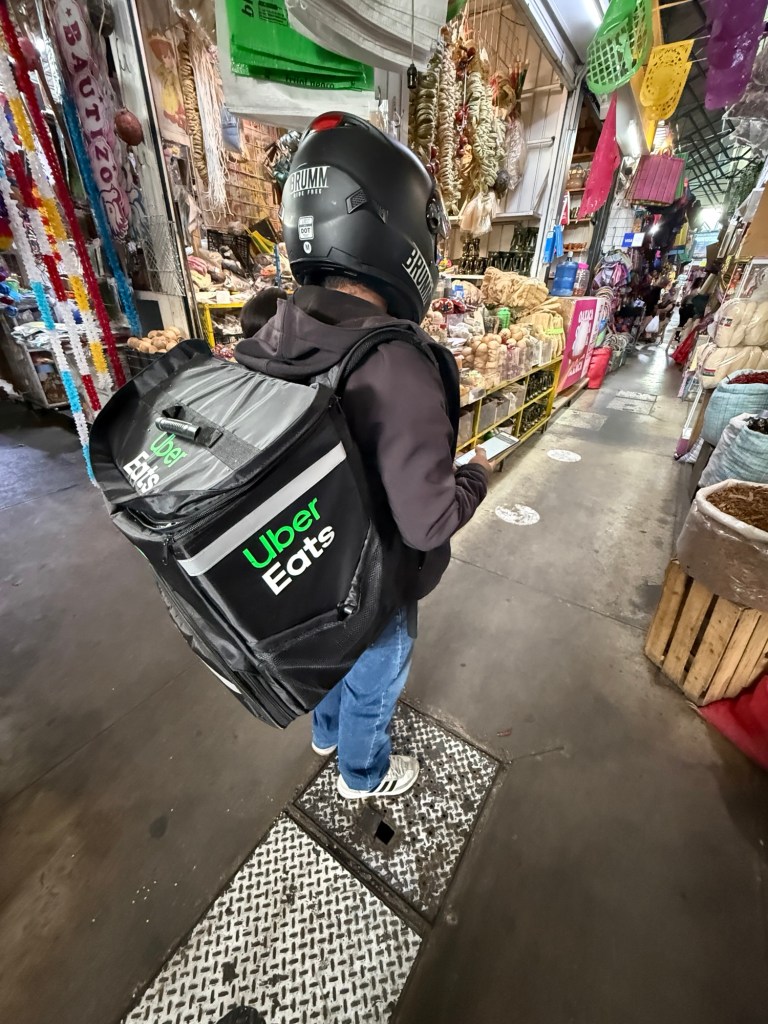
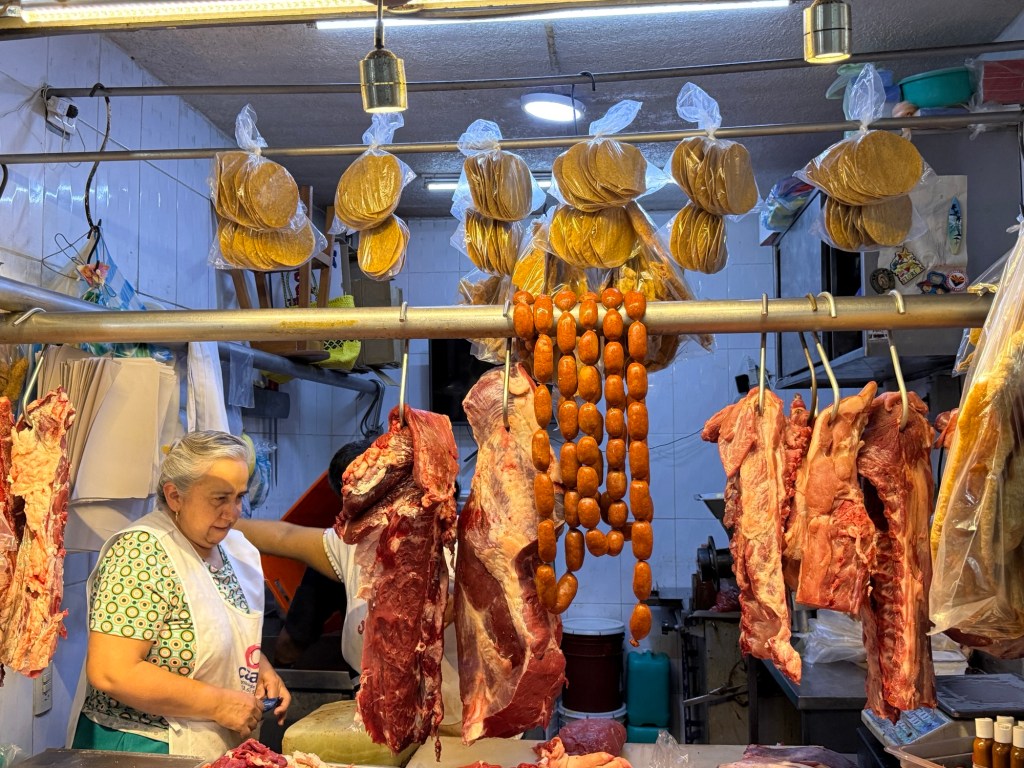
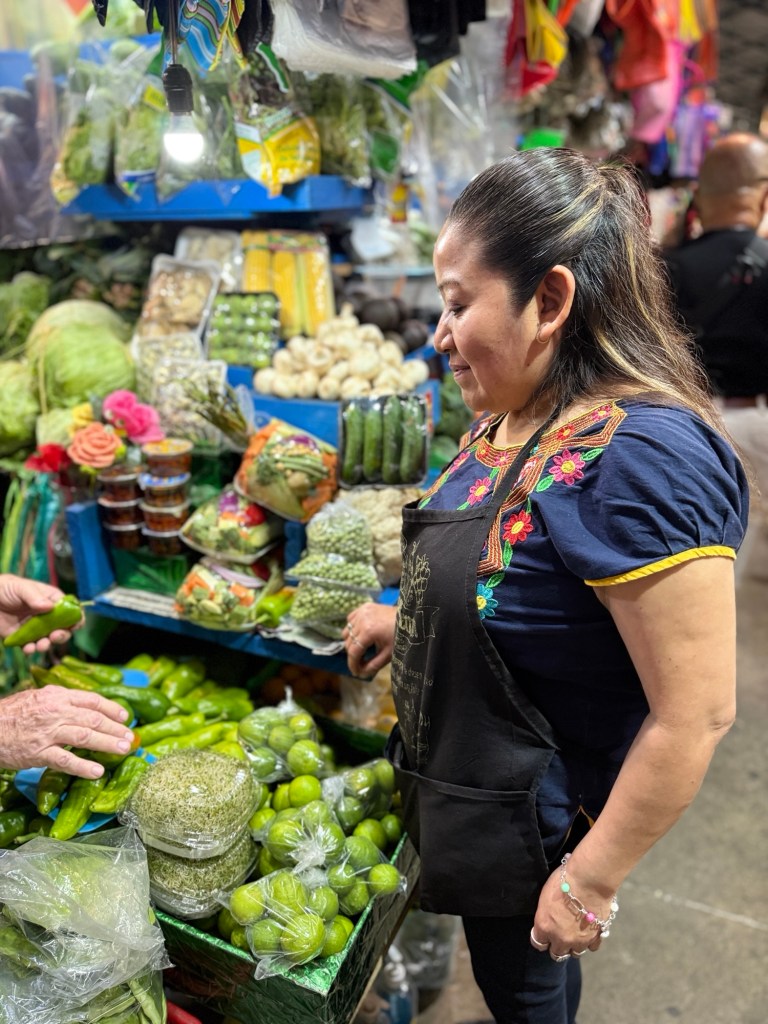
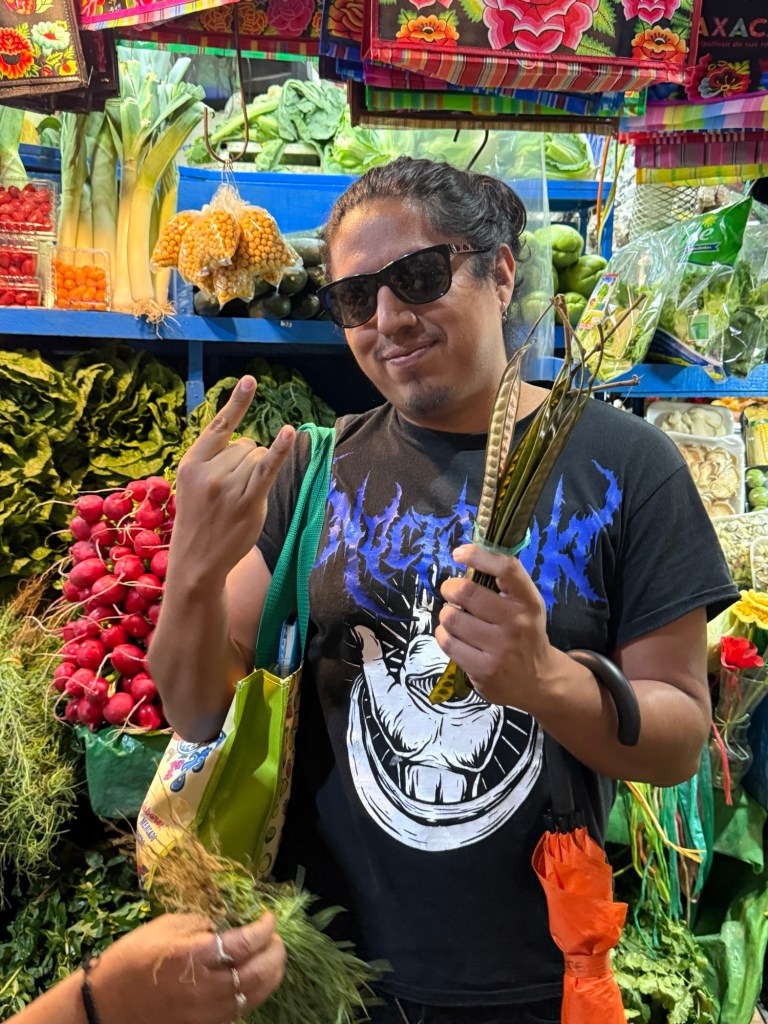
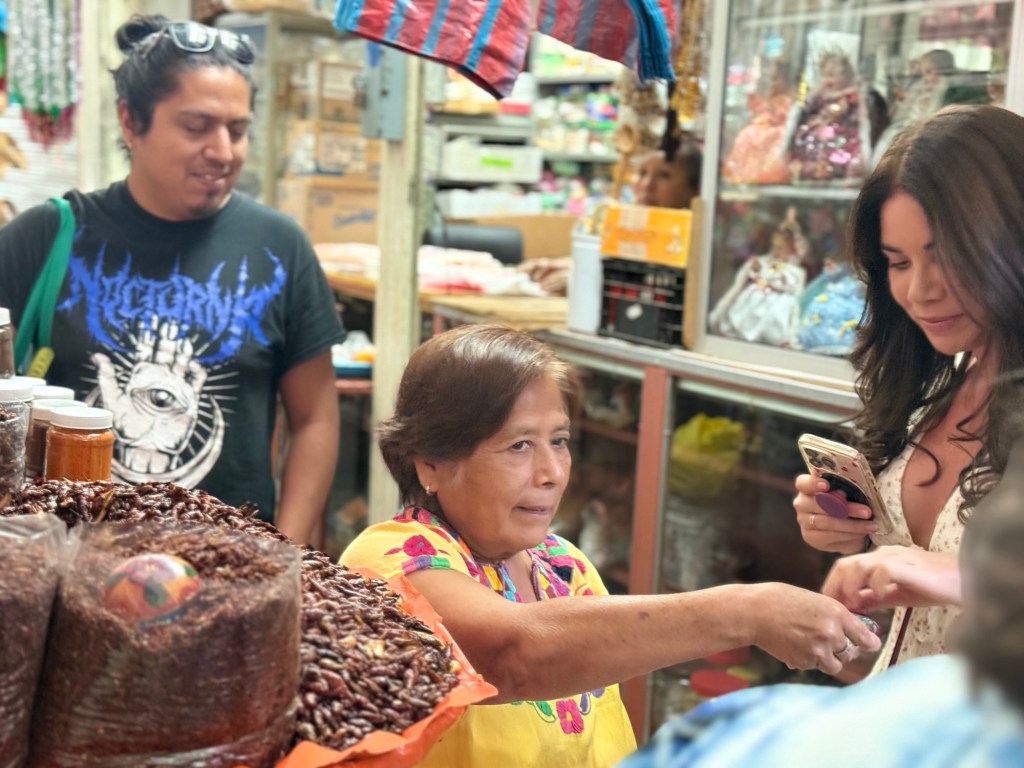
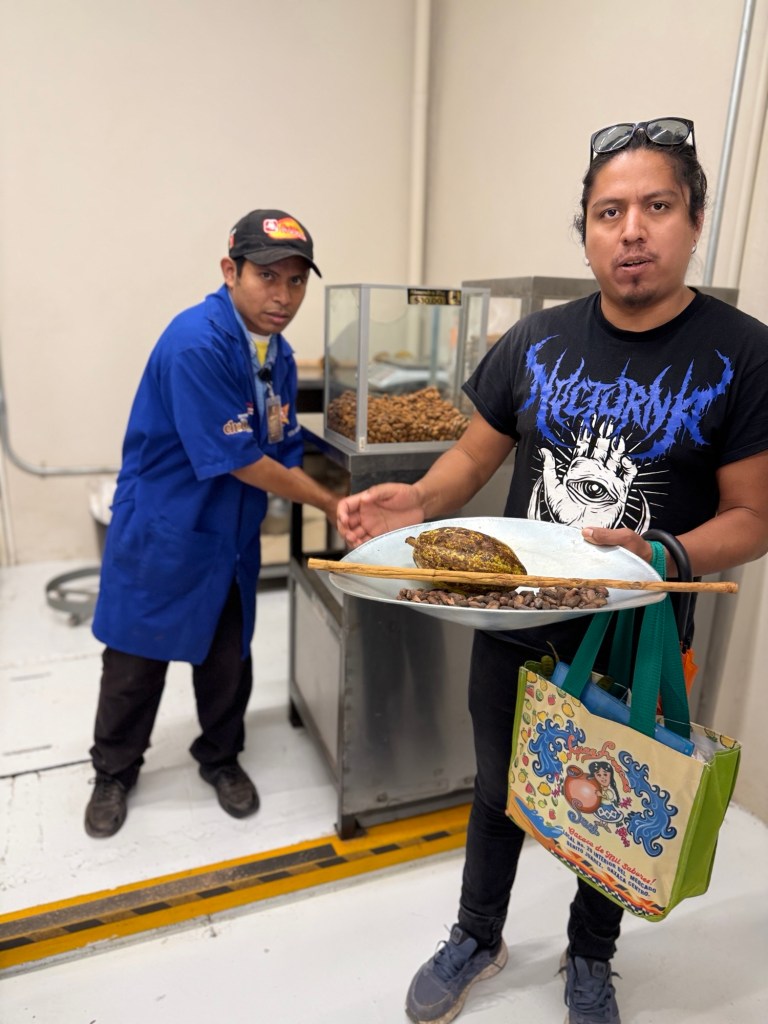
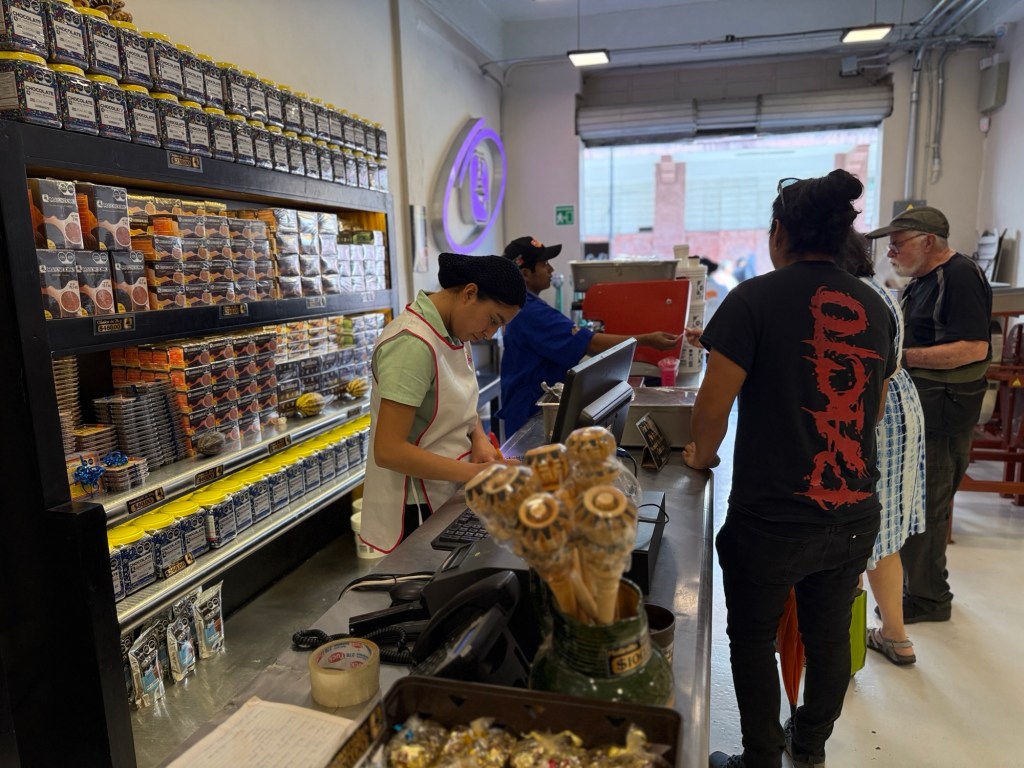
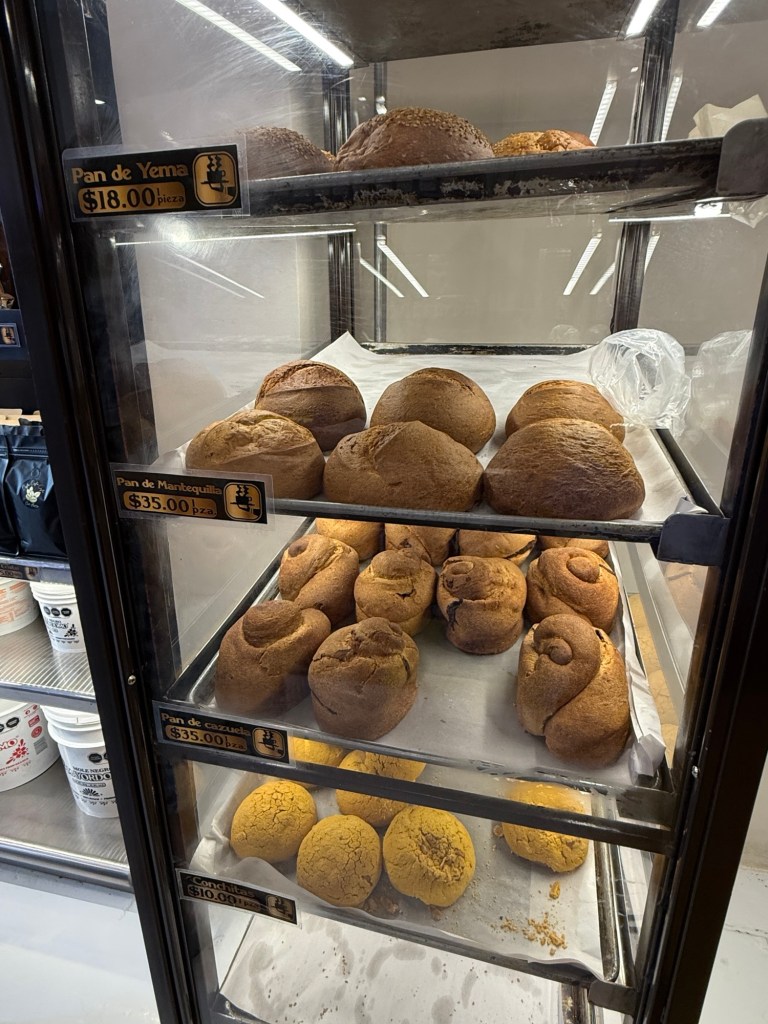
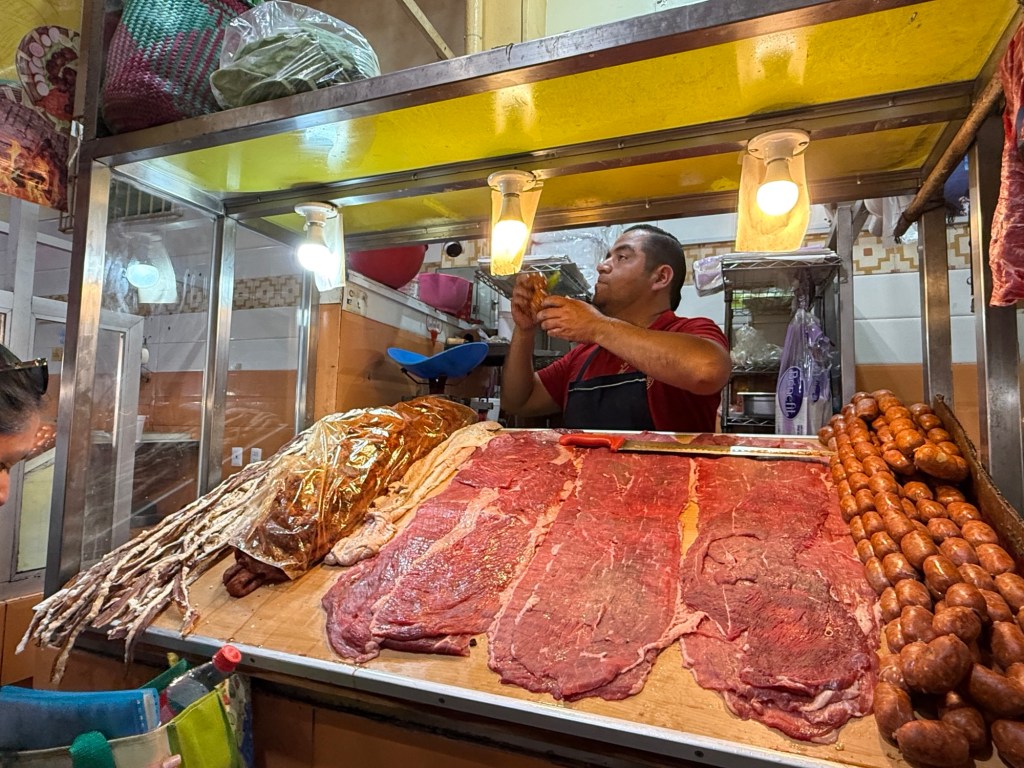
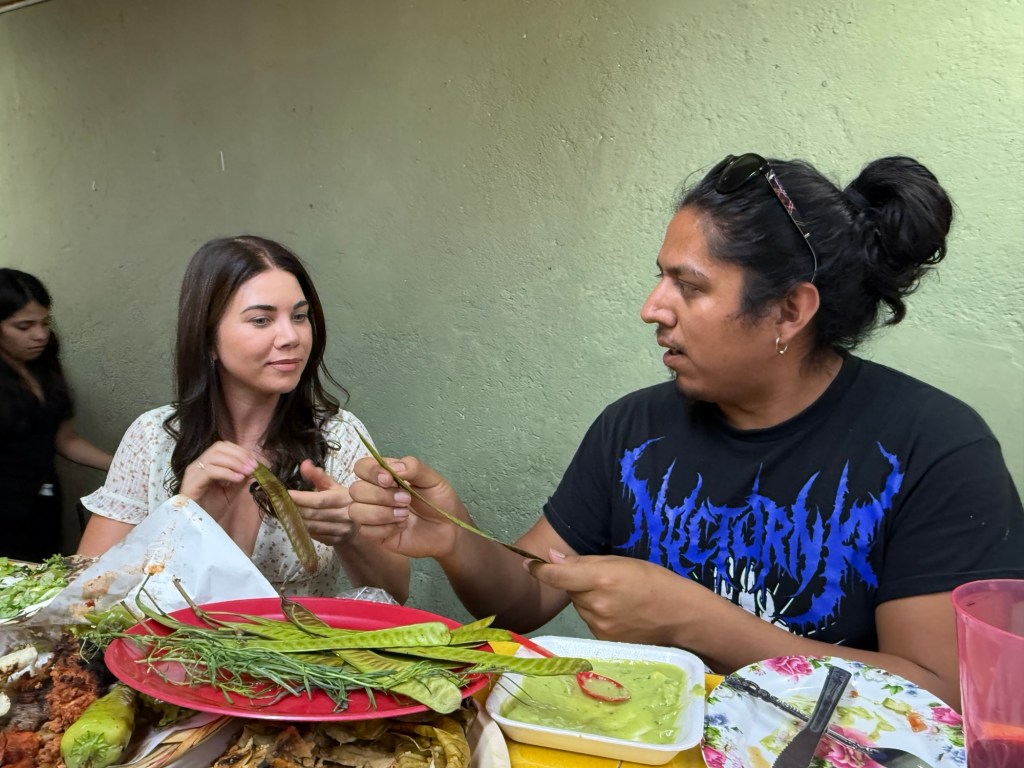
Casa de las Artesanías de OaxacaFull of loveOn the way to the zocalo (main plaza)Did you notice the katydid on the poster? Cool feet, huh?!“Fight like a woman.”Our tour guide Coyote showing us the Central Valley by the city of Oaxaca on the map to highlight the cultures we would encounter in the market, Mercado Benito Juarez. We were joined by Gina from Australia whose next stop is a kick-boxing camp in the desert near La Paz (up north). I wondered if she might be a gymnast—should have asked. Mamey fruit seller. Everyone seems to be an artist in Oaxaca…First stop was to taste tejate, a Oaxacan drink made with corn, cocoa, and a bunch of spices (see image below) that is whipped (foamy top under plastic). We also had a drink made of squash pulp, panela (delicious brown sugar from cane), cinnamon and maybe other spices. I didn’t get a photo, but later we had horchata, which I think of as milk, rice, cinnamon, and sugar (and water), but here is made with milk and the red pulp from a prickly pear fruit (the nopal cactus fruit). Can’t remember them all: cinnamon, the flower of some kind of tree…maybe Anita will remember and I’ll update.Intro to some of the peppers used for mole (special thick sauces whose primary ingredient is often pepper). An Uber Eats delivery guy asking for directions.We tried their chicharrón (deep fried pork rind), pate (pork parts blended to make what Anita said we call head cheese), and dried (cured) beef sausage.And picked up veggies to go with meat and other dishes for a meal later. Coyote said this vendor, whose name I am not remembering, taught him how to judge the peppers’ (in Dave’s hand) hotness by how heavy it is.These beans, called huaje, help with digestion and we opened them at the end of our meal and ate the seeds fresh. In case, like me, you wonder what that gesture means, it’s “hang loose” and is the official hand gesture of Hawaii meaning “aloha spirit, love, and local pride” according to Wikipedia. Next stop was trying fried and boiled crickets. We learned she and other cricket sellers get up at 3 am to collect the crickets when they’re easier to catch). The fried ones are made with chile, garlic, and other spices.Brief stop to learn about cacao roasting and other ingredients (cinnamon and almonds). Cacao is pollinated by a tiny fly!Oaxacans typically have bread with their hot chocolate for breakfast.
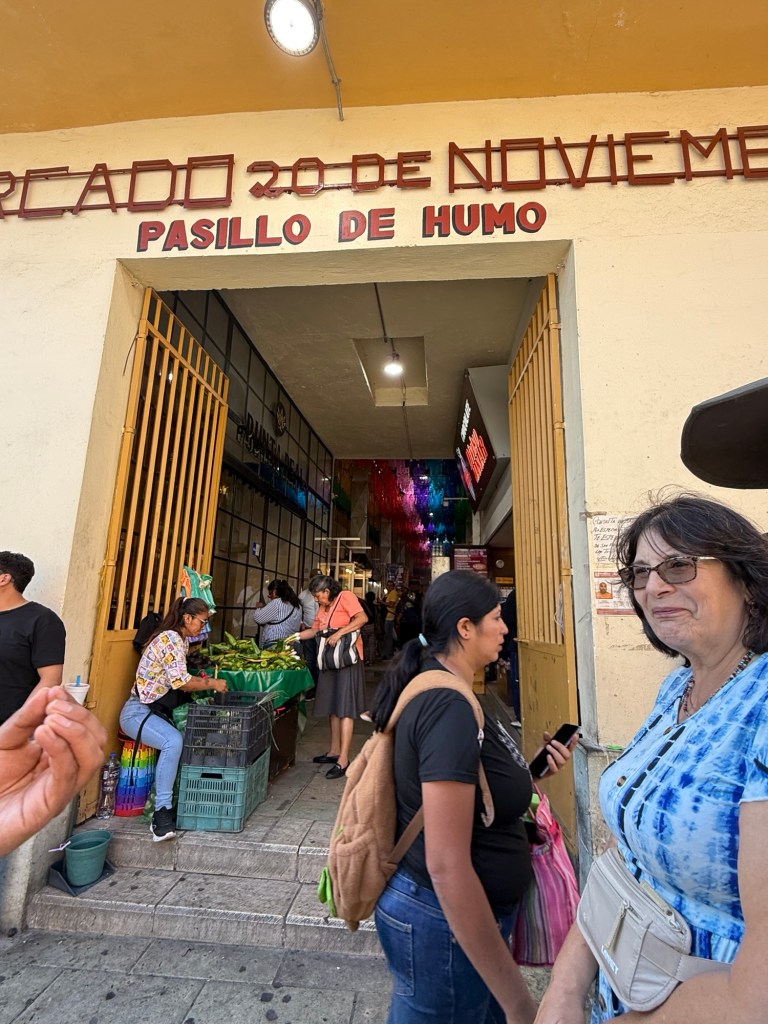
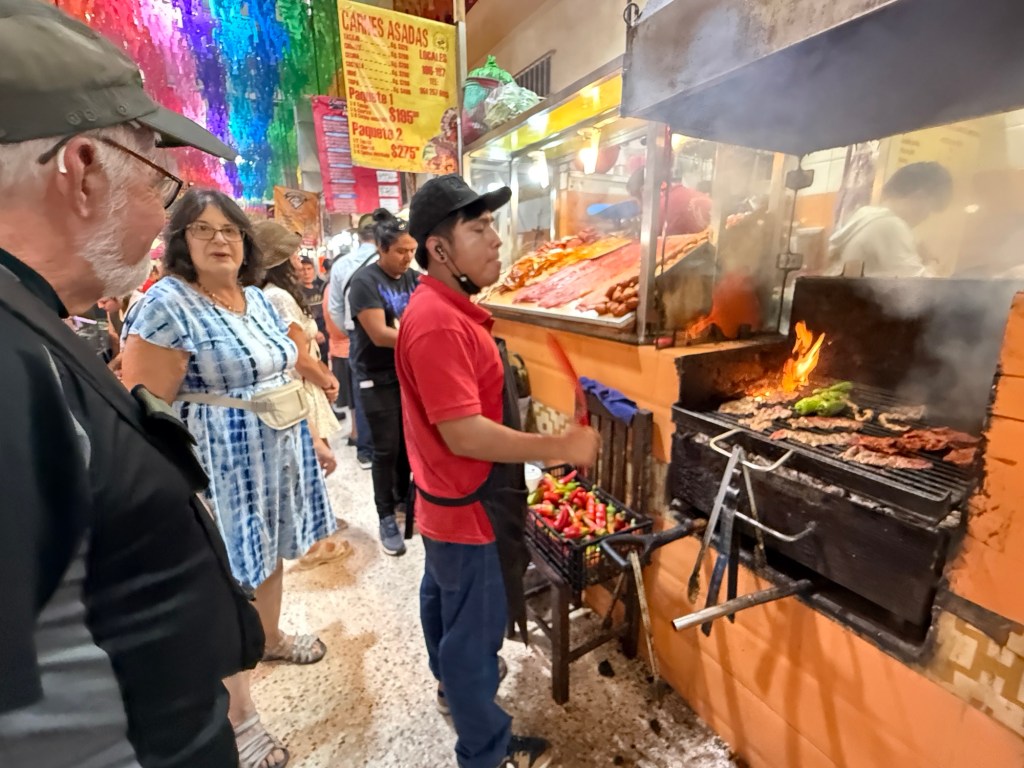
The passageway of smoke (grilling smoke) in the adjacent market, Mercado 20 de Noviembre (the date of the Mexican Revolution that is considered the start of the modern Mexican era).
Coyote brought the peppers that were also grilled for us.
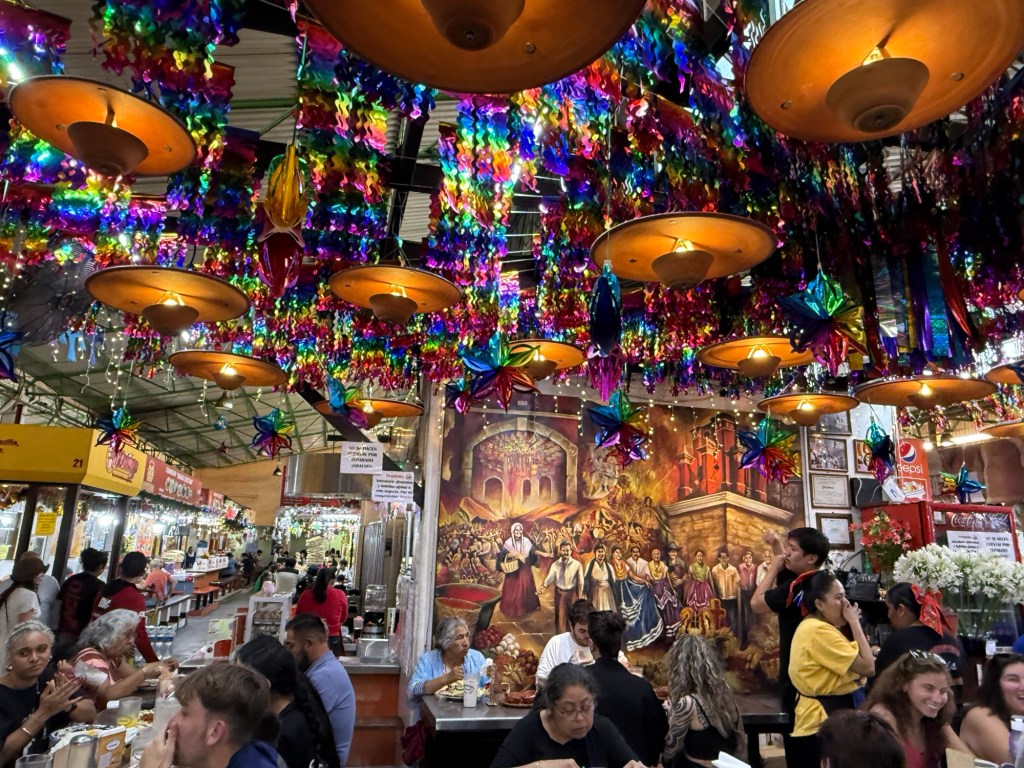
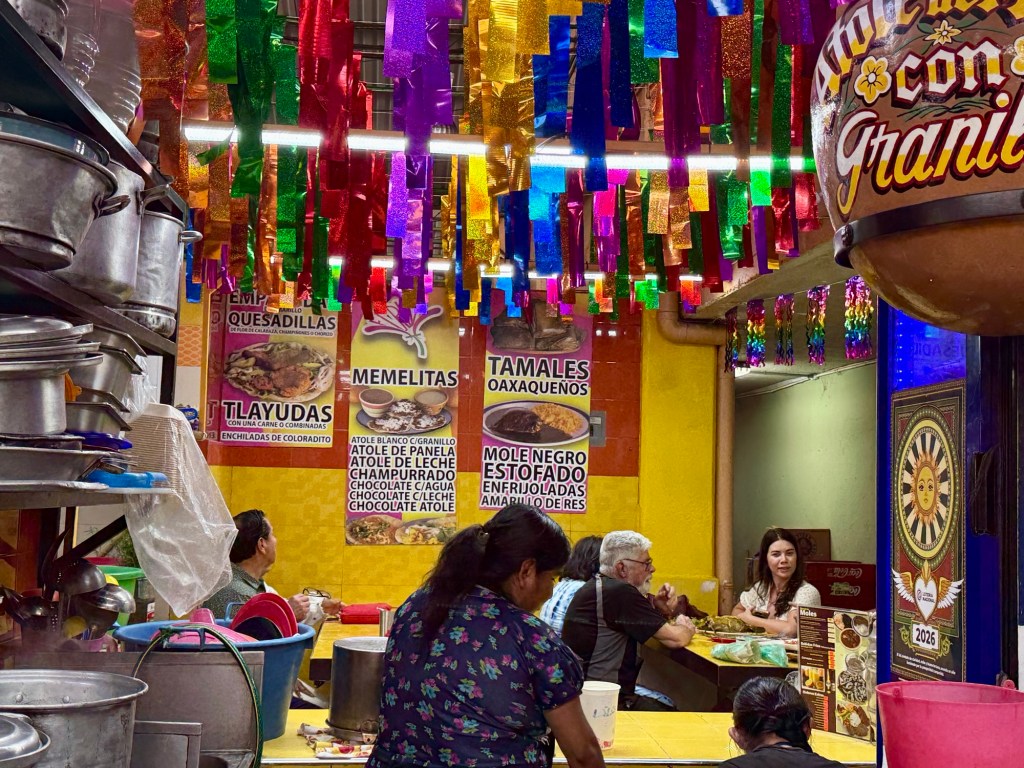
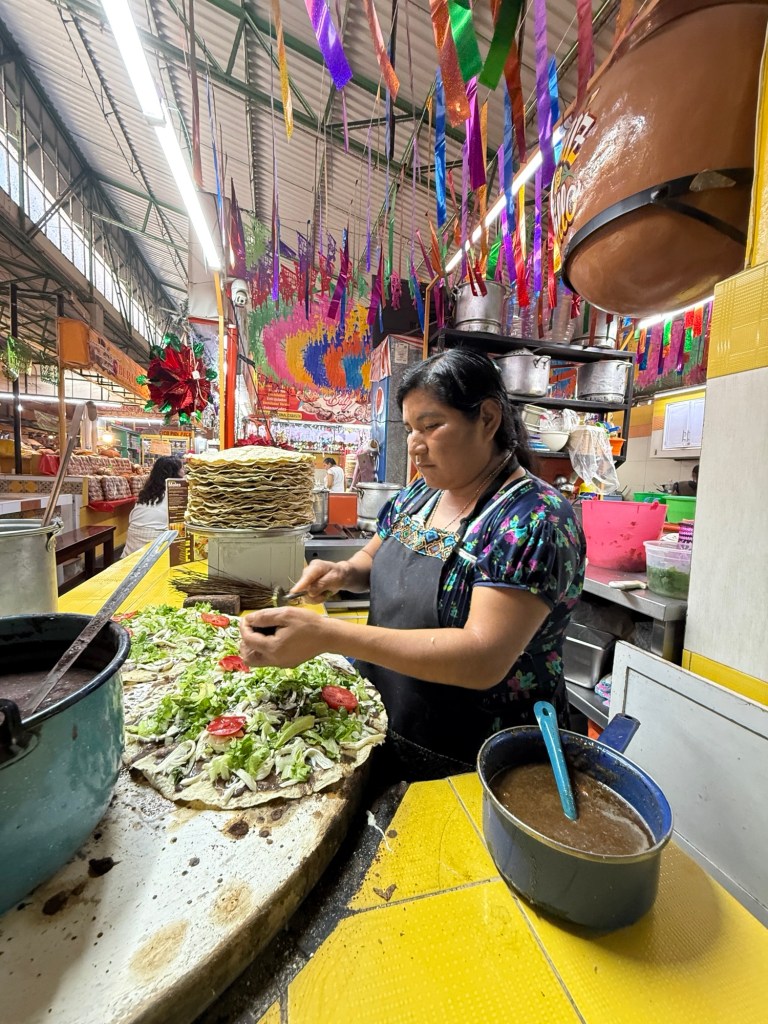
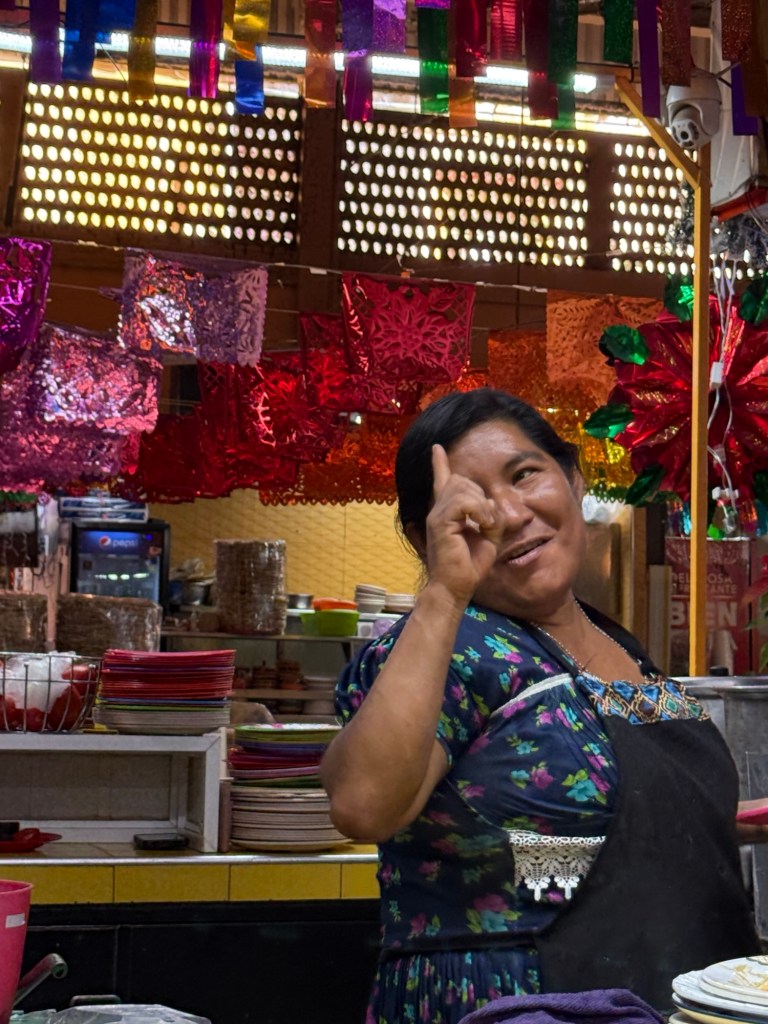
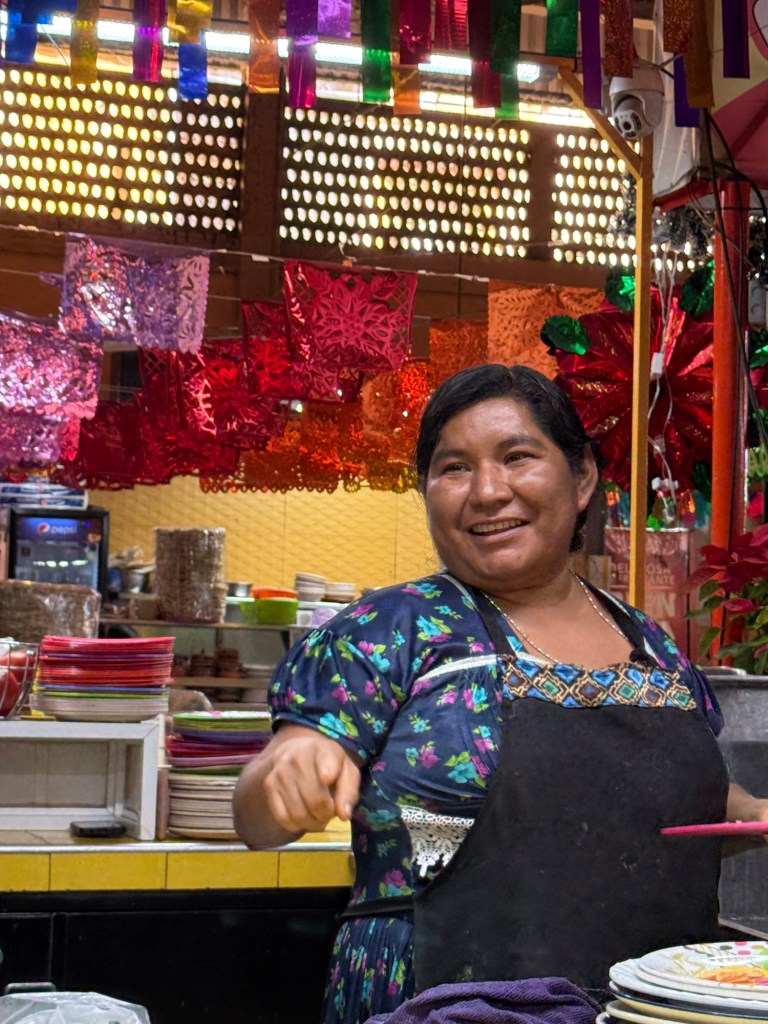
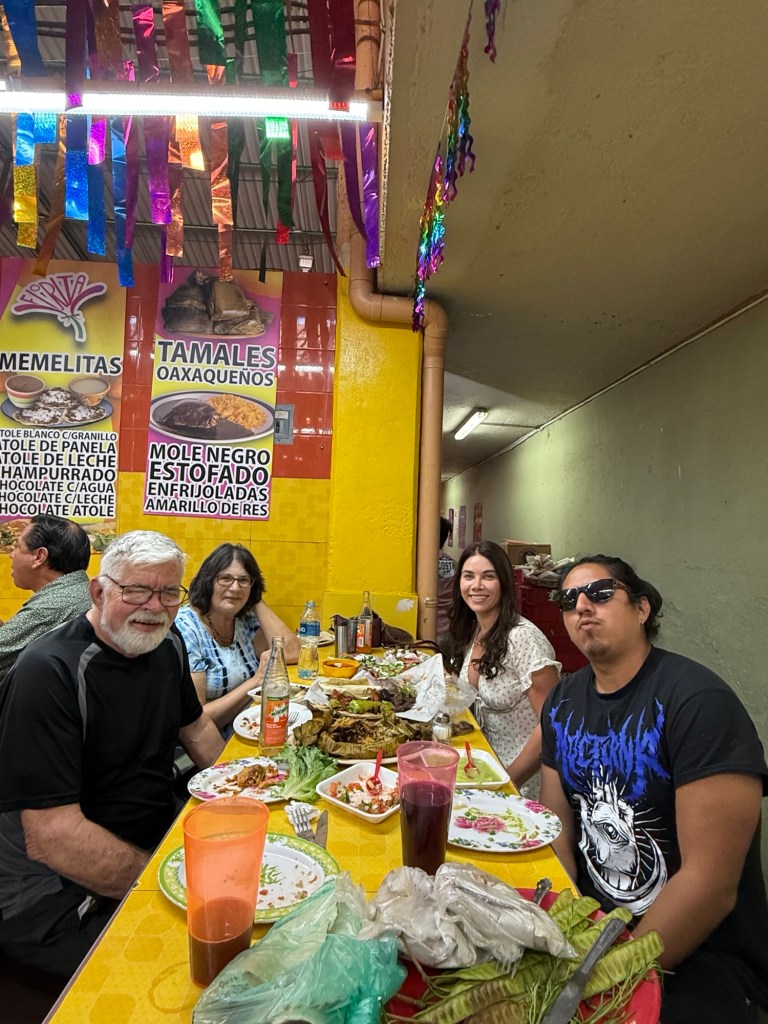
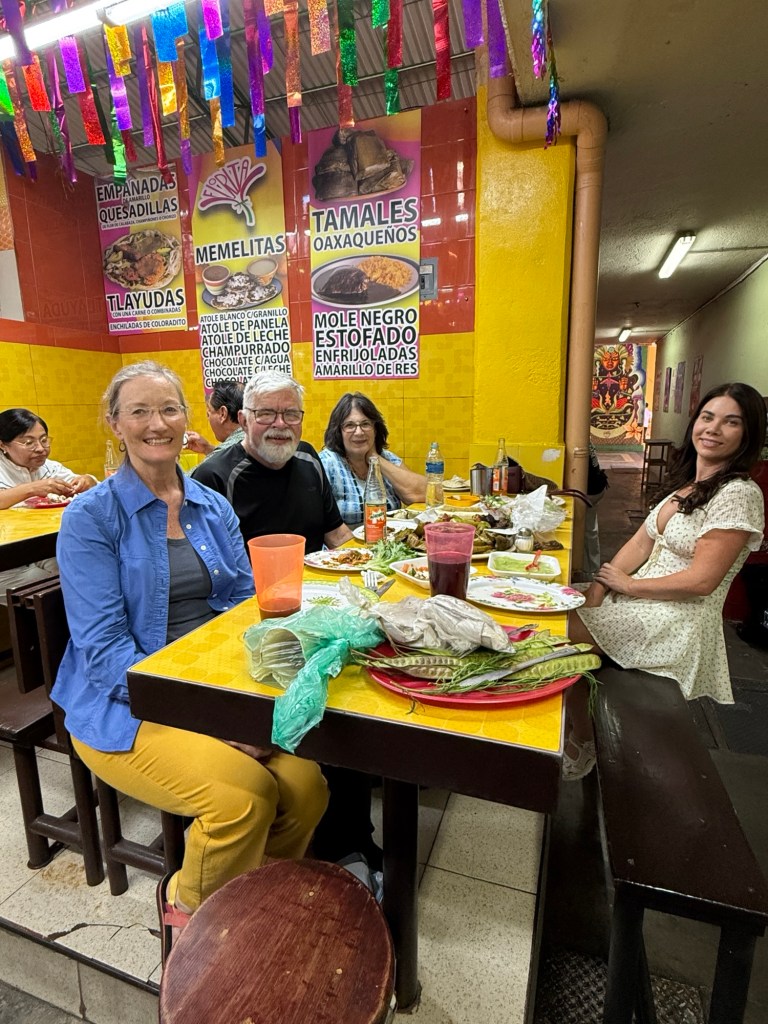
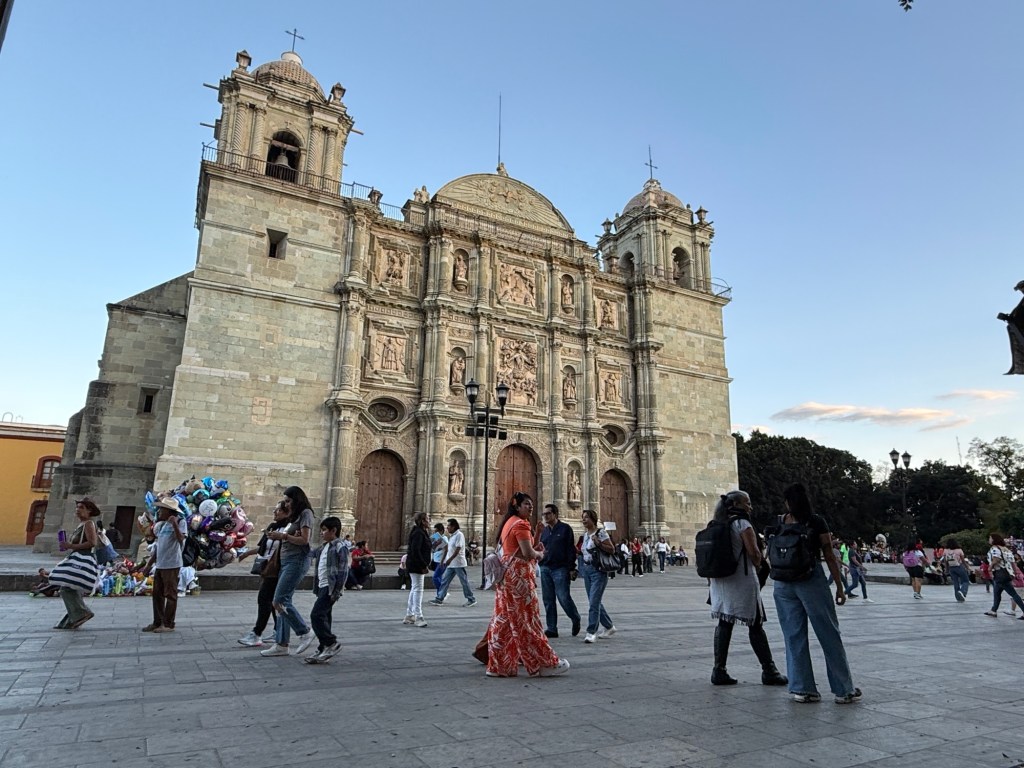
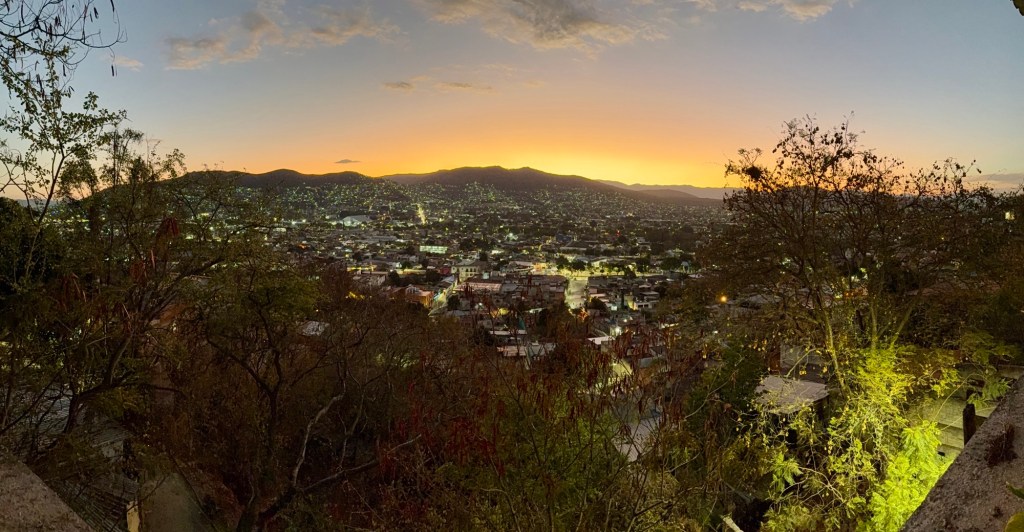
Magnificent interiorBenita prepared a large tostada-like dish called tlayuda that used to be eaten only for super but has become so popular it’s eaten any time of day now. She told me her indigenous tongue is Chatin and “thank you” in Chatin is “nii nii.” Though she looks very serious in the photos I captured, she smiled a lot…Coyote didn’t realize she was Chatin, from a community pretty far from Oaxaca and, he explained, known for a special mezcal whose agave plants may only be planted by women. The herb on the red platter, chapito, and the bean, huaje, both are eaten at the end of the meal and help with digestion. We learned Coyote’s main job is playing heavy metal music, mostly for school children. He writes lyrics about social issues, culture, and dinosaurs…His t-shirt is for his girlfriend’s heavy metal band called Noctorna.The zocalo (main plaza) park picking up with evening strollers.The view from Hotel Terraza Cielito Lindo (Hotel Beautiful Sky Terrace).

 Wild Bee Plantings