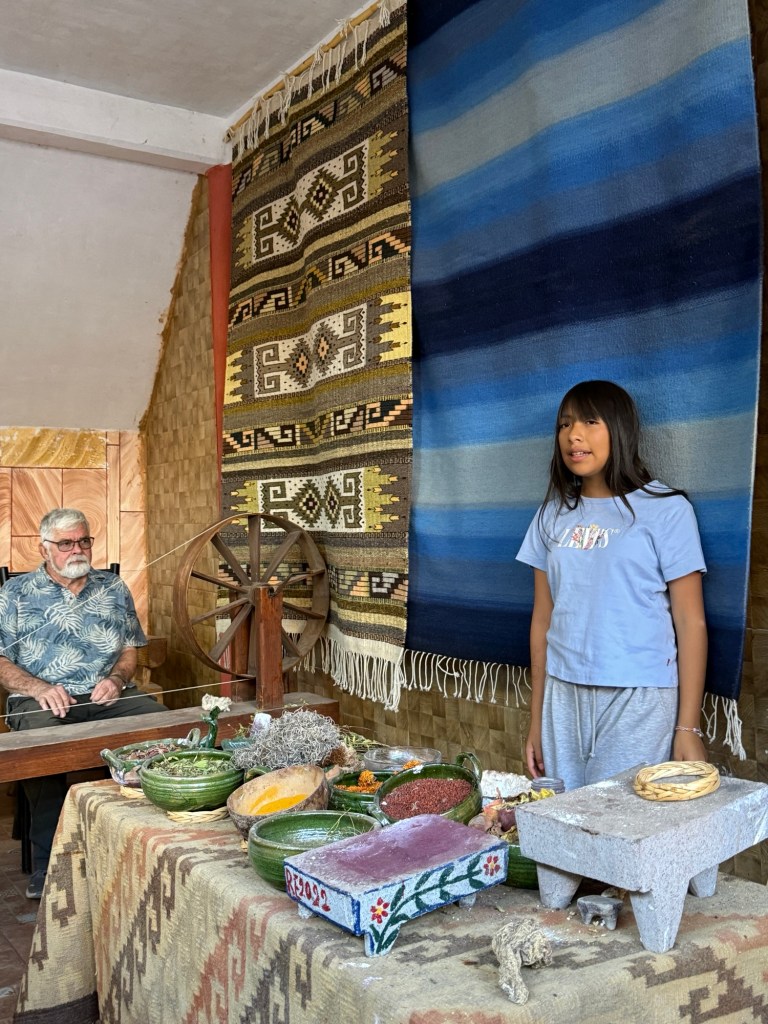
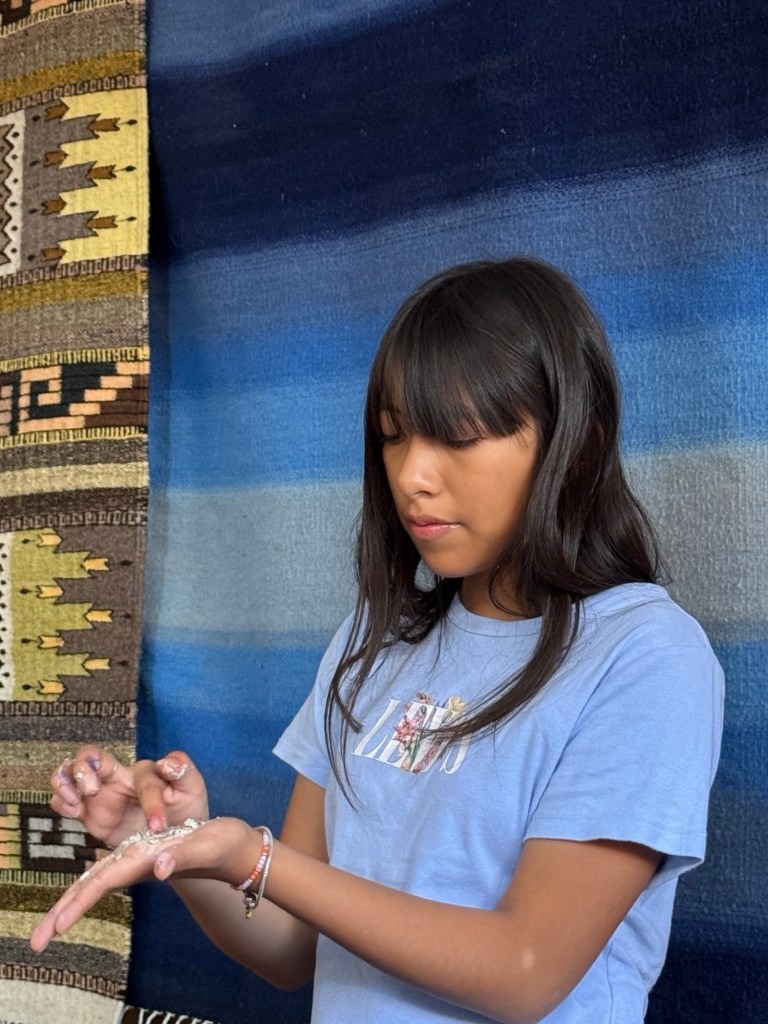
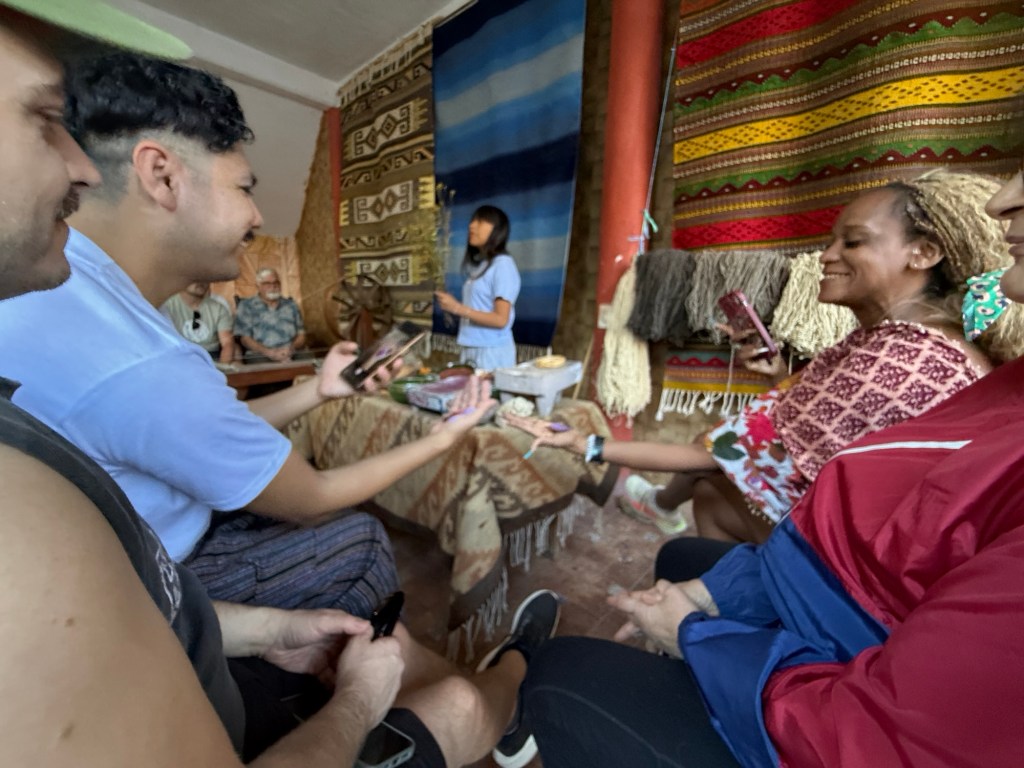
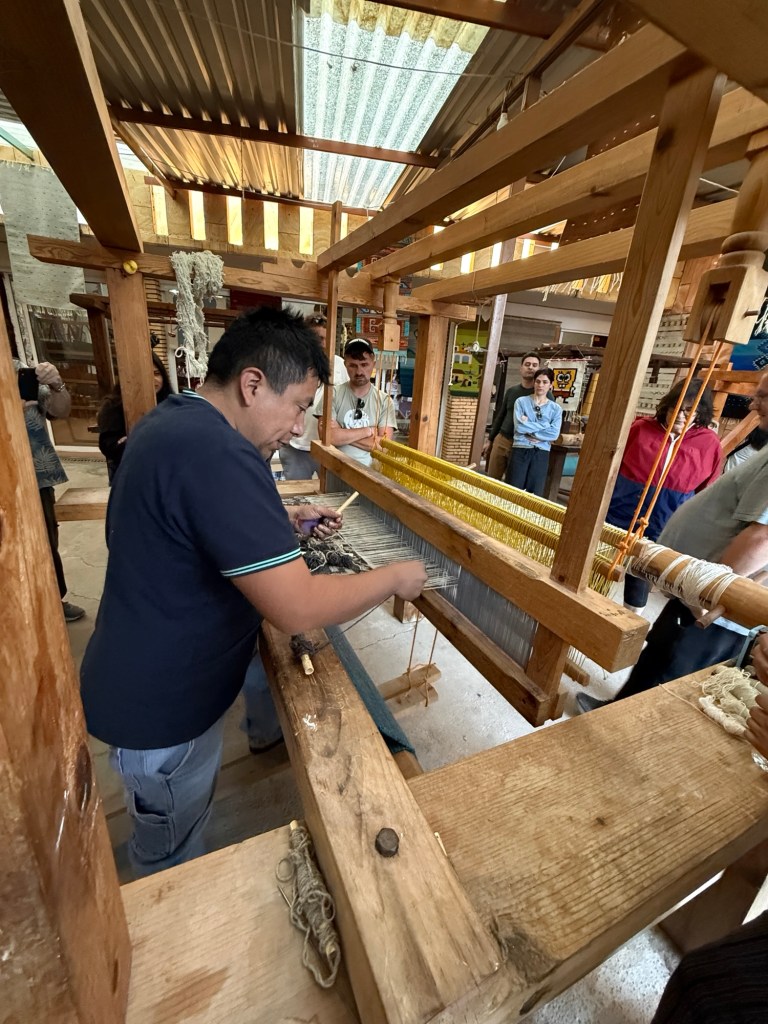
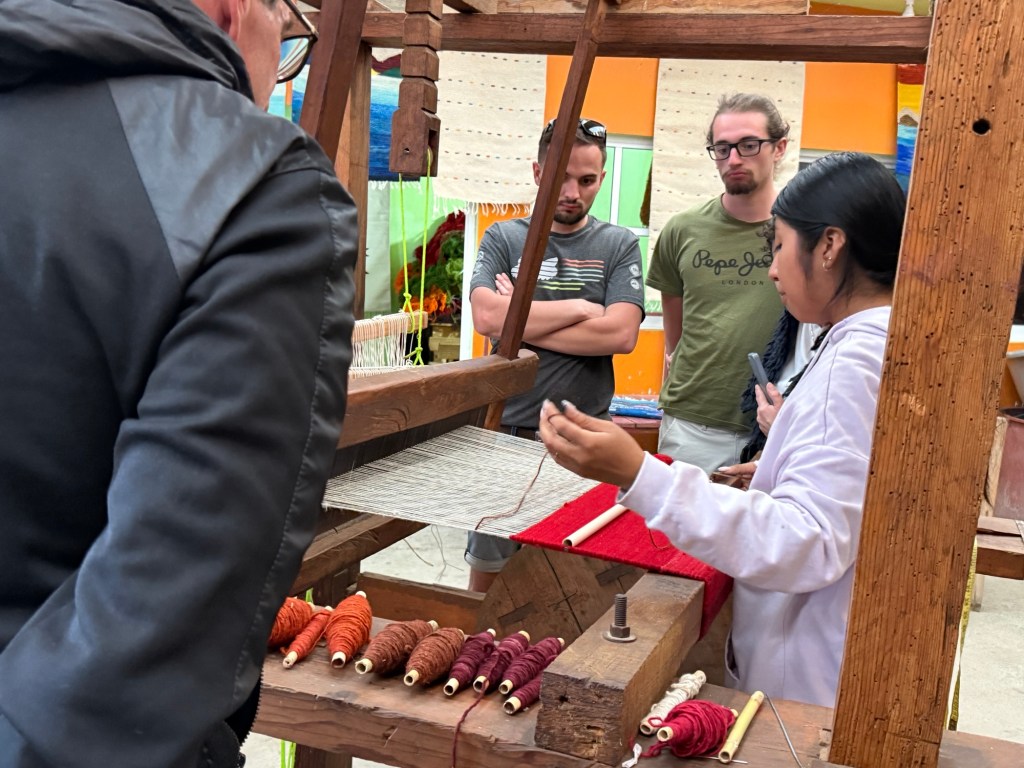
Our second to last stop of the day was to learn about some of the traditional dyes and weaving techniques. The 13 year old daughter of the shop owners spoke to the English-speaking group. She let us try carding wool (and see what hard work it is), showed us how it’s spun, and explained what natural ingredients are used for various colors. Then her dad and sister explained how the loom worked.
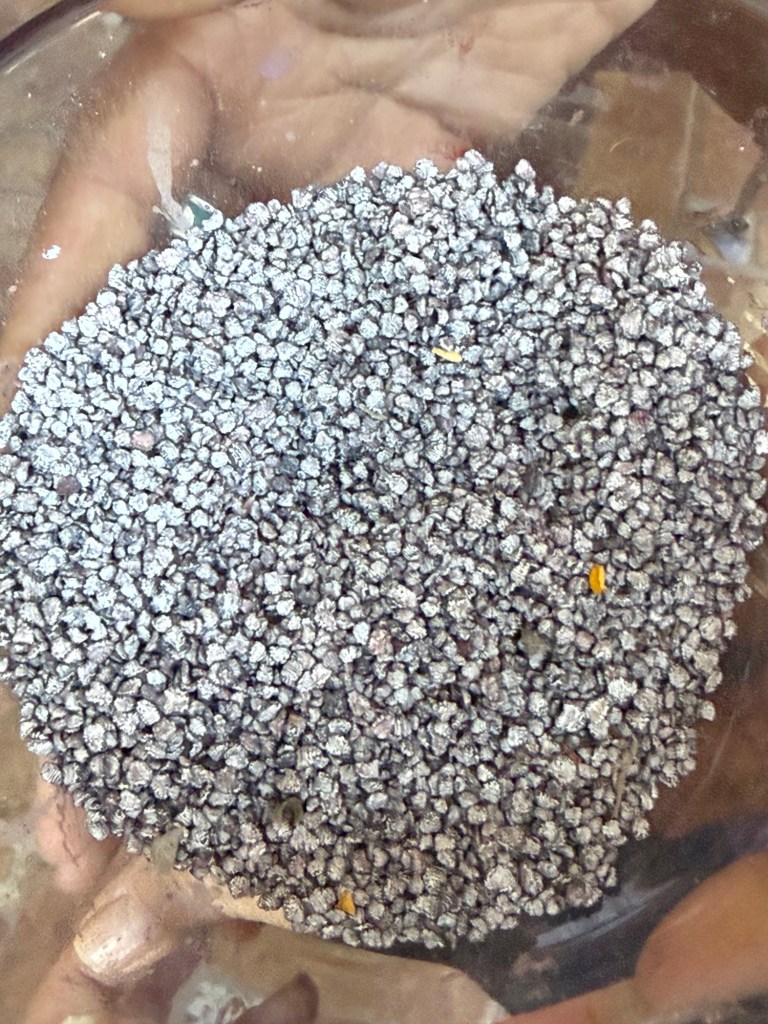
These are dried cochineal, scale insects that feed on prickly pear cactus and are used to make red colors. In the past, cochineal were very important dye in lipsticks and other cosmetics around the world. We also have them on our prickly pears in the US. If you see a cottony substance on prickly pear, you can find the insect below (inside) the fluff, sheltered sort of like spit bugs on some other plants—unless you clear away the cotton or spittle, you don’t see the insects. Even though I’ve seen and crushed live cochineal, this was the first time I’d seen them like this, collected and dried. She showed us how different mordants affected the colors.Guests comparing how the colors could change depending on what was added. Their rugs are made on pedal looms (manipulated by foot pedals), but I’m pretty sure most weaving for clothing is done by backstrap loom. If I didn’t already include a photo of a woman weaving on a backstrap loom on a street in Oaxaca, it will be in another post, and later a visit to the Textile Museum includes clothes made on backstrap looms. Those looms are portable and make long narrow cloth. She gave the Spanish language demo, while her dad did the English one.
 Wild Bee Plantings