Mitla

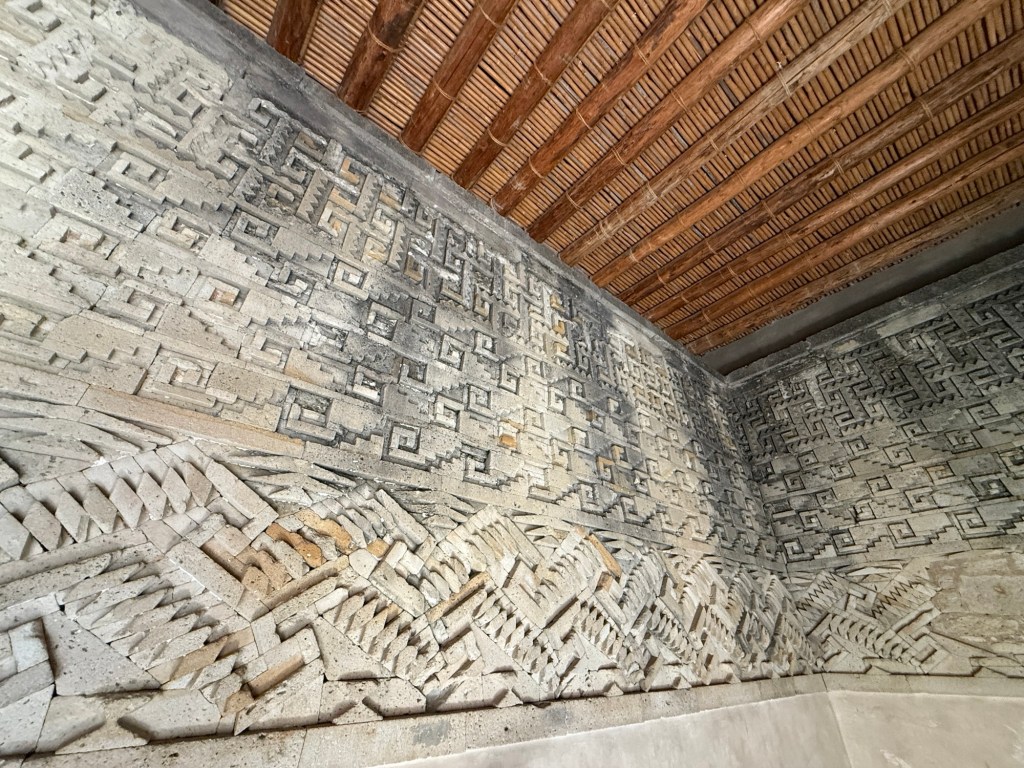
I wrote down the dates 1500 bc to 900 ad for the time when Mitla thrived as a Zapotec center. It remains a Zapotec center but several of its original buildings were destroyed to build the cathedral. All the geometric stonework is from that 1500 bc to 900 ad period and some original paint was still visible, though parts were restored in the early 1900s.
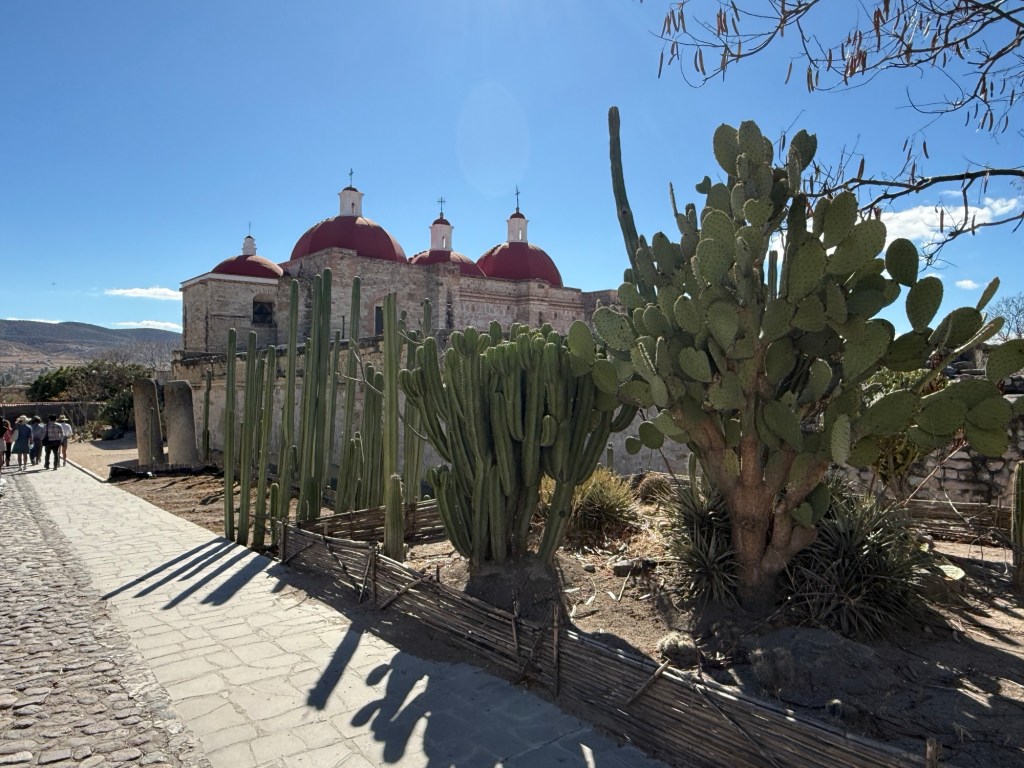
The cathedral in Mitla built atop the e most sacred part of the original Zapotec temple that was built over a deep sacred cave (400 m, connecting to the underworld).

It’s really hard to capture how awesome these archeological treasures are. The local population has asked that no digs disturb the sacred underground sites, but satellite technology that can penetrate ground has been used to learn a little more about it.
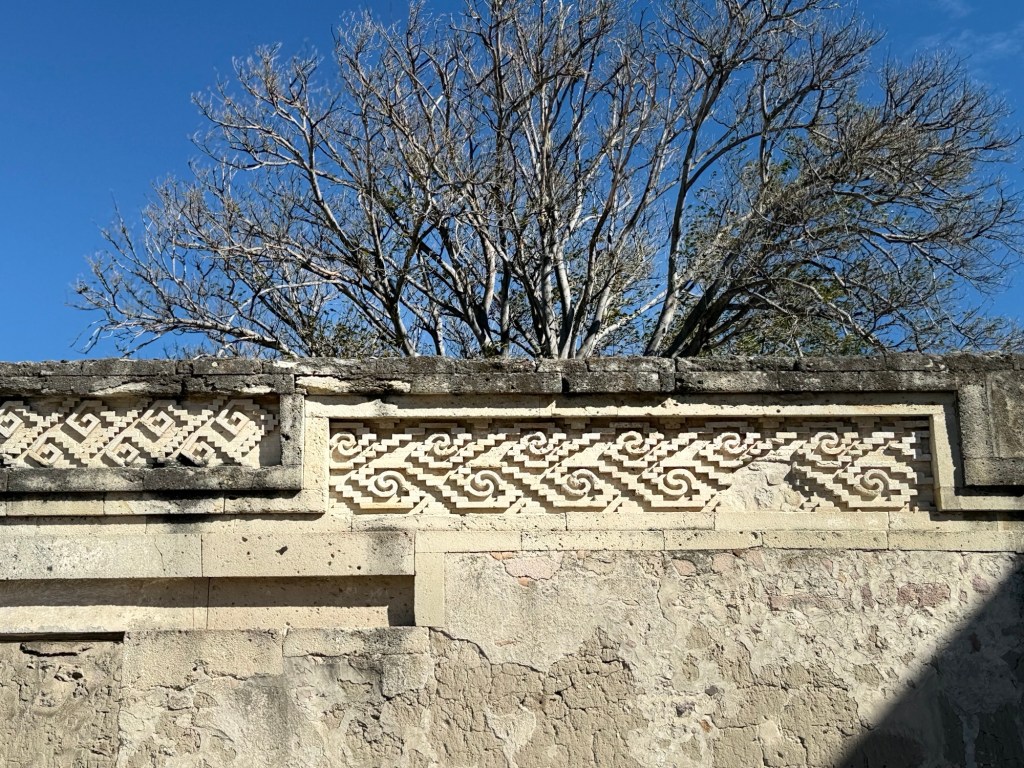
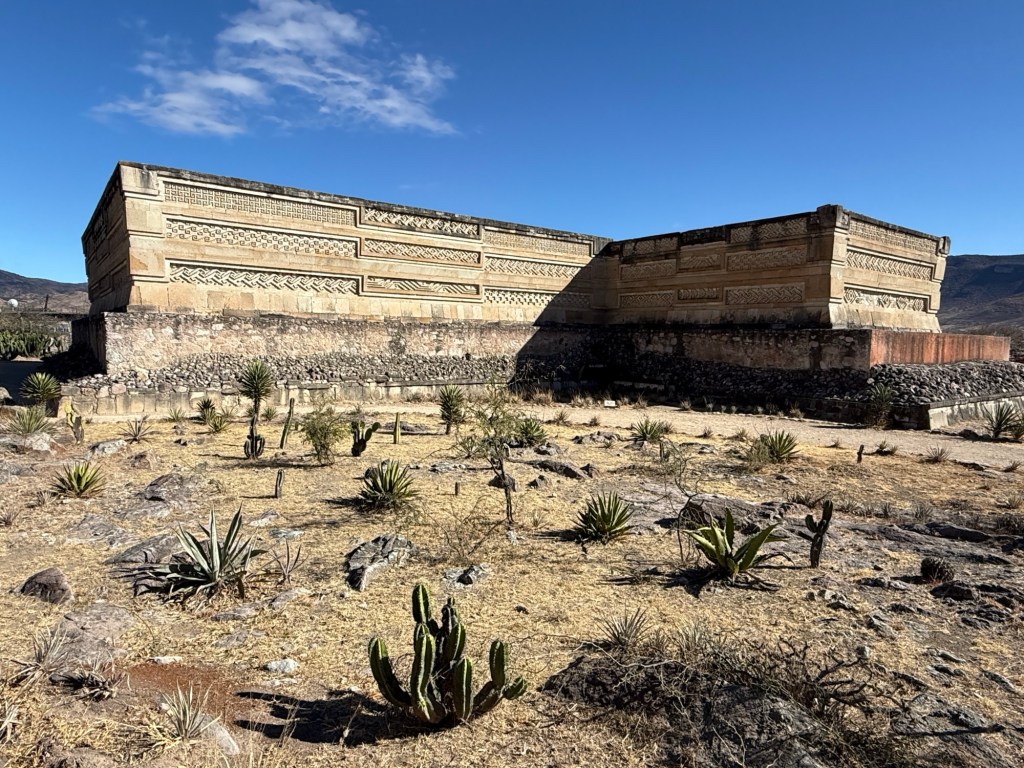
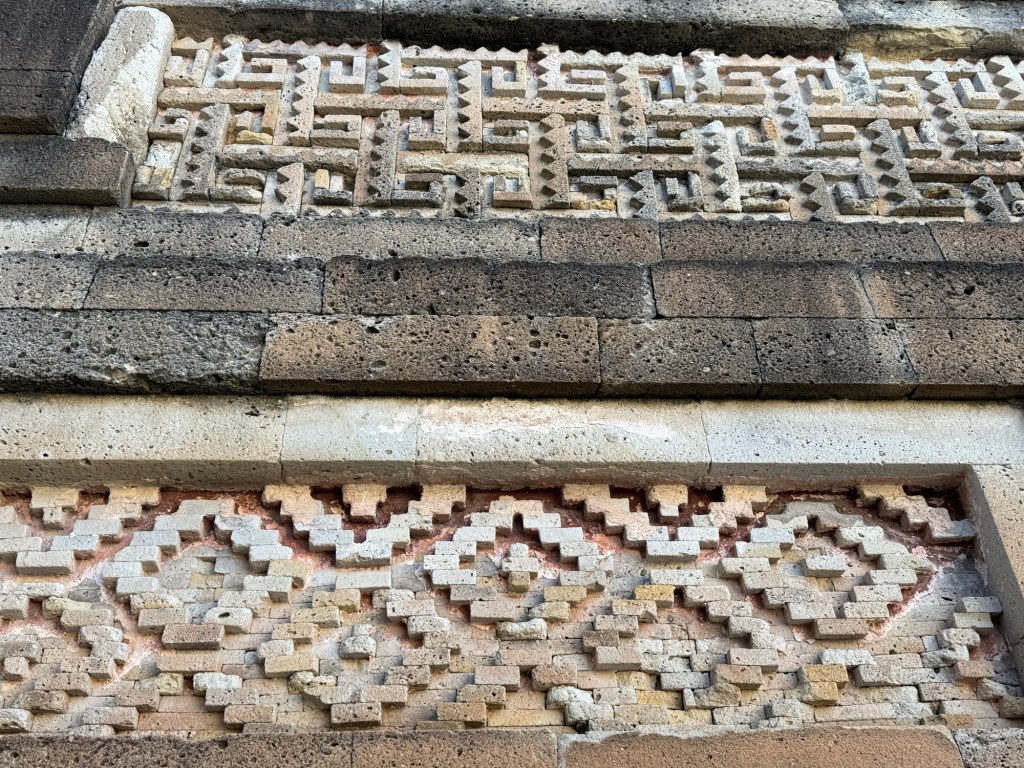
Though no one currently knows the meaning of each pattern, archeologists speculate about some. Pavel didn’t explain these but did talk about some we saw a bit later.

Pavel spoke very quickly and my notes are pretty skimpy, but one archeologist thinks forked tongue square snake may be a water snake symbolizing water.

One pattern may symbolize cardinal points.

The center bottom (hopefully you can click on photo to zoom in if interested) symbolized mountains and wind.

Pavel mentioned their calendar had 30 months with 20 days each.
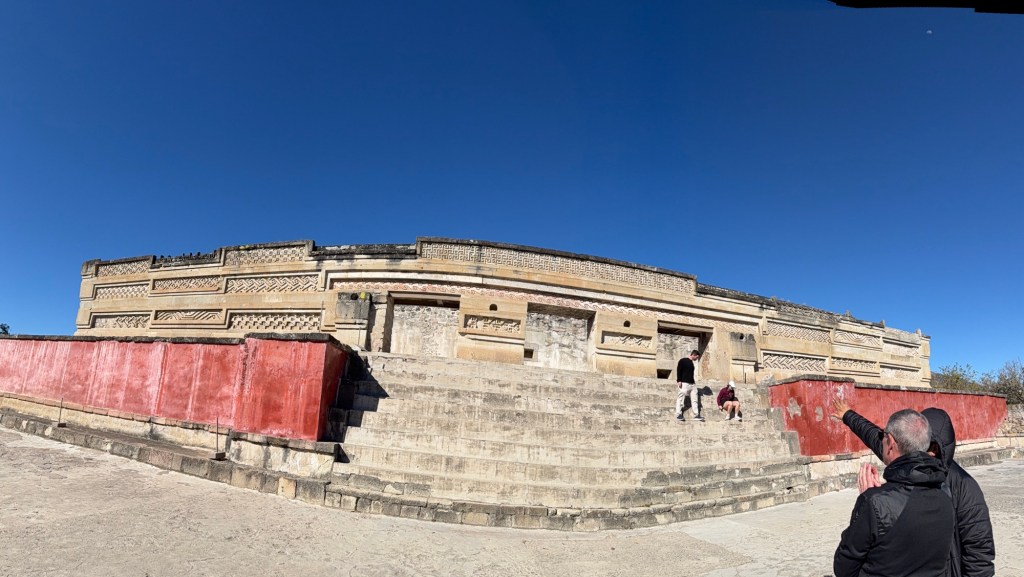
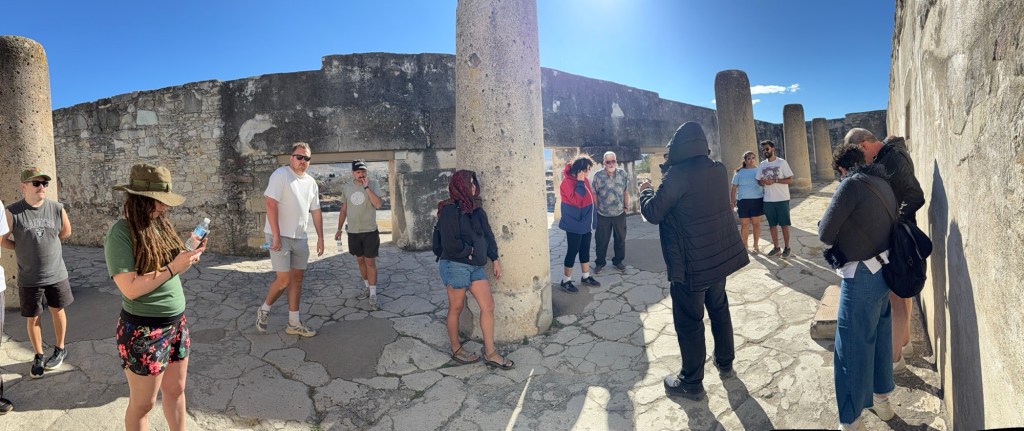
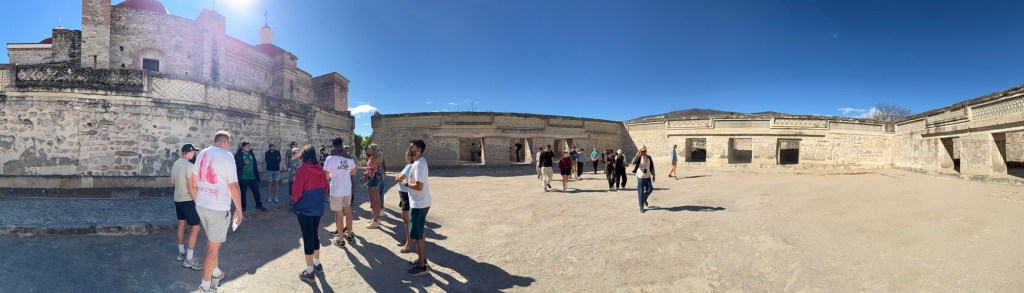
This pano wraps around the square…
It’s amazing how well the stone has held up. Some patterns are carved, while others are mosaics.

Hierve el Agua

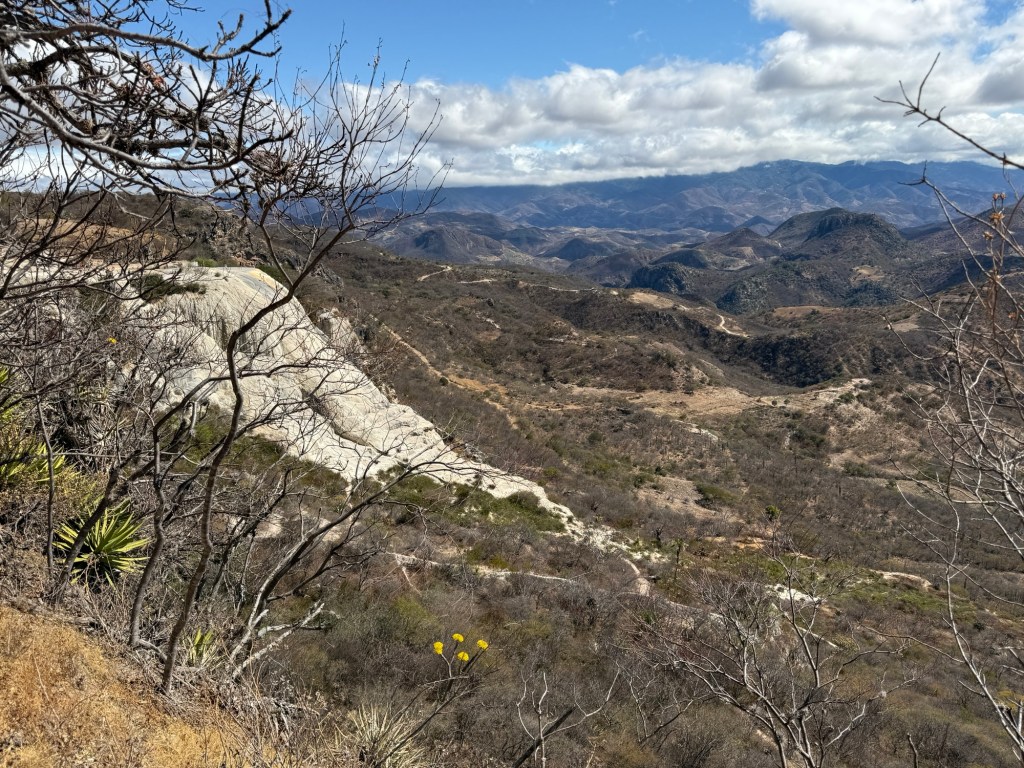
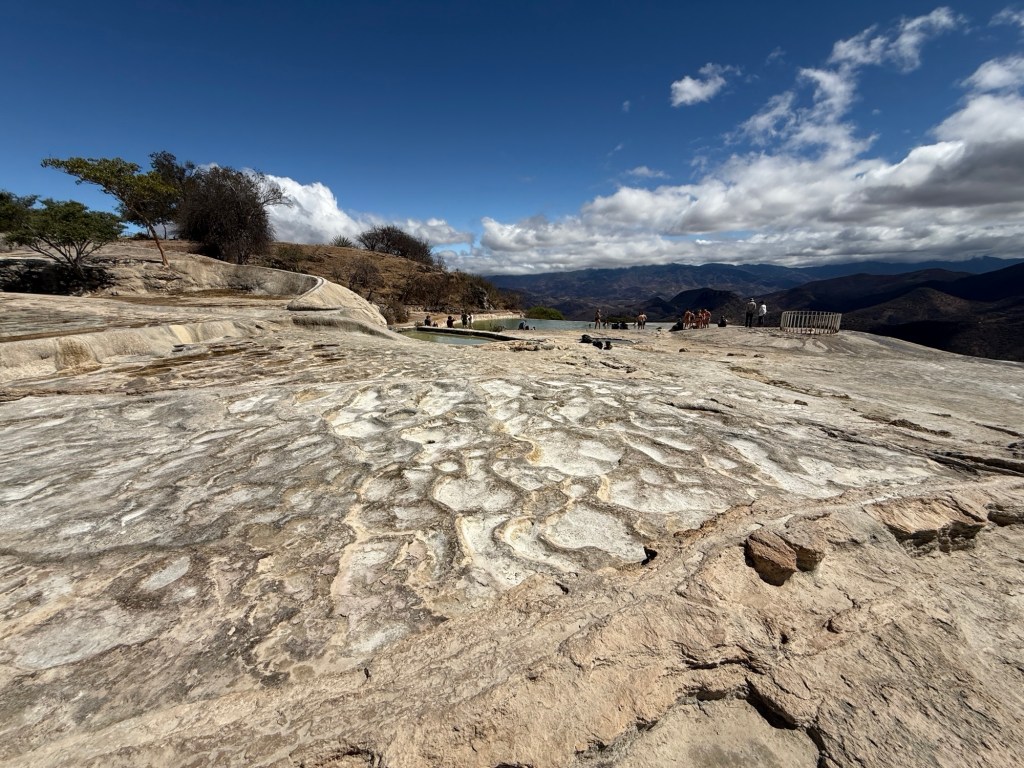
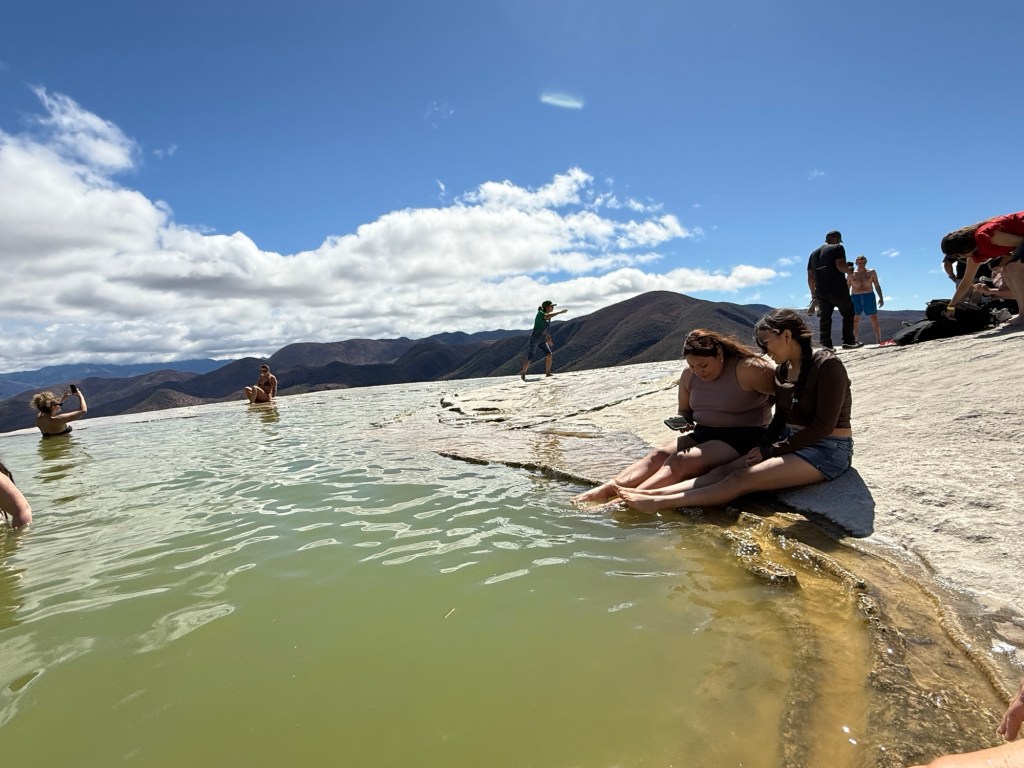
While our guide, Pavel, did a beautiful job explaining sites along the way, he said very little about Hierve el Agua, where usually a local guide would give us a tour. This day all the local guides were working on repairing the trail. It’s a beautiful place a couple hours drive southeast of Oaxaca.

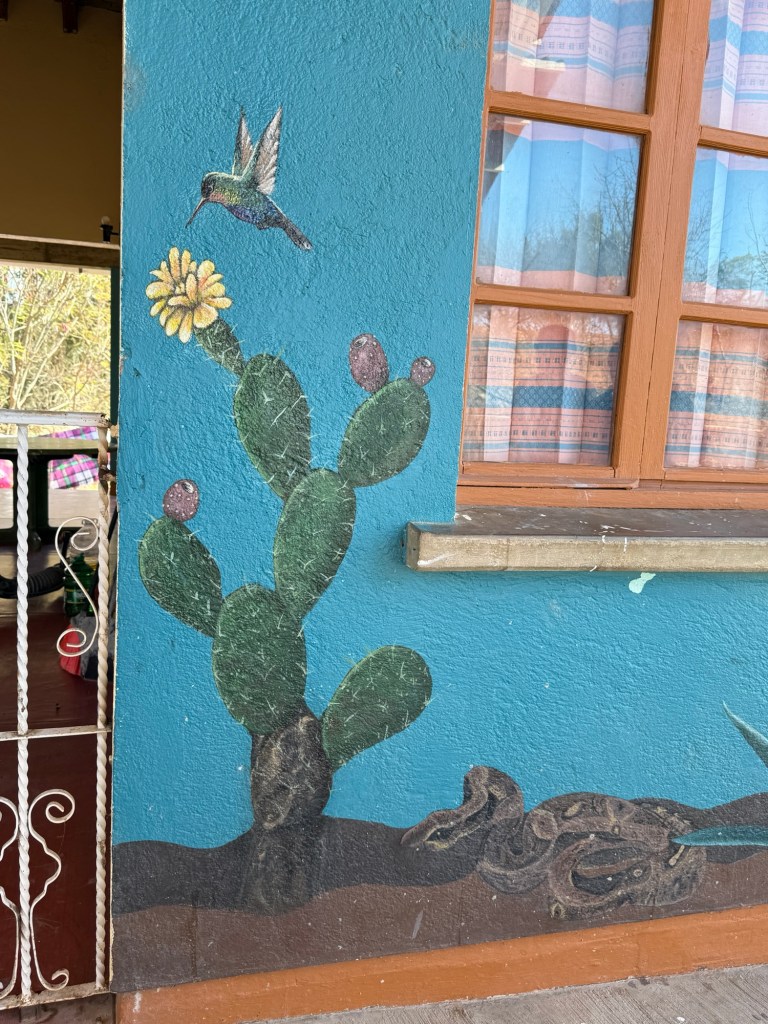
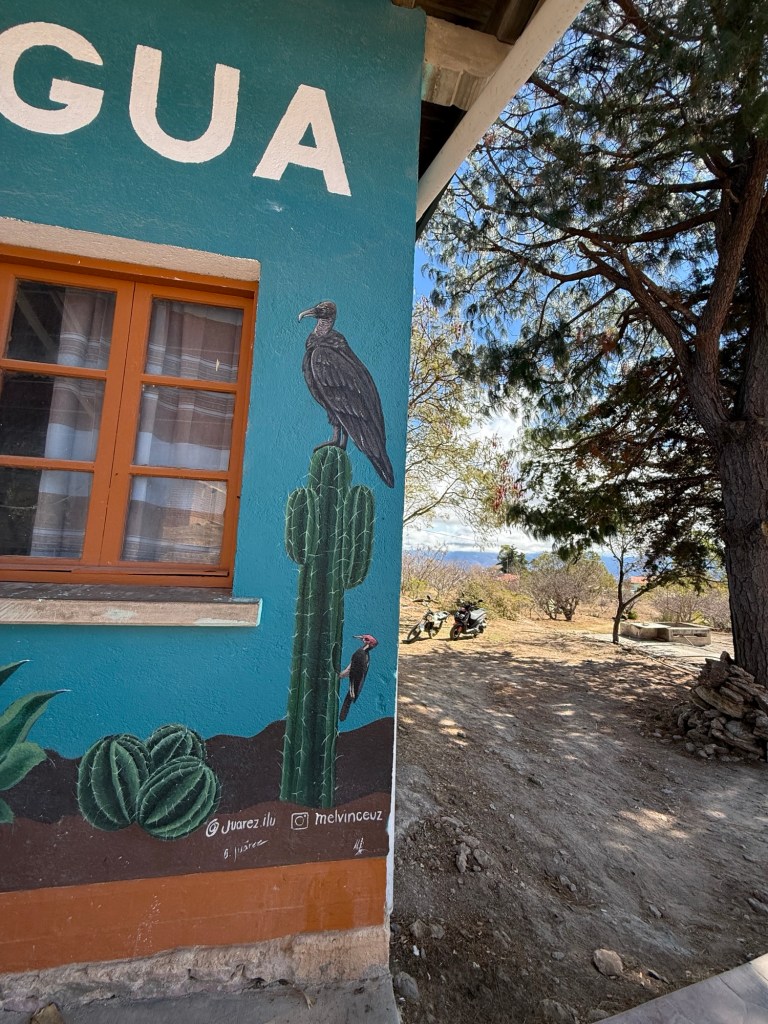
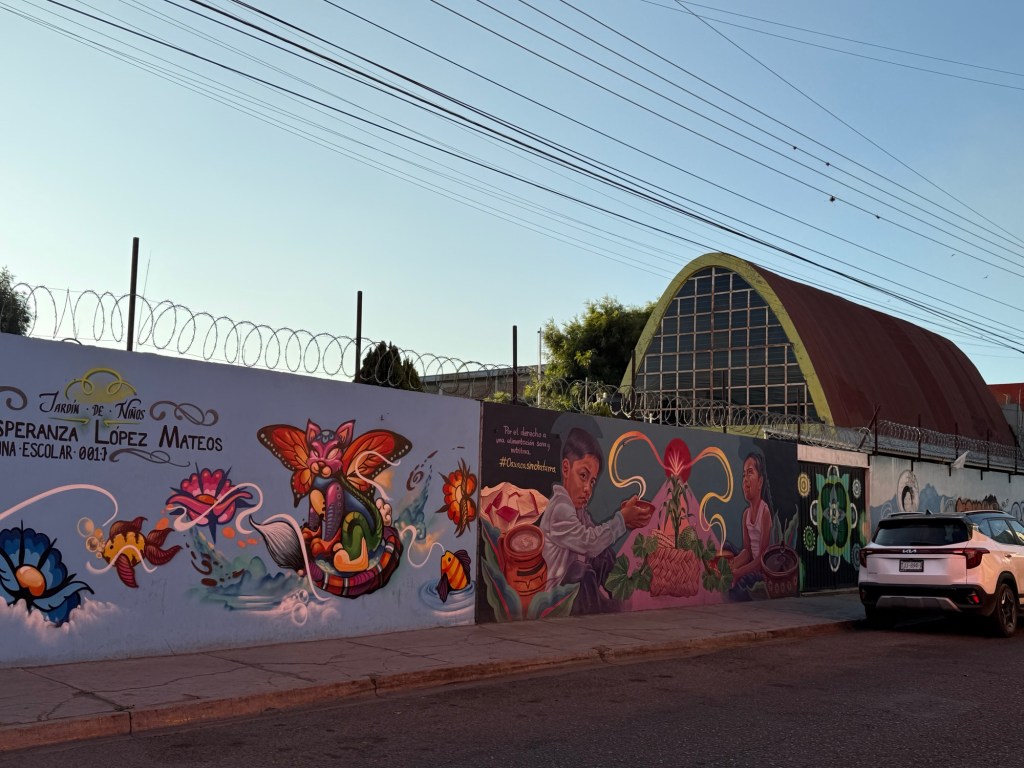
Murals on the entry building.

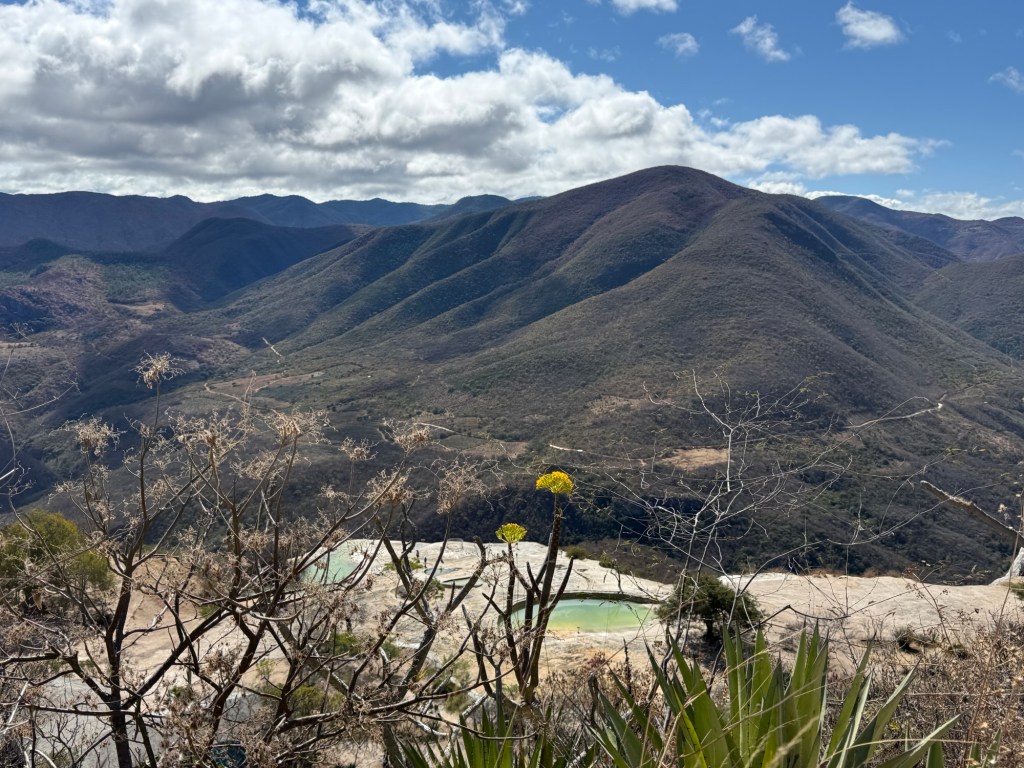
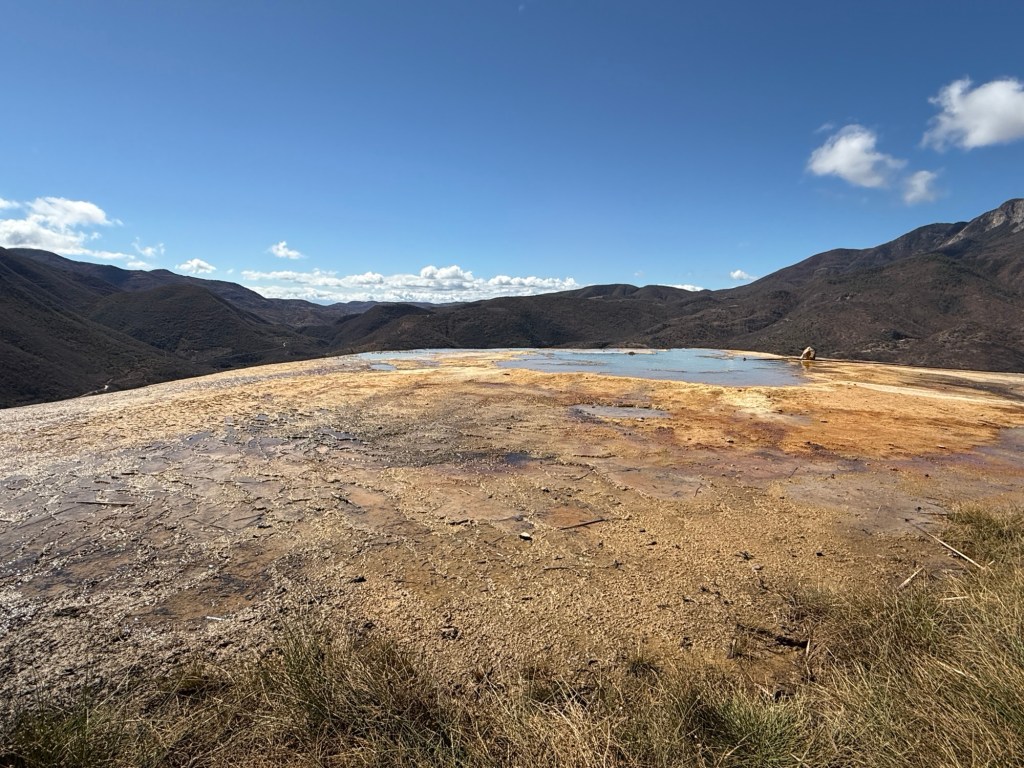
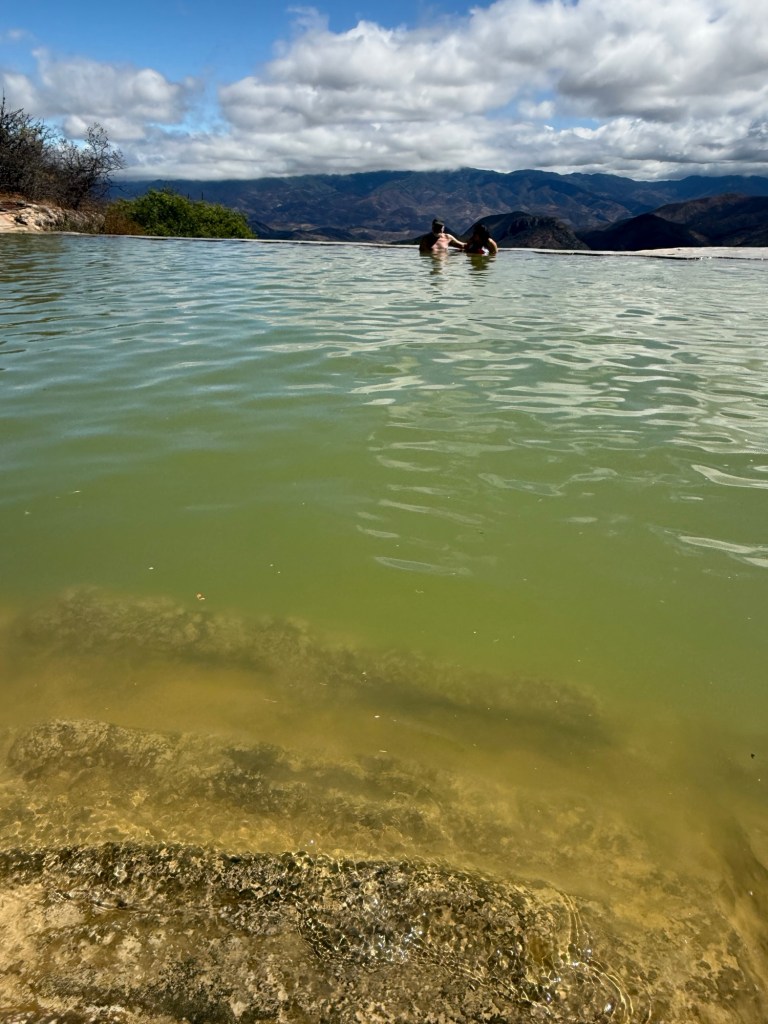
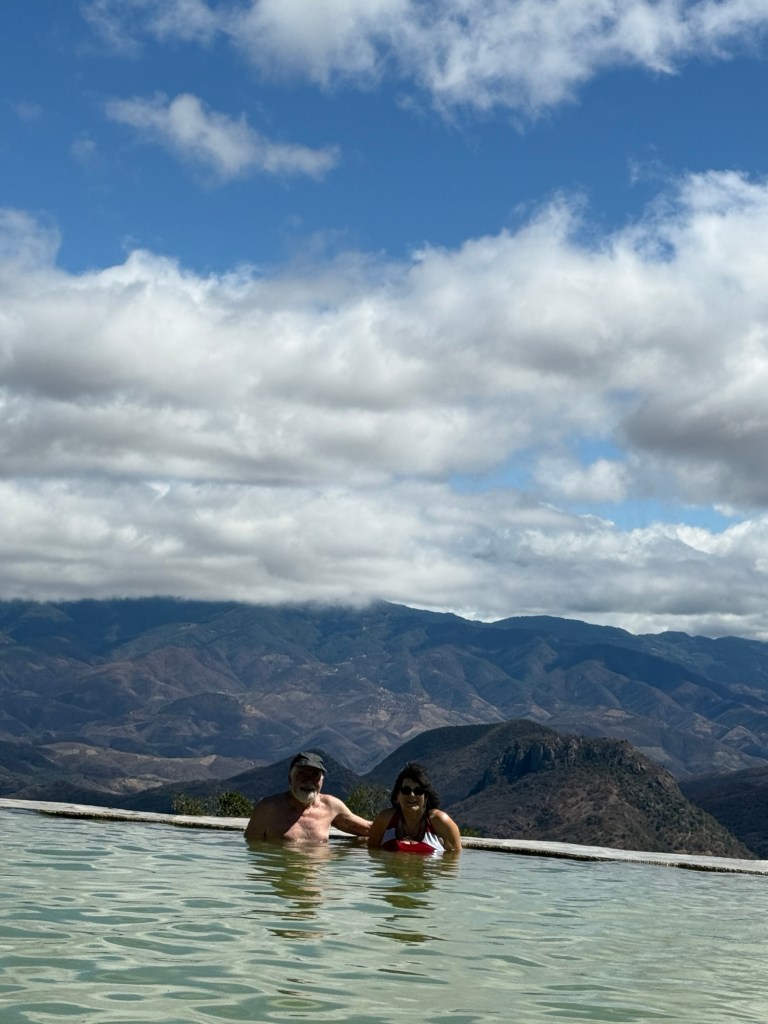
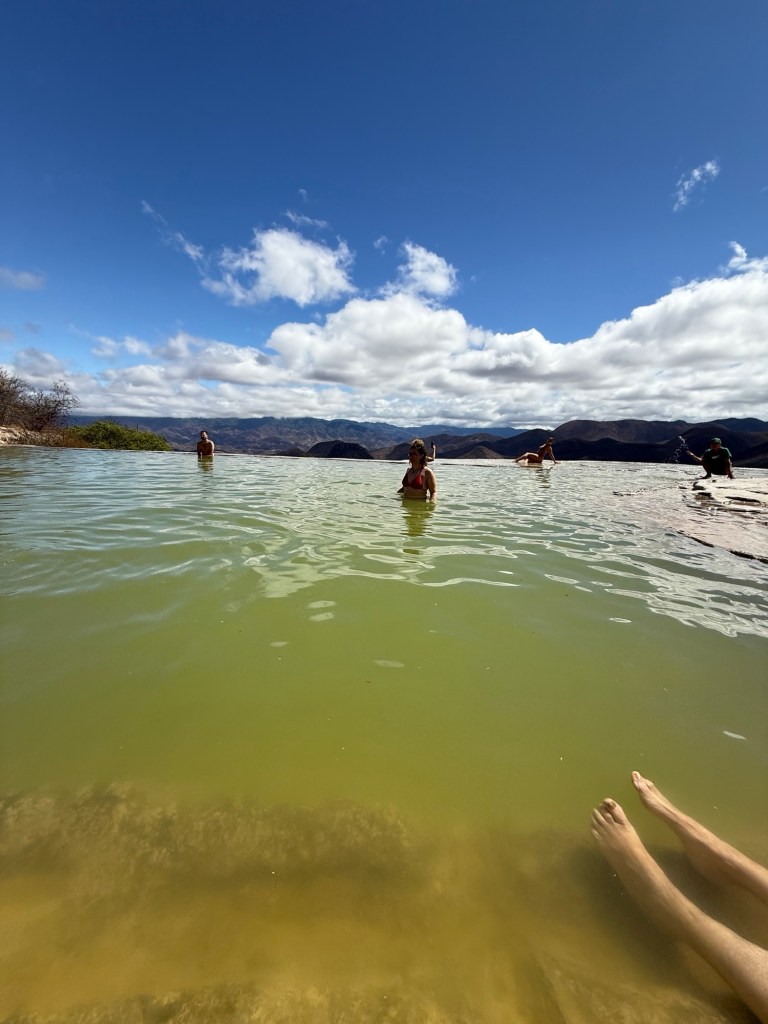
One of the pools at Hierve el Agua. we saw a roadrunner shortly afterward and if any of my camera photos came out, I’ll add that once home. I also saw my first stingless bees here and if any of those photos are nice, will also add. In Mexico, Central America, and South America, there are native bees that make honey. Though they don’t sting, if you disturb their nests, they bite en masse. The honey is considered very nutritious and medicinal.

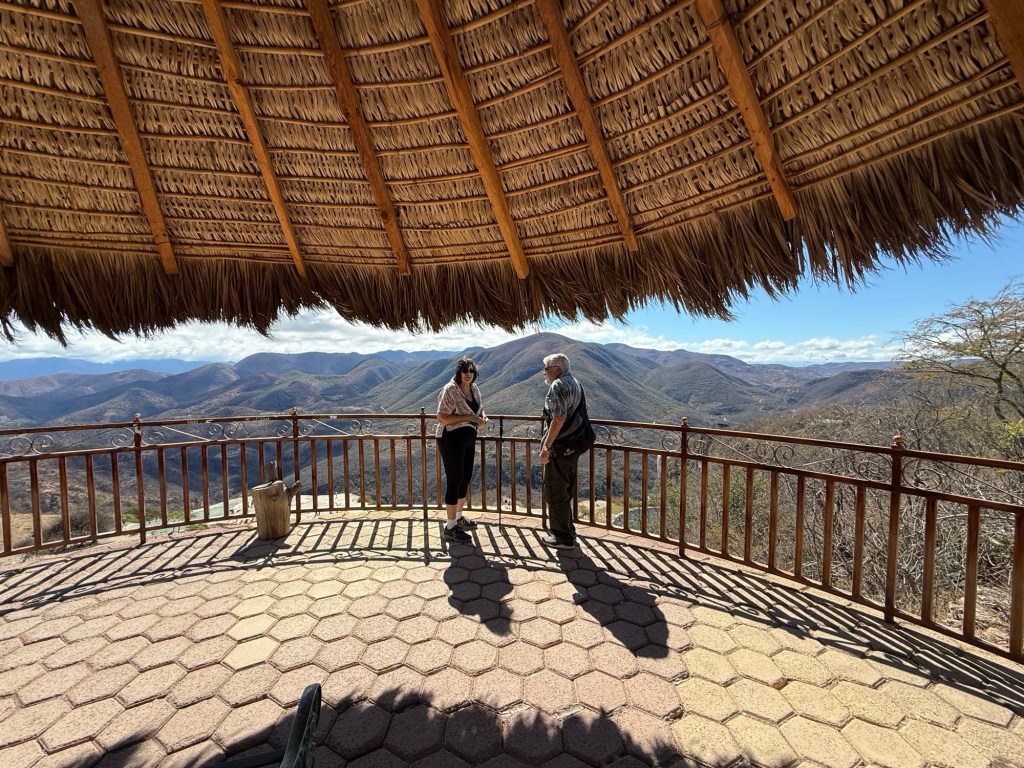
Beautiful views in every direction.
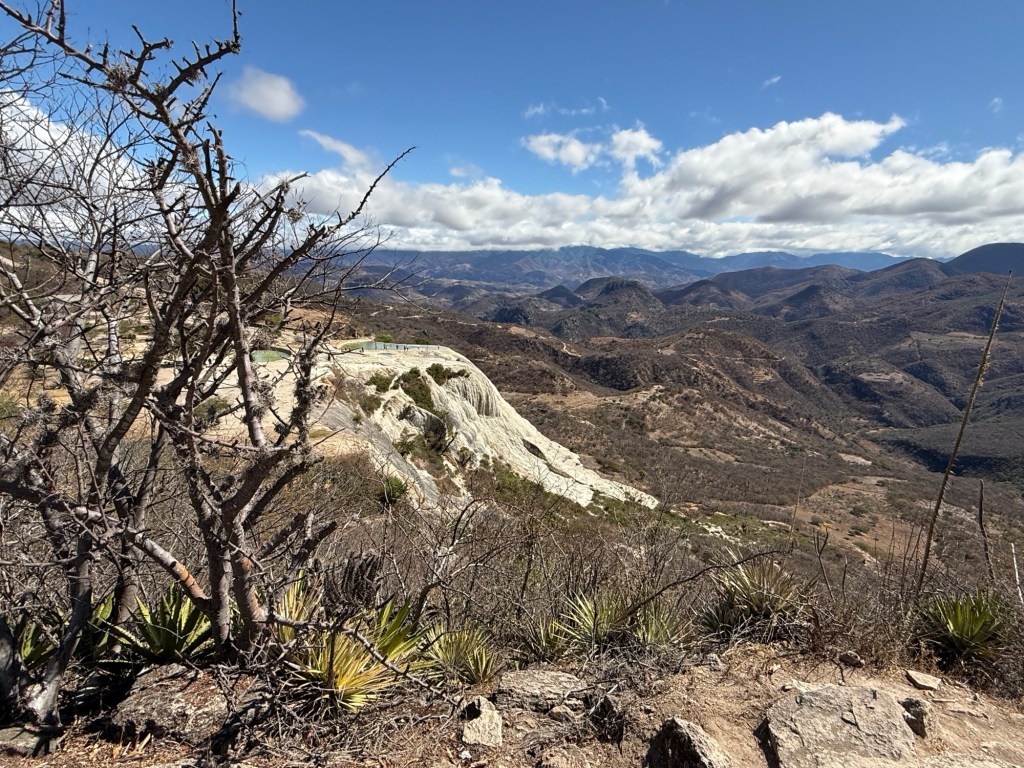
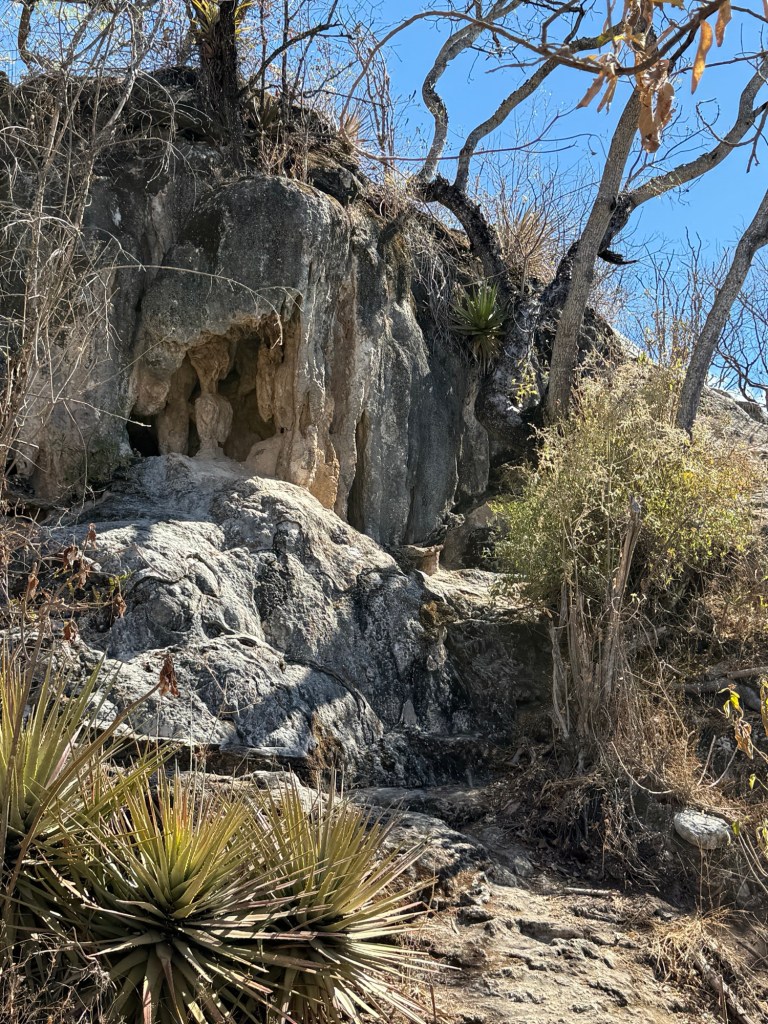
Mineral deposits from the water.
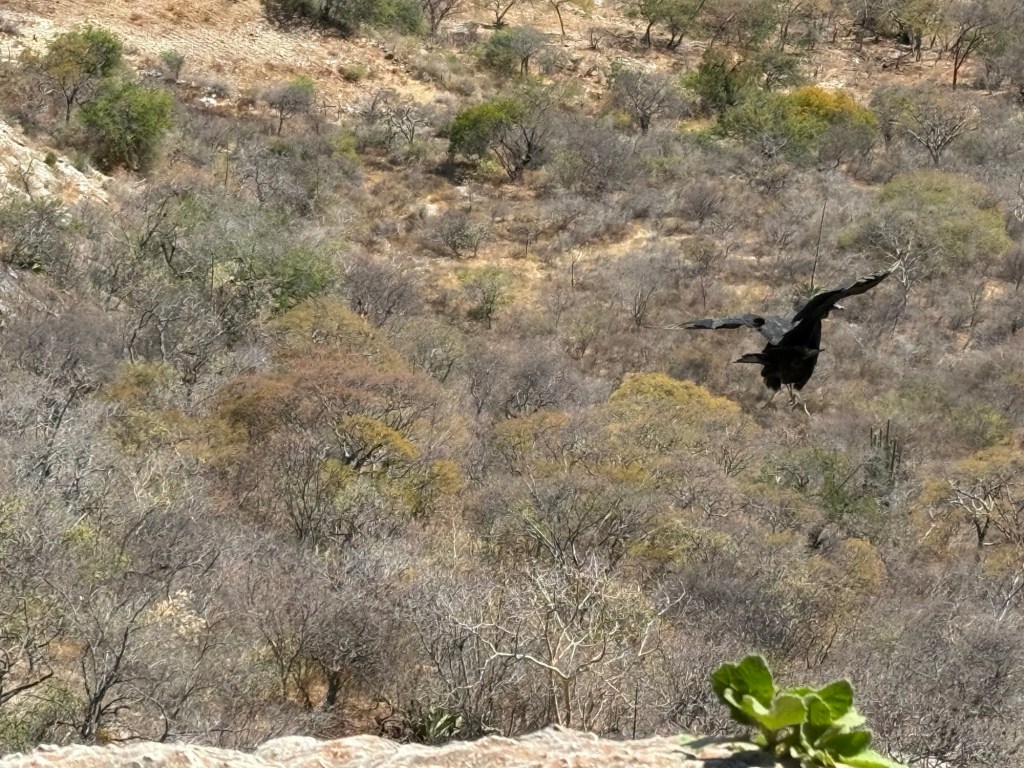
Black vultures soaring.
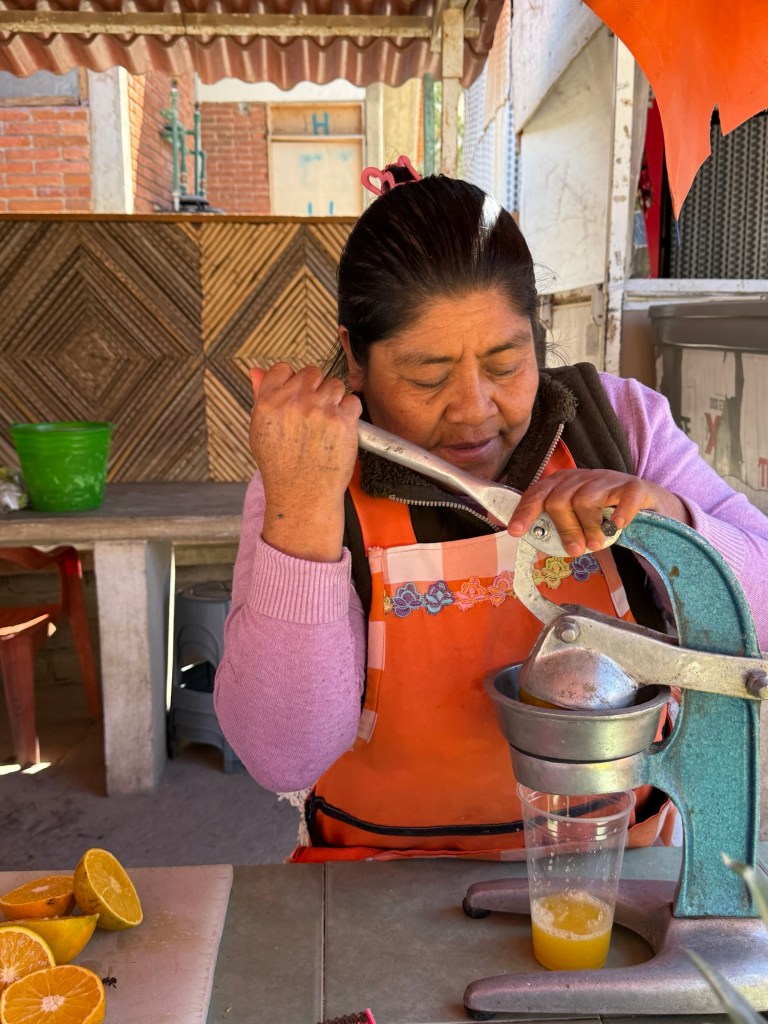
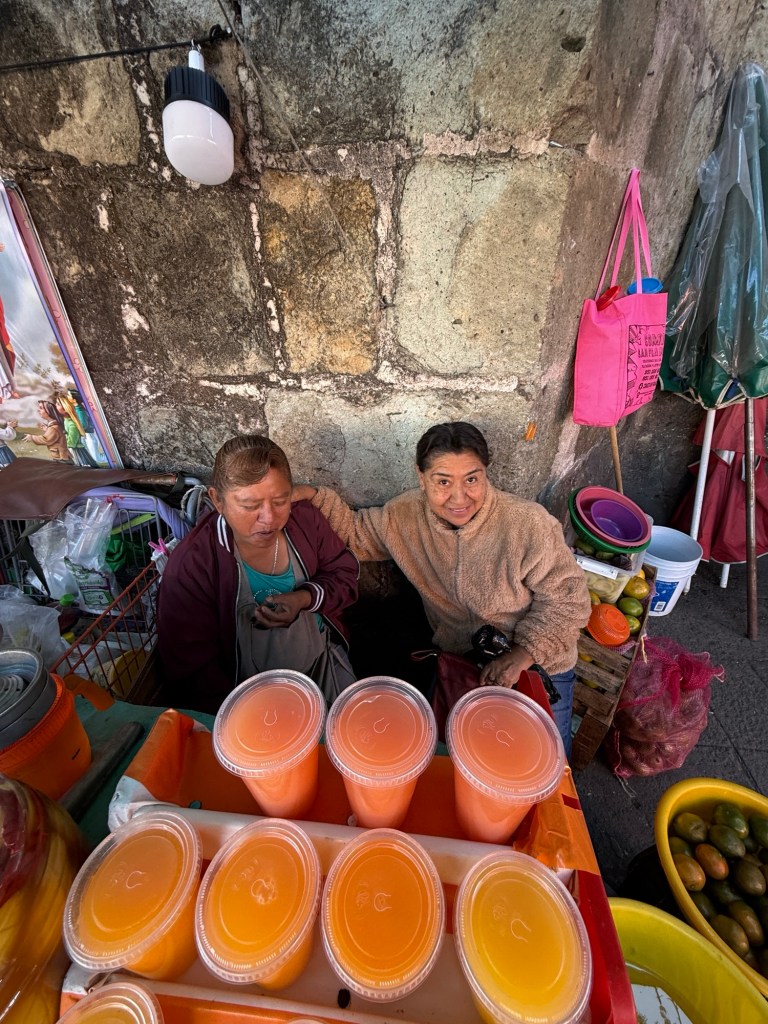
Fresh orange juice is a huge treat for me in Mexico and Guatemala. Dave noted the expanse of shops vs relatively small number of tourists. The site is owned by the town (not a national preserve) so at least the entry fees support the community.

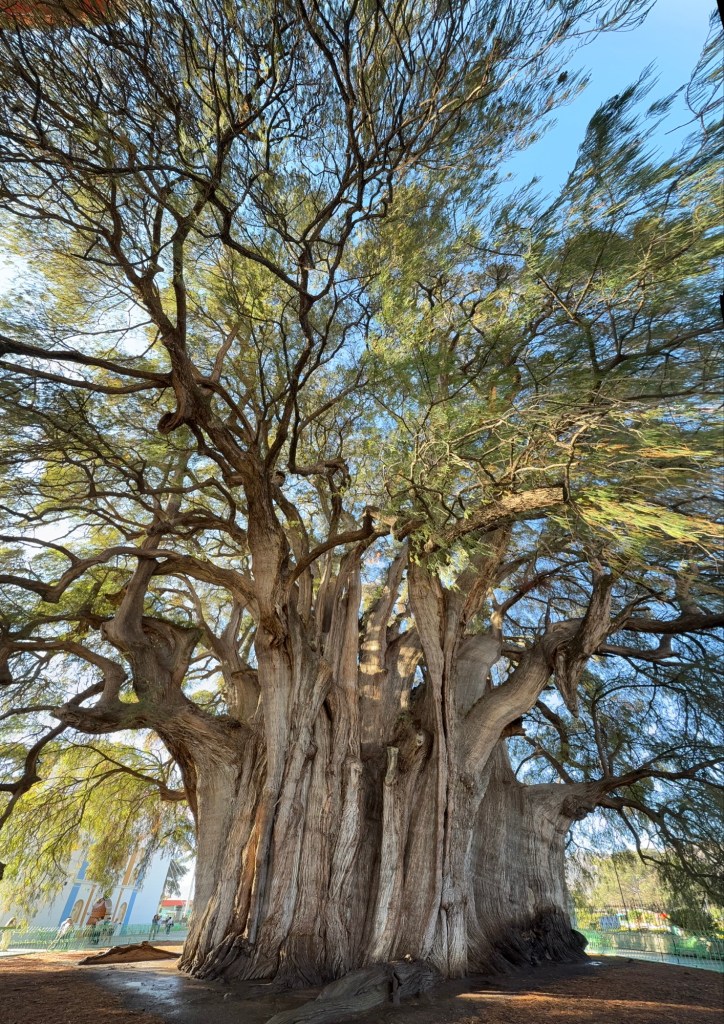
The widest tree in the world

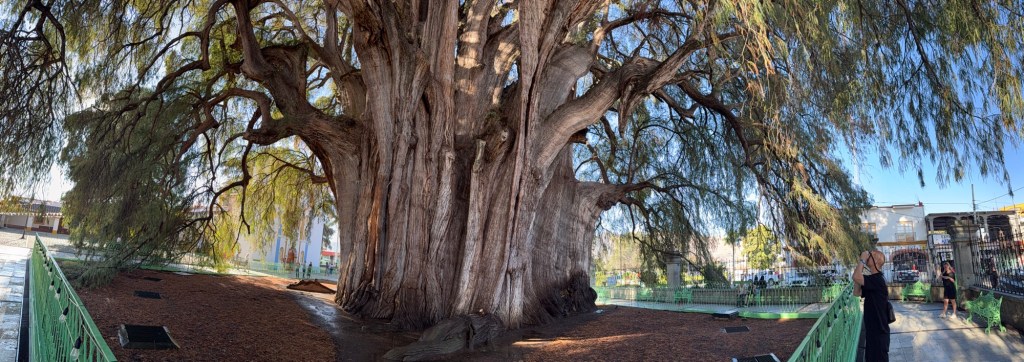
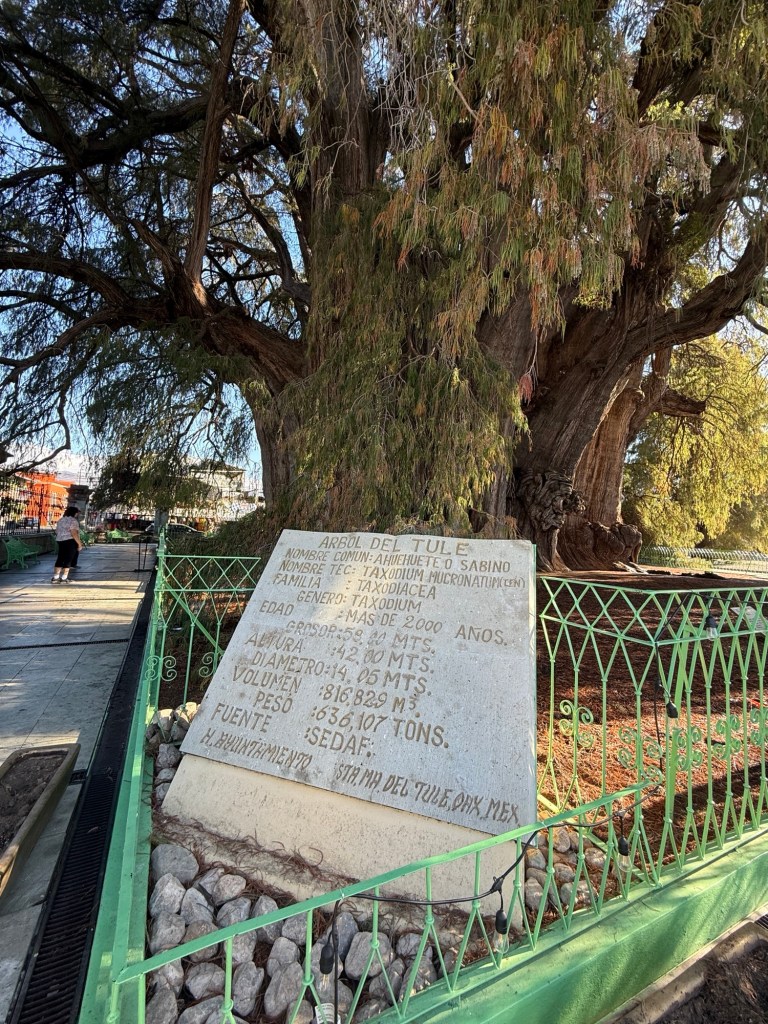
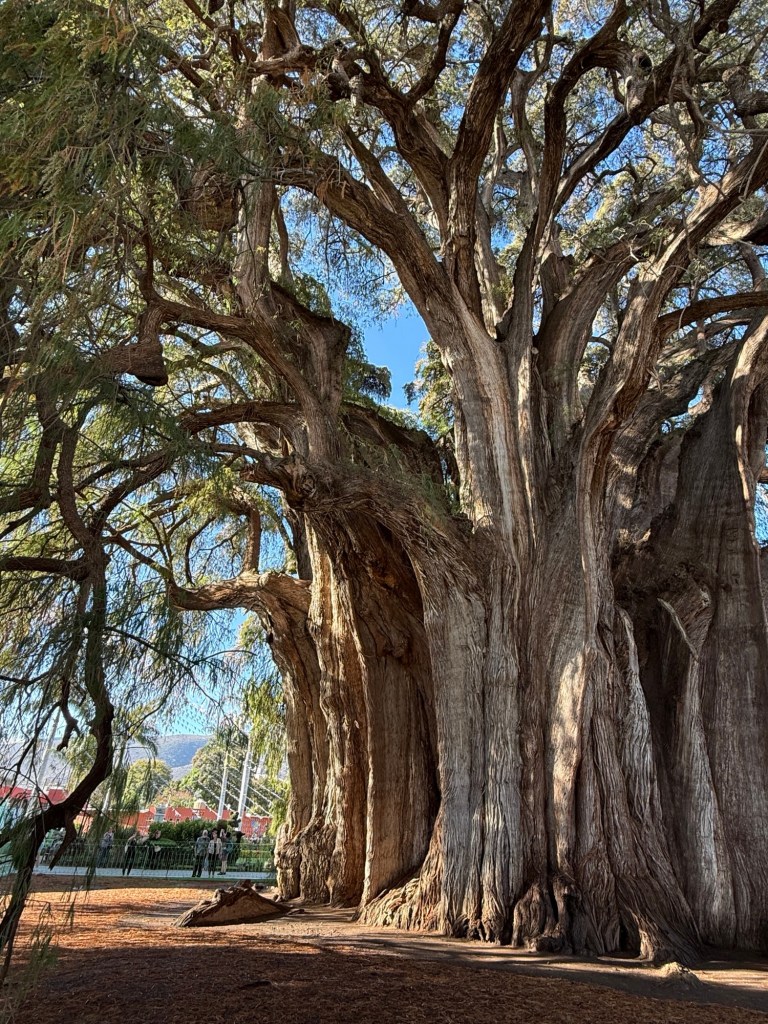
I took a lot of photos and the rest are on Flickr. If you’re interested I can share the link to all the trip photos (I’ll organize them a bit once home and add photos from my camera). This magnificent tree is a kind of cypress more that 2000 years old in Santa Maria del Tule. An ahuahuete (Taxodium mucronatum), Nahauatl for “wise one in water,” a sacred tree. We actually have cypress in North Carolina that are more than 2000 years old, too, but they are much skinnier and many have had their tops blown out in hurricanes. Tule is the word for cattails that used to be abundant there. The nearby garden and what we cold see of the town were very well tended.

It has a circumstance of 137.8’ (42 m) and a diameter of 46.1’ (14 m).
The vertical panorama distorts a bit…
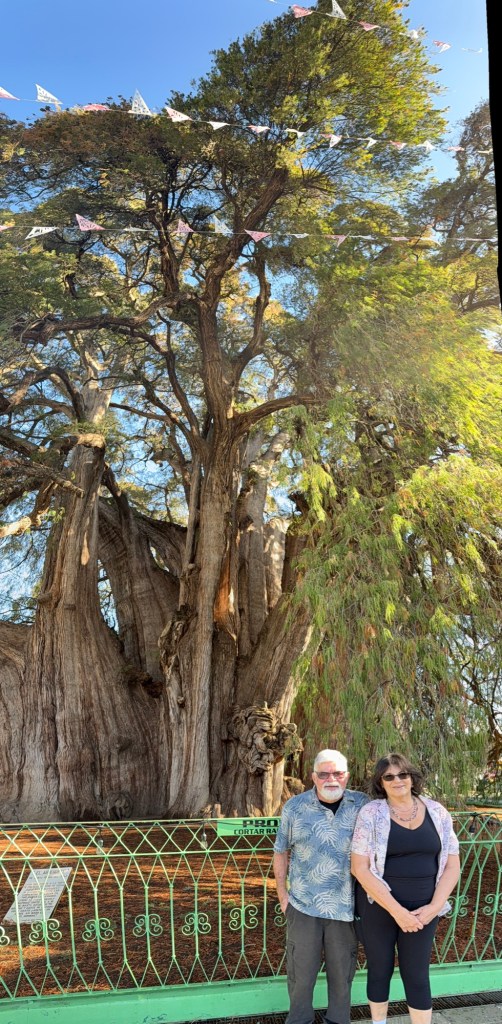
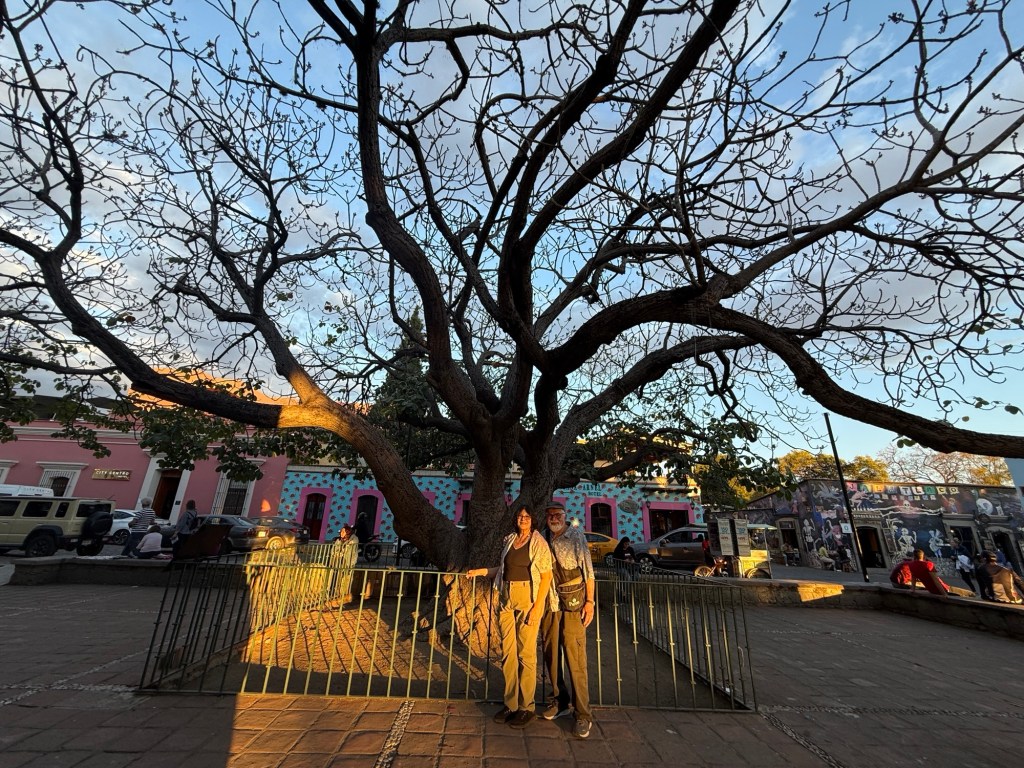
That’s Dave and Anita to the left of the tree in the background. Dave suggested this perspective to give a better sense of how enormous the tree is.
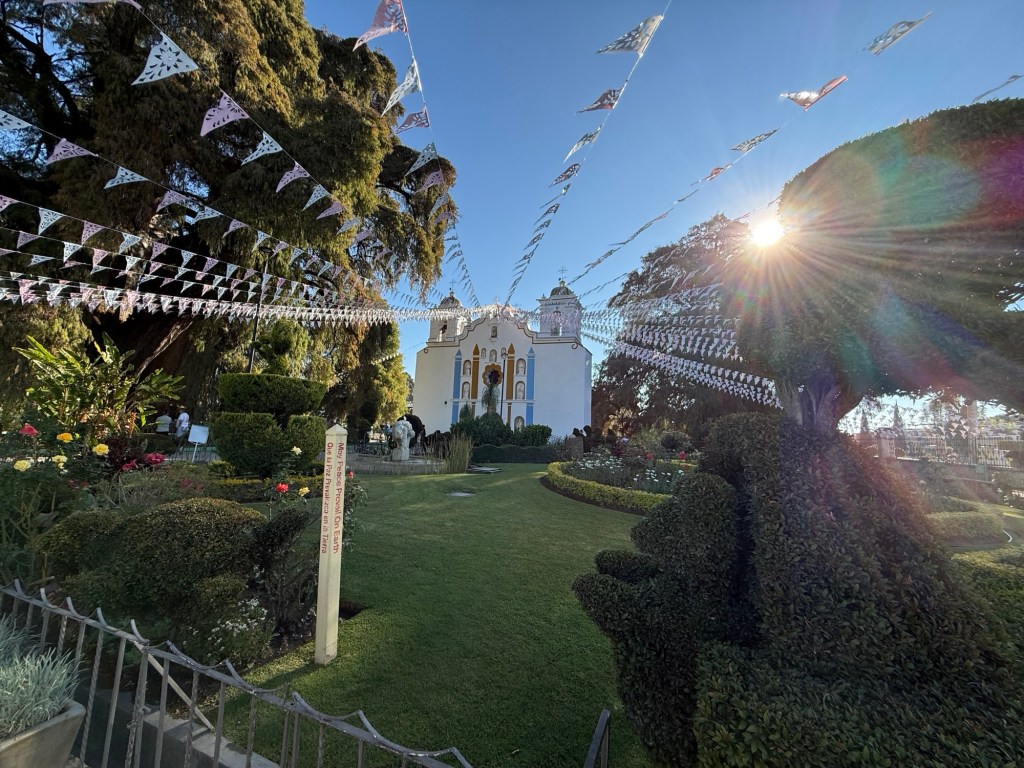
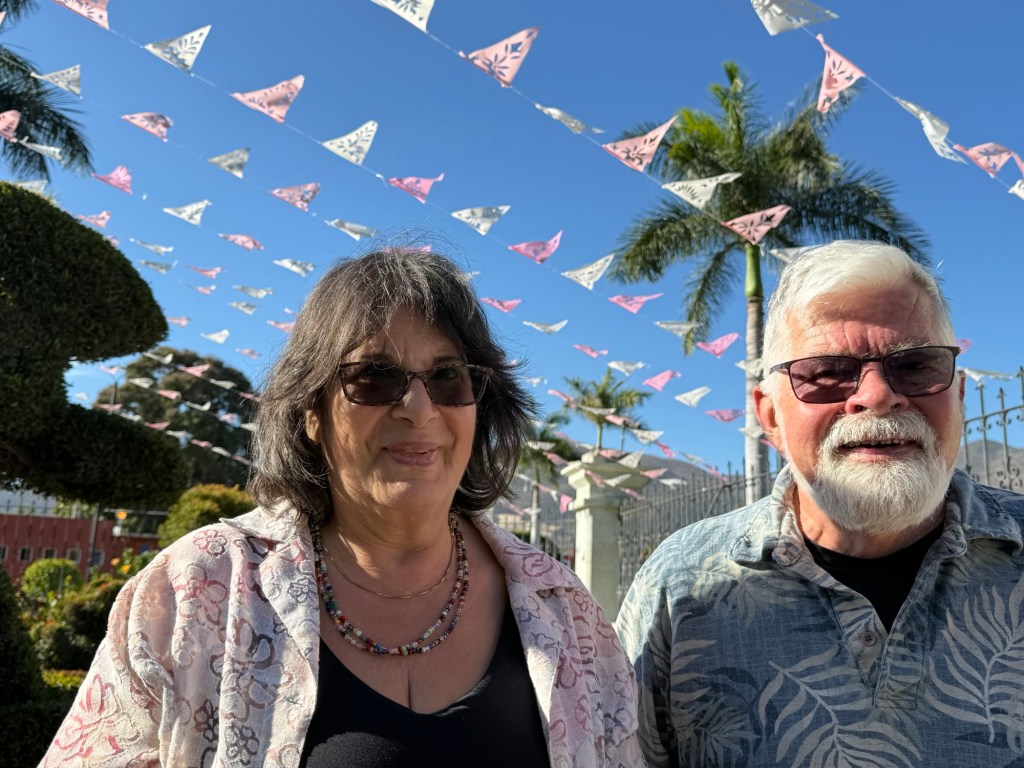
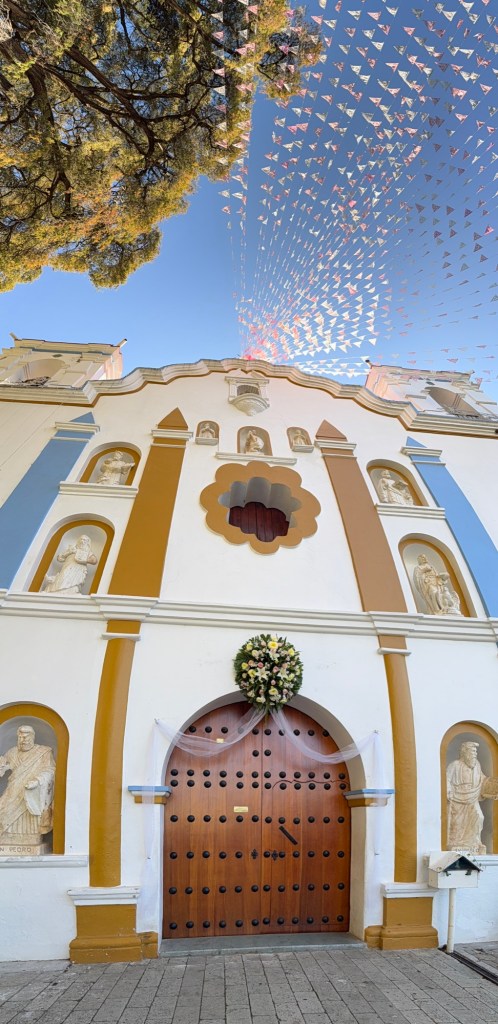
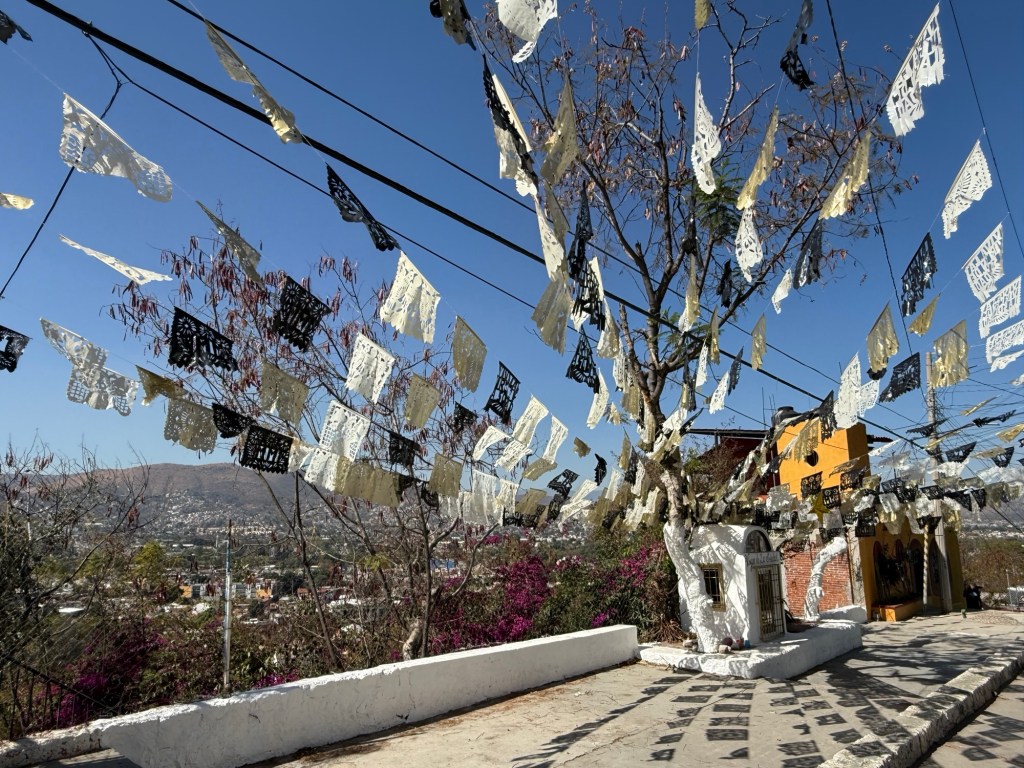
Again, the vertical panorama distorts a bit, but I hope gives a sense of how beautiful the church is. I loved the fresh flowers above the door. In the past, the streamers would have been paper and much more ephemeral.
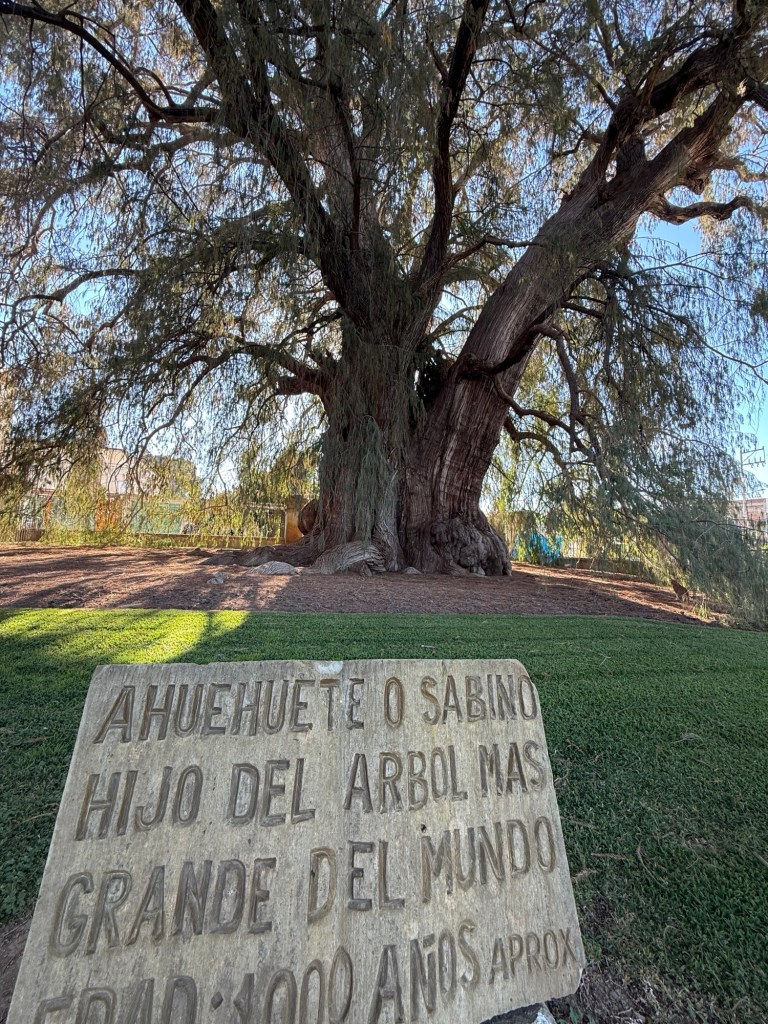
The 1000 year old daughter tree nearby.
Exercise class nearby. They invited us to join, but we only had a few moments to visit the tree.
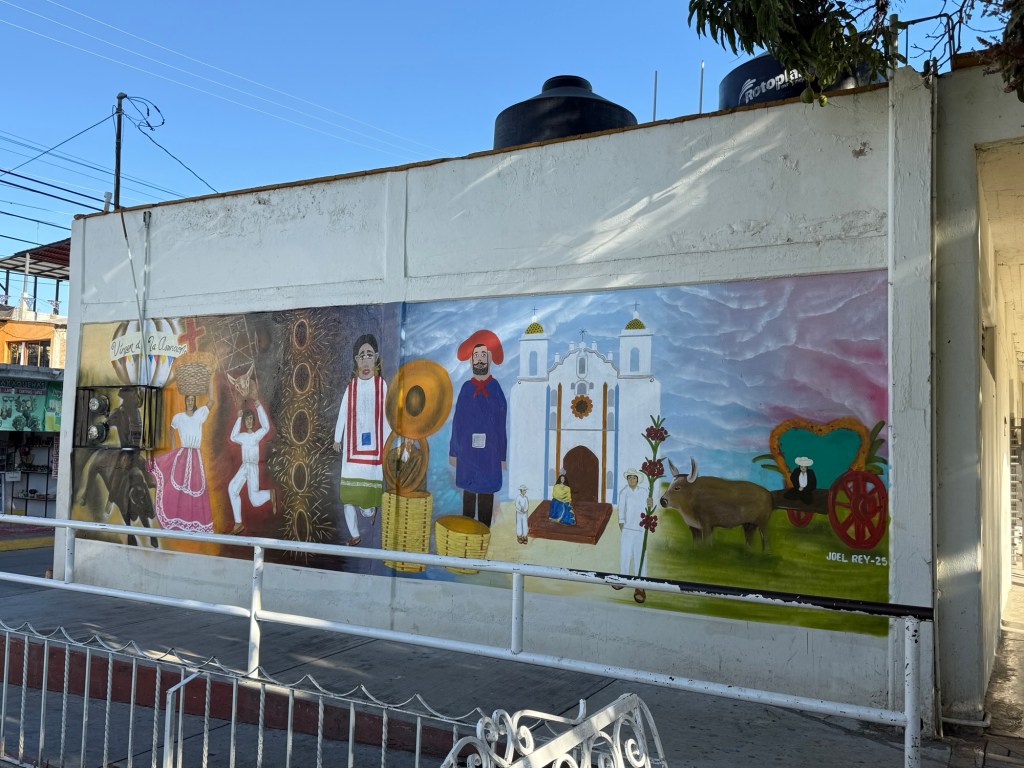
A beautiful representation of Tule.

On the way to a tour

Took a new route to join a tour to a beautiful mountain oasis Hierve el Agua and other places, so will share the day in pieces. I tried a multi photo upload but it cuts the image. I think you can click on the image to see it in full, but for these probably fine as is.

A saint, graphic arts, and some dancing

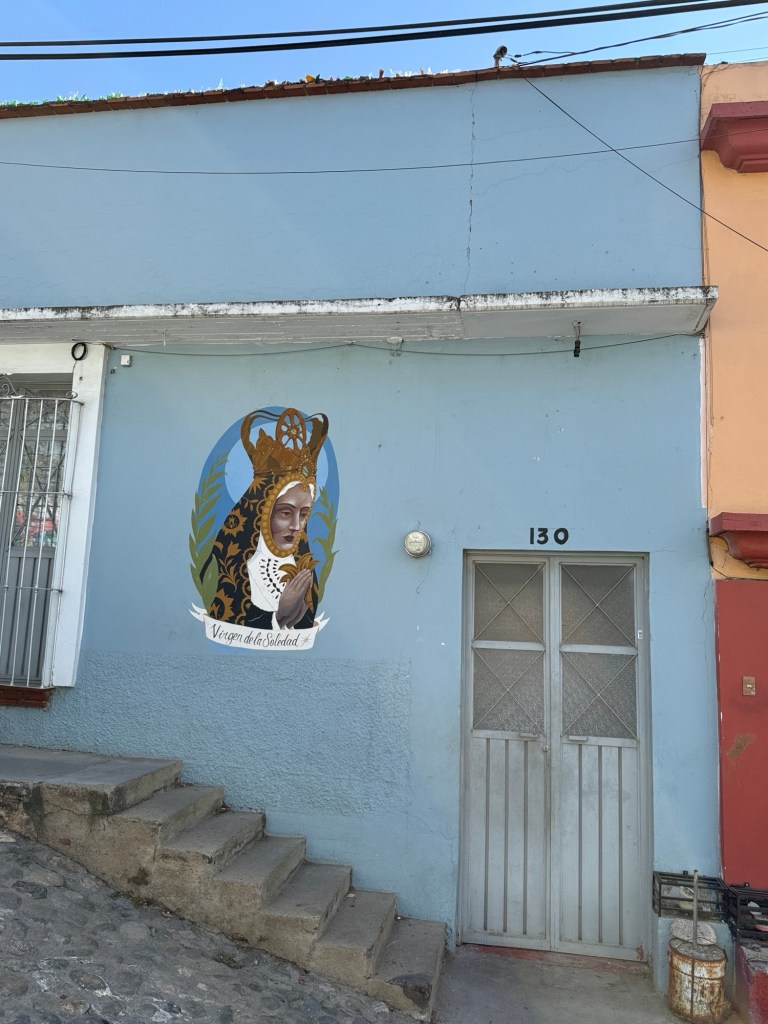
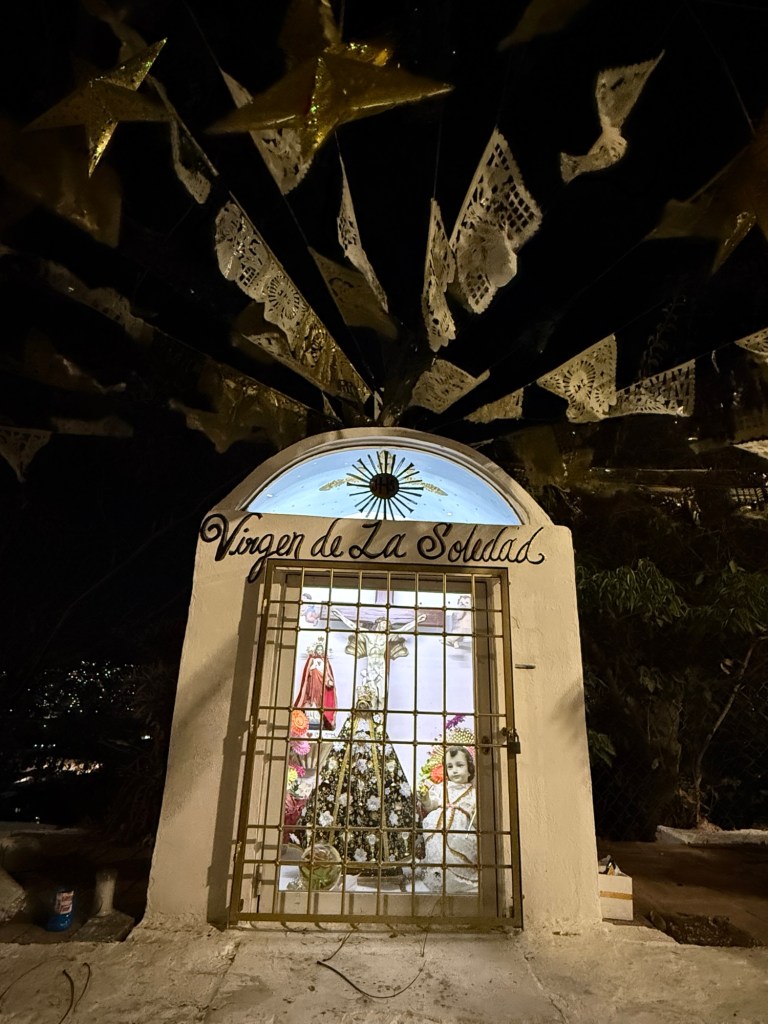
My path took me by Our Lady (or the Virgin) of Solitude multiple times today. She’s Oaxaca’s patron saint, protecting against epidemics and earthquakes, depicted with a pale face and black velvet robe with gold brocade and wearing a gold crown with diamonds.

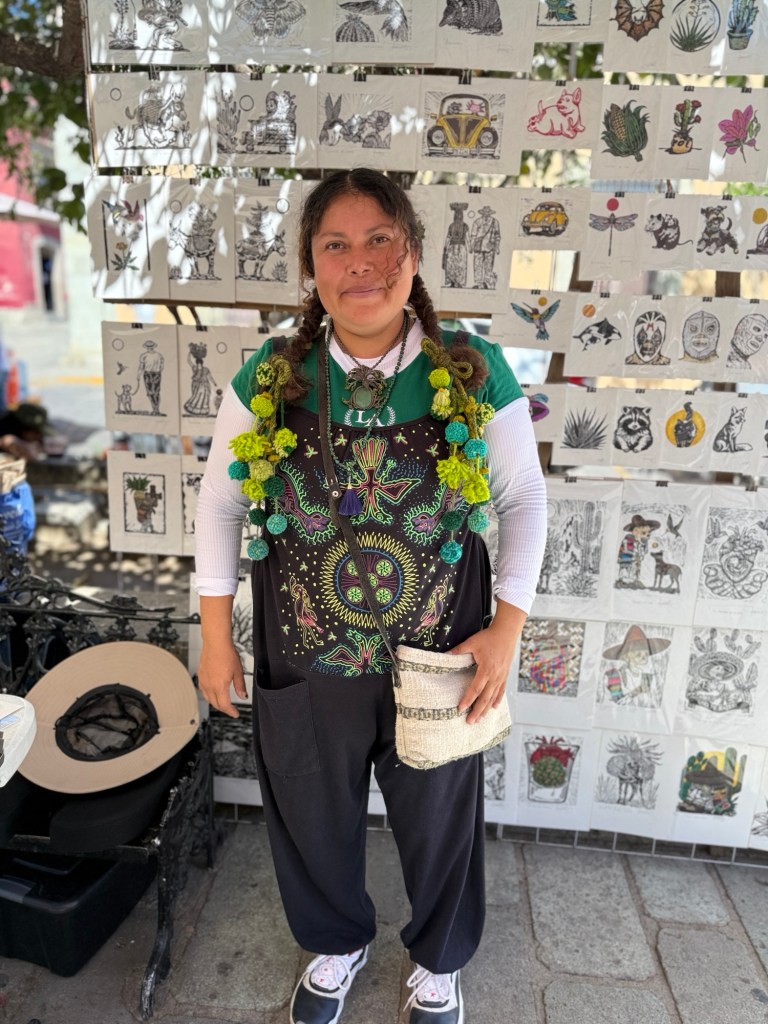
Dave was on a mission to visit an art market we learned was only open Friday, Saturday, and Sunday and Nella, pictured above, was our favorite artist there (Dave quickly pointed out Anita is his favorite artist). Nella explained that how one wears bangles and braids signals if you’re single (both behind), engaged (one in front) or married (both in front).

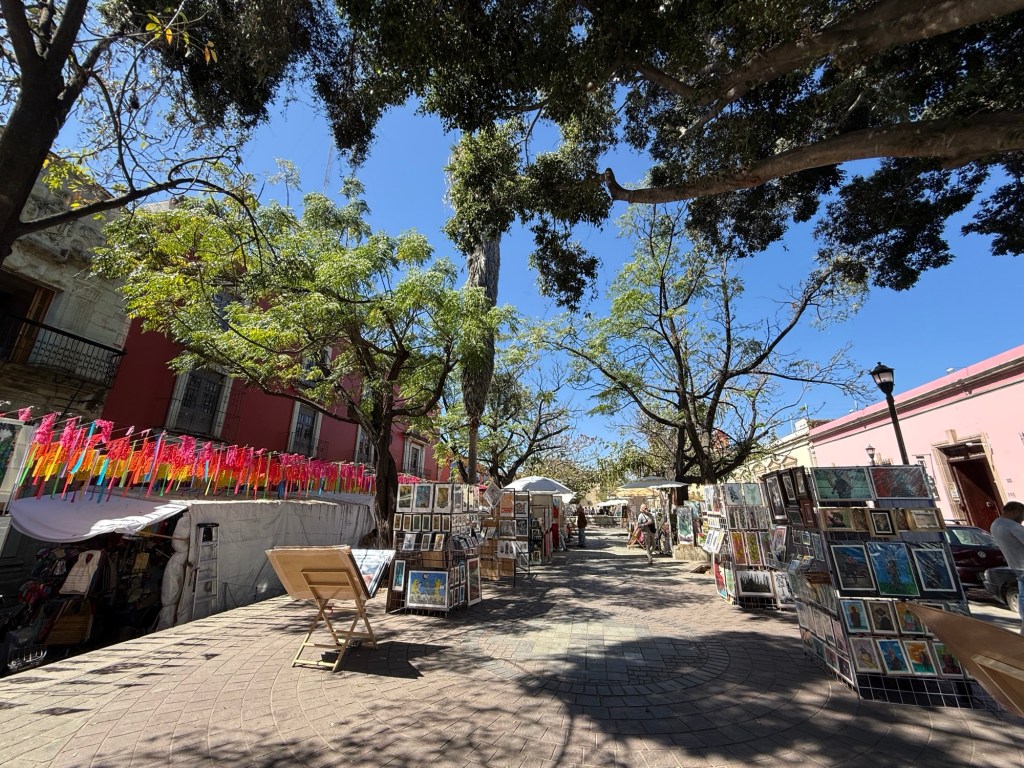
The art market
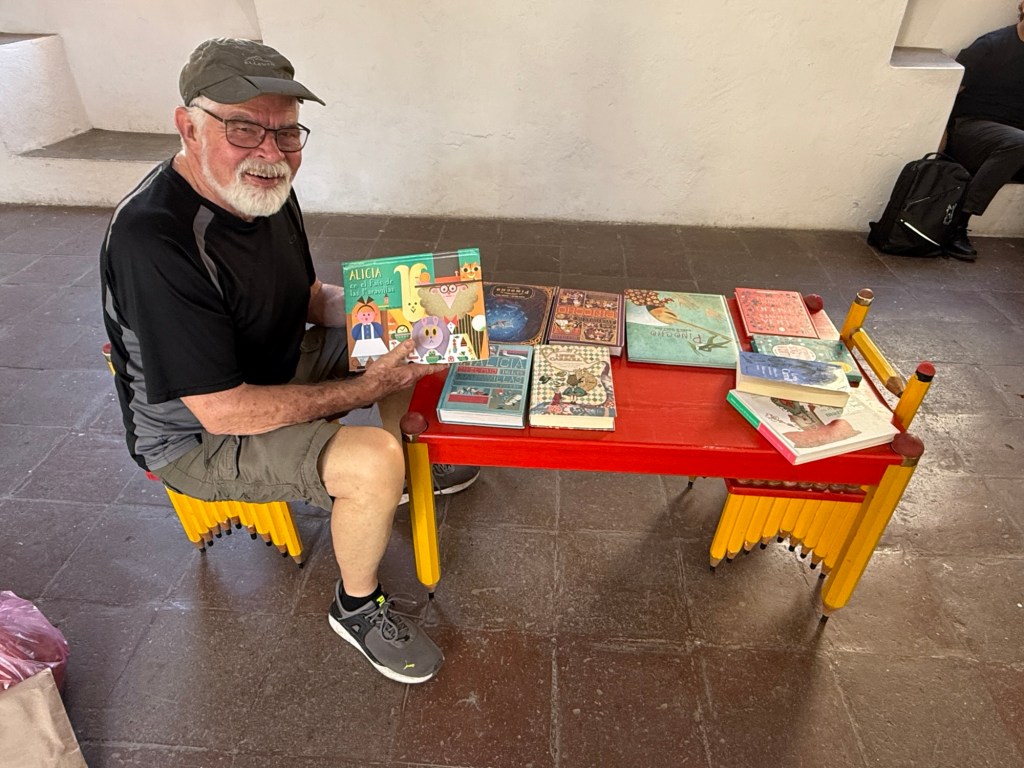
Dave showcasing the charming children’s table and chairs at the graphic arts center.
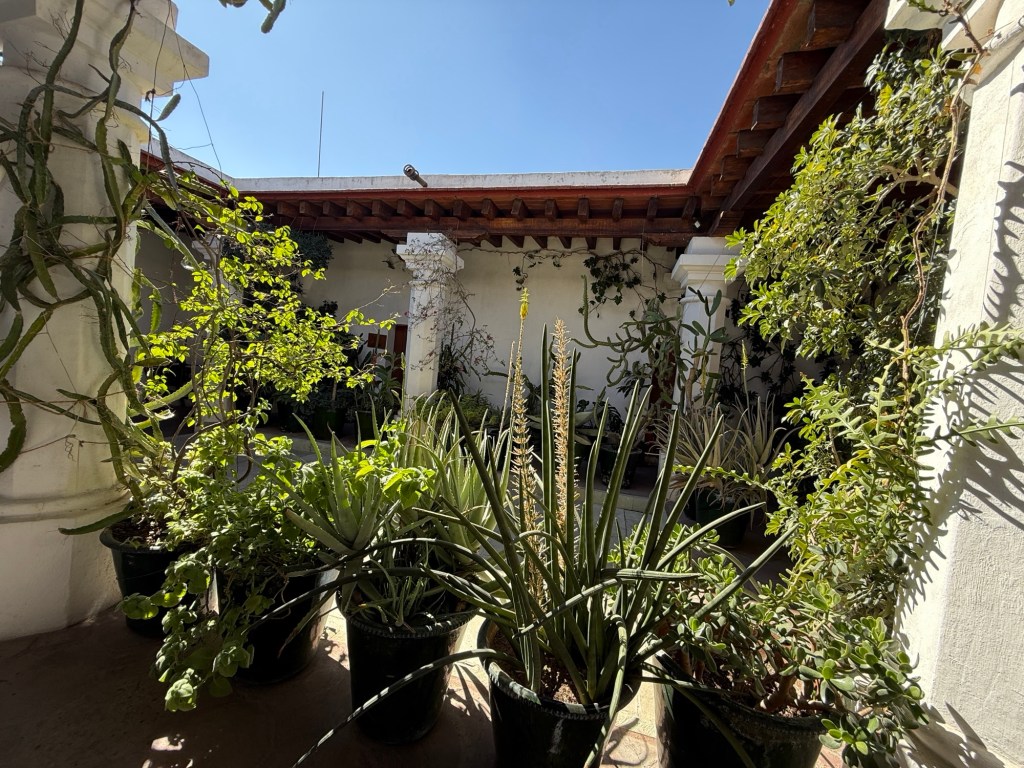
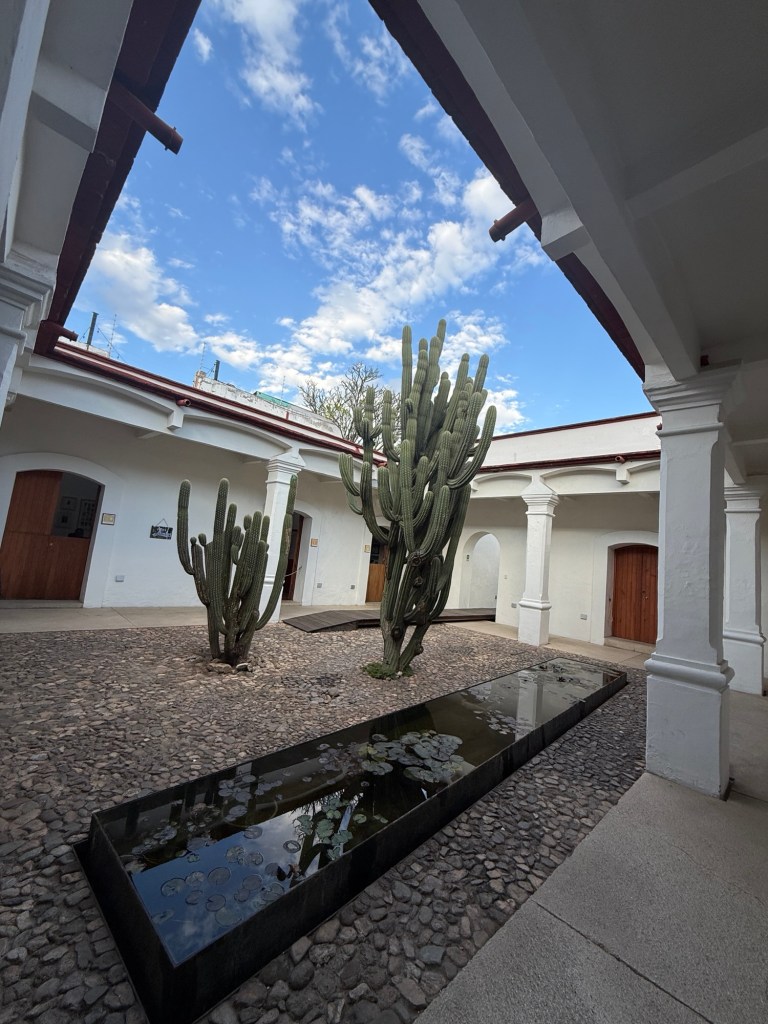
Lovely courtyard at the graphic arts center
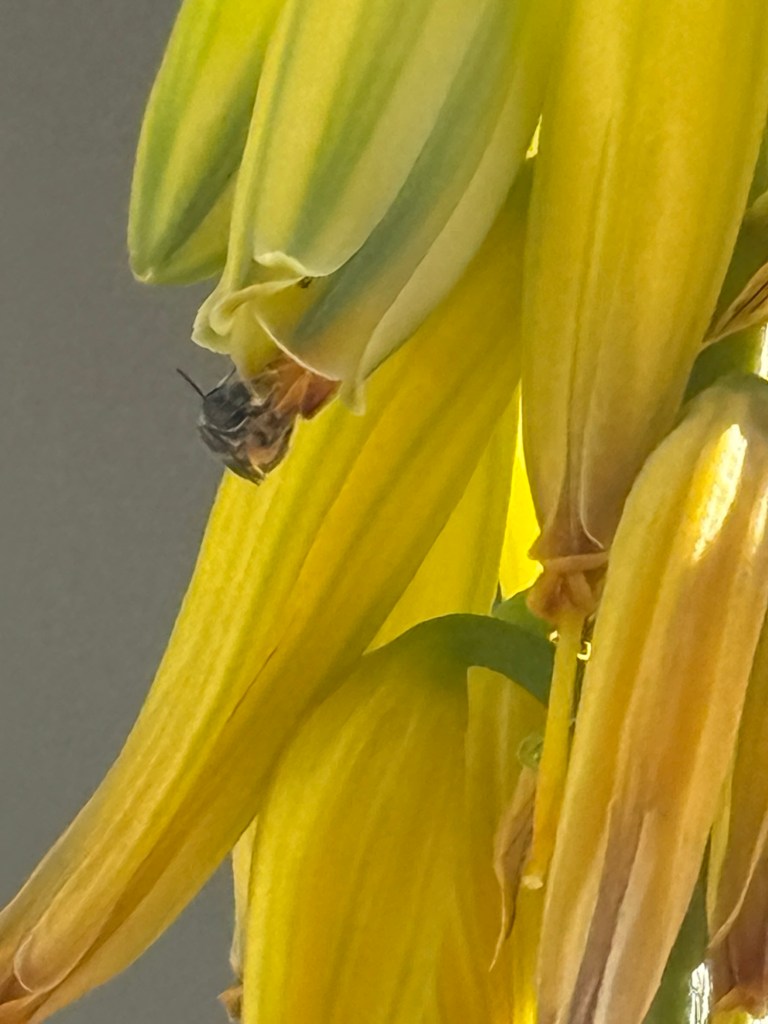
With a bee visiting one of the flowers
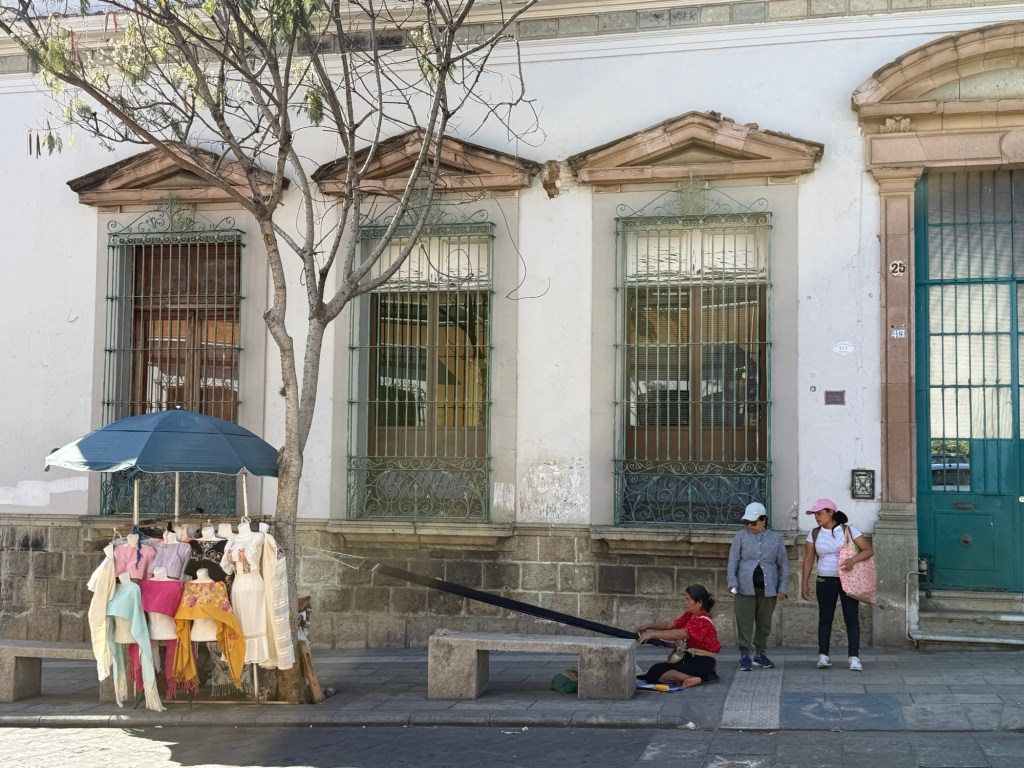
A weaver set up on a sidewalk with her wares and a backstrap loom.
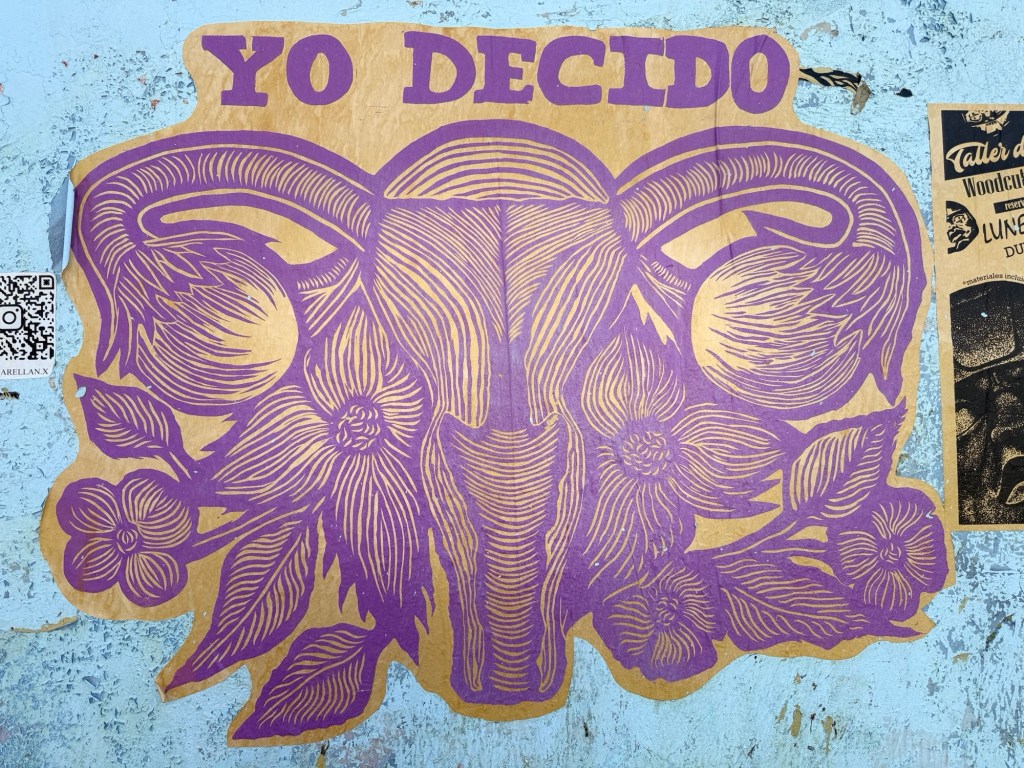
“I decide”
Marimba players in the plaza near the Cathedral of the Virgen of Solitude where every cafe serves “nieve” (snow), a sorbet-like shaved ice treat.
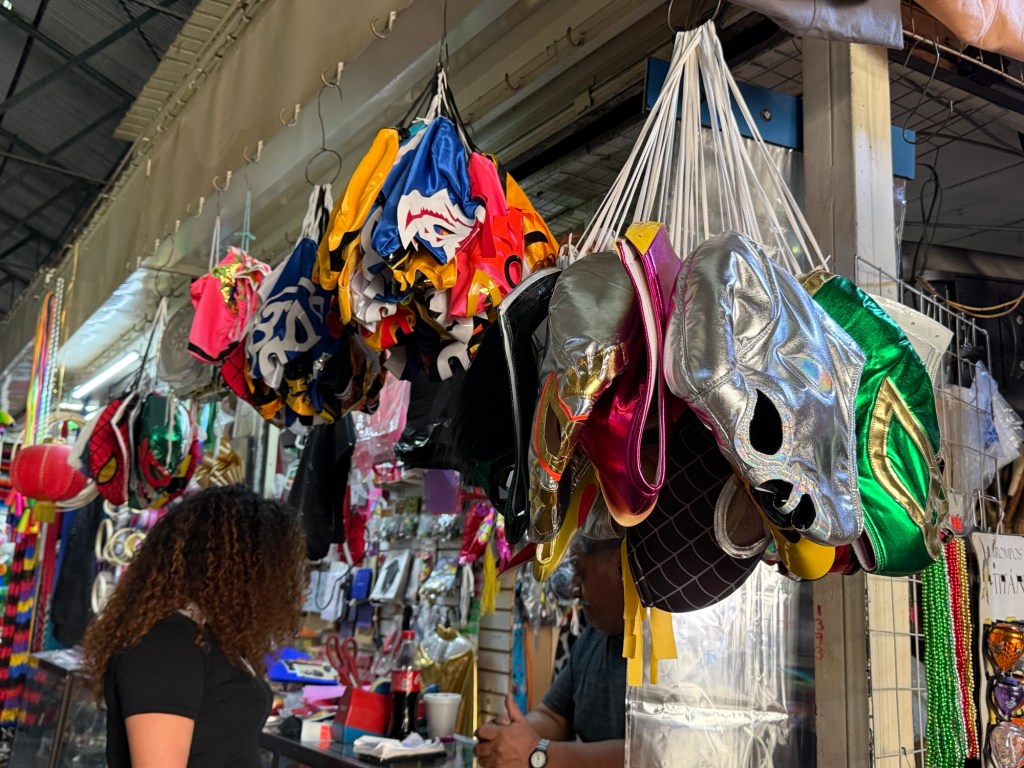
Lucha libre masks for sale at the market
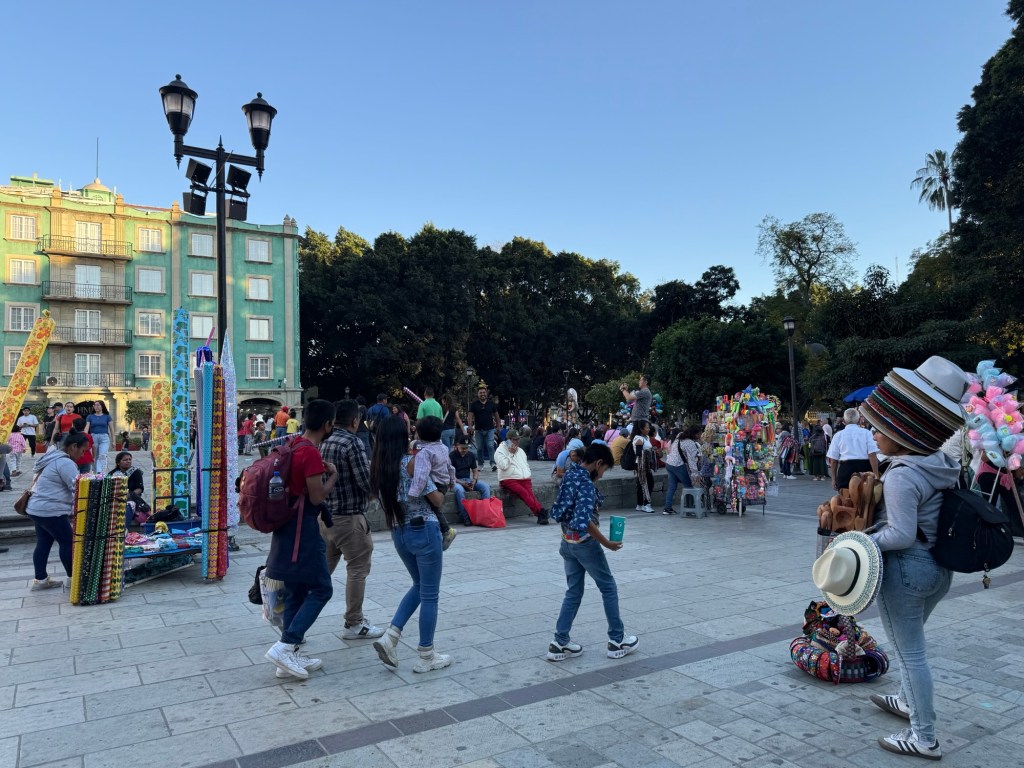
Dancing (hard to see at back) in the main plaza (zocalo) in late afternoon, and vendors with long skinny balloons that look like torpedos when kids aim them, but they gently descend once launched. If people watching is your thing, this is the place to be.

A dance troupe practicing by the Virgin of Solitude Cathedral.

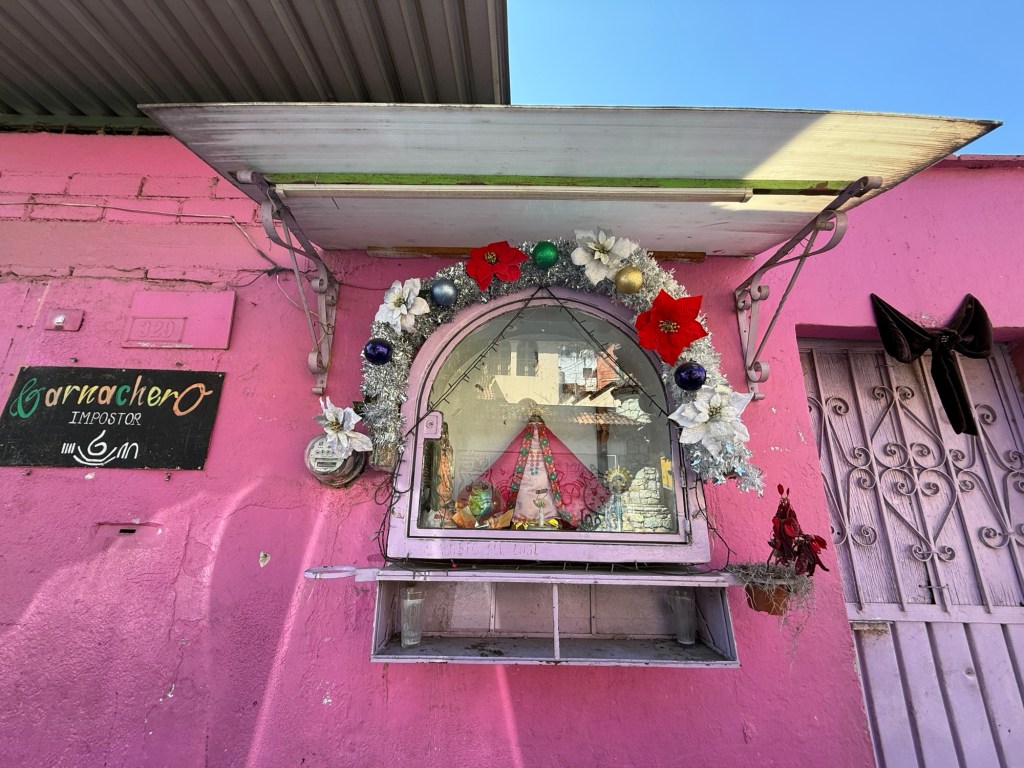
The Virgen de la Soledad again (I shared a photo of this shrine from my first day in town, but in daylight). The shrines are extra-special at night.

In the pink until I read today’s news from Minnesota

Today we had a food tour at the market after visiting an artisanal arts center.

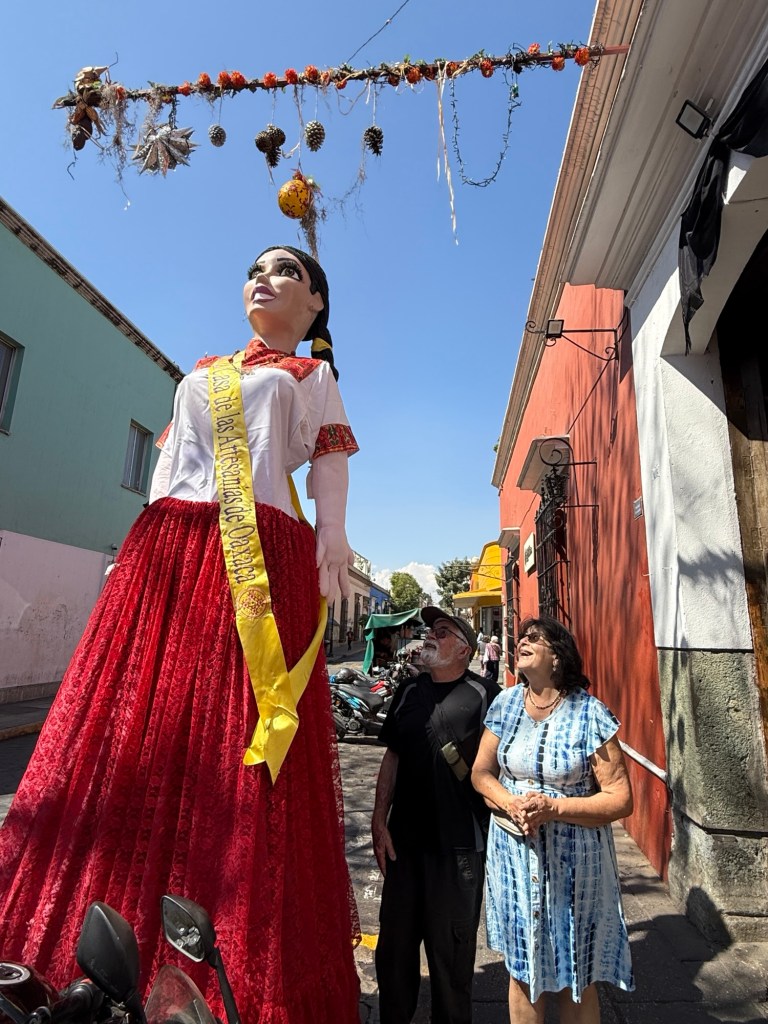
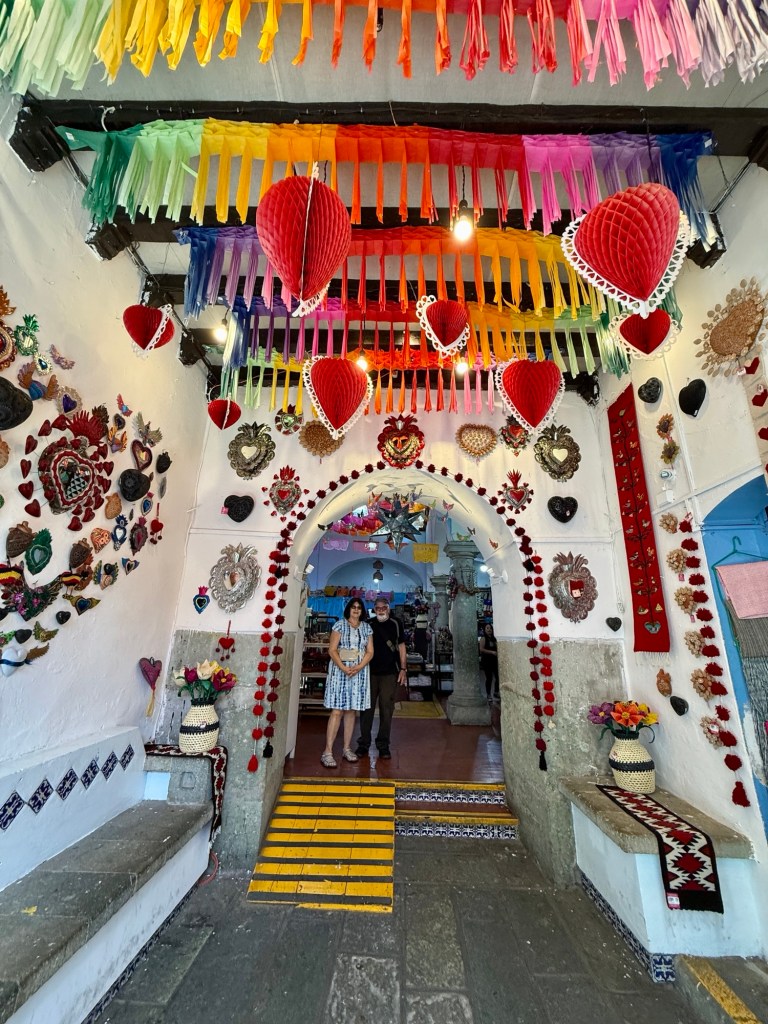
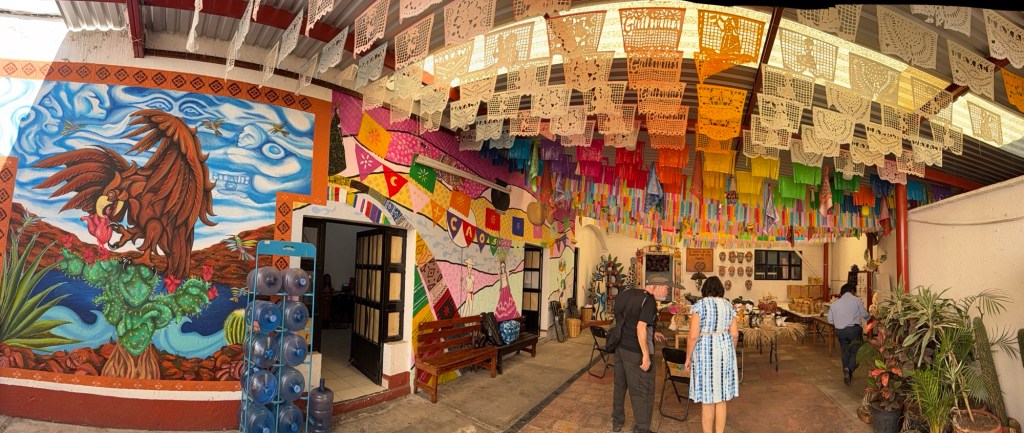
Casa de las Artesanías de Oaxaca
Full of love
On the way to the zocalo (main plaza)
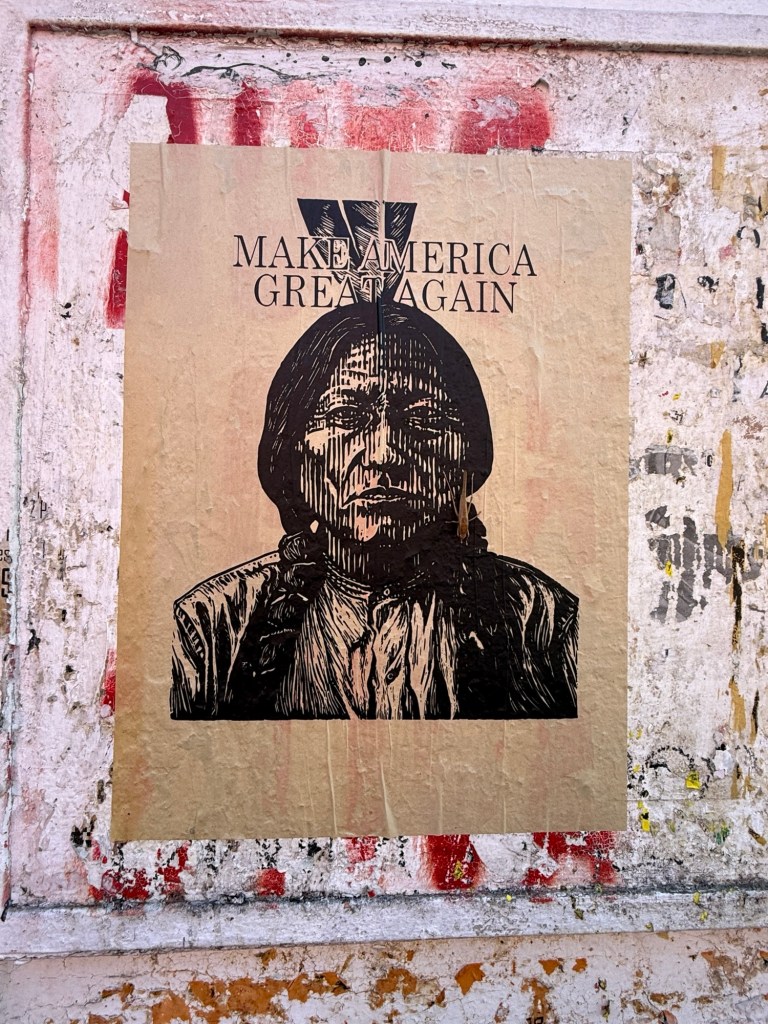
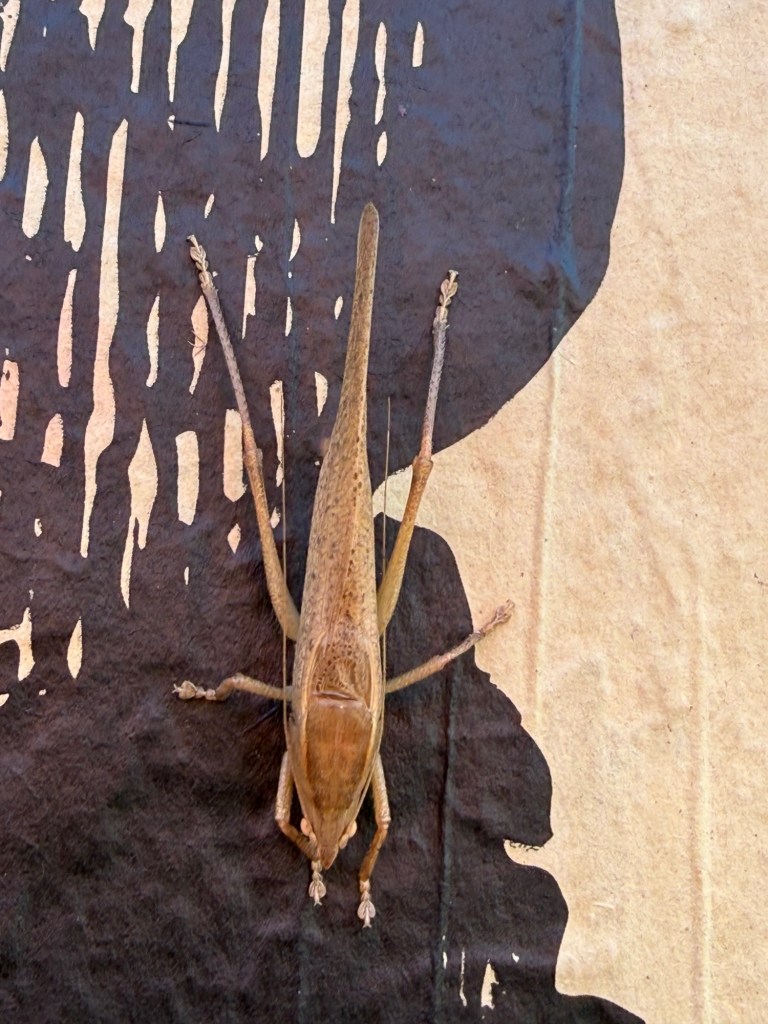
Did you notice the katydid on the poster? Cool feet, huh?!
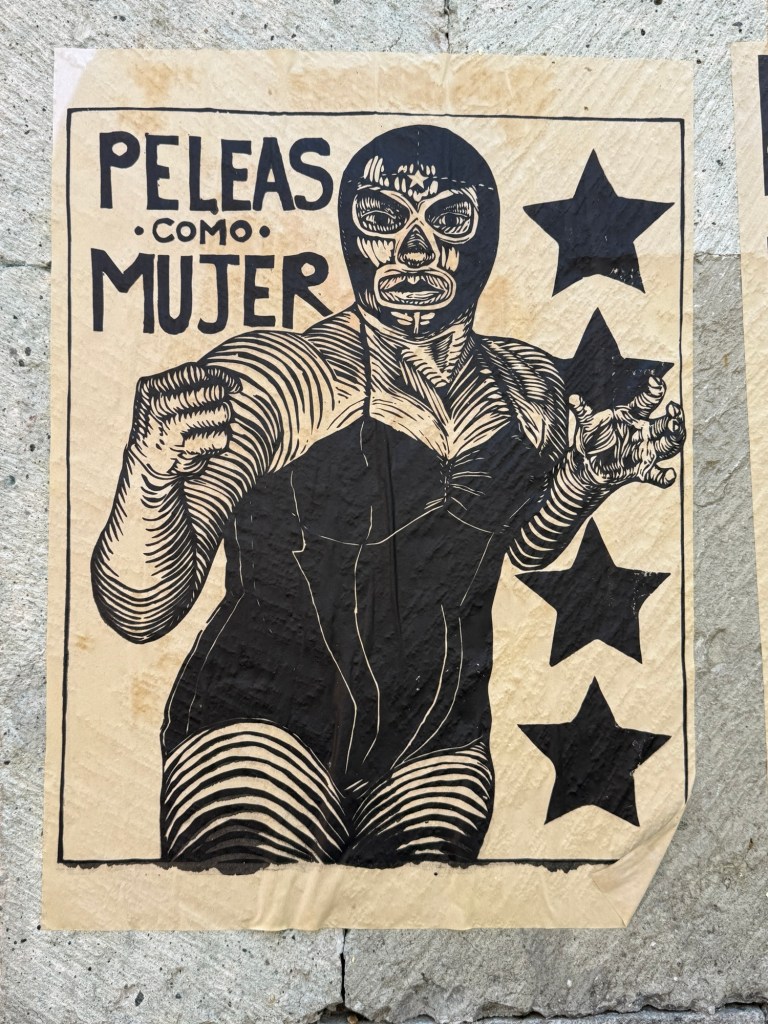
“Fight like a woman.”
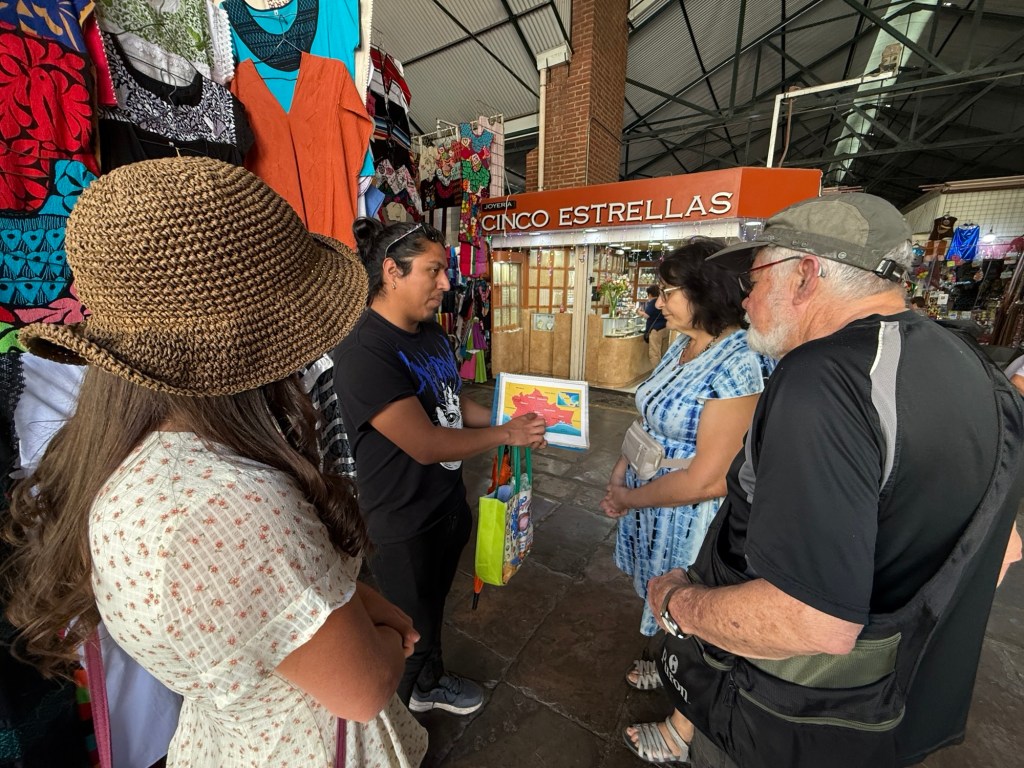
Our tour guide Coyote showing us the Central Valley by the city of Oaxaca on the map to highlight the cultures we would encounter in the market, Mercado Benito Juarez. We were joined by Gina from Australia whose next stop is a kick-boxing camp in the desert near La Paz (up north). I wondered if she might be a gymnast—should have asked.
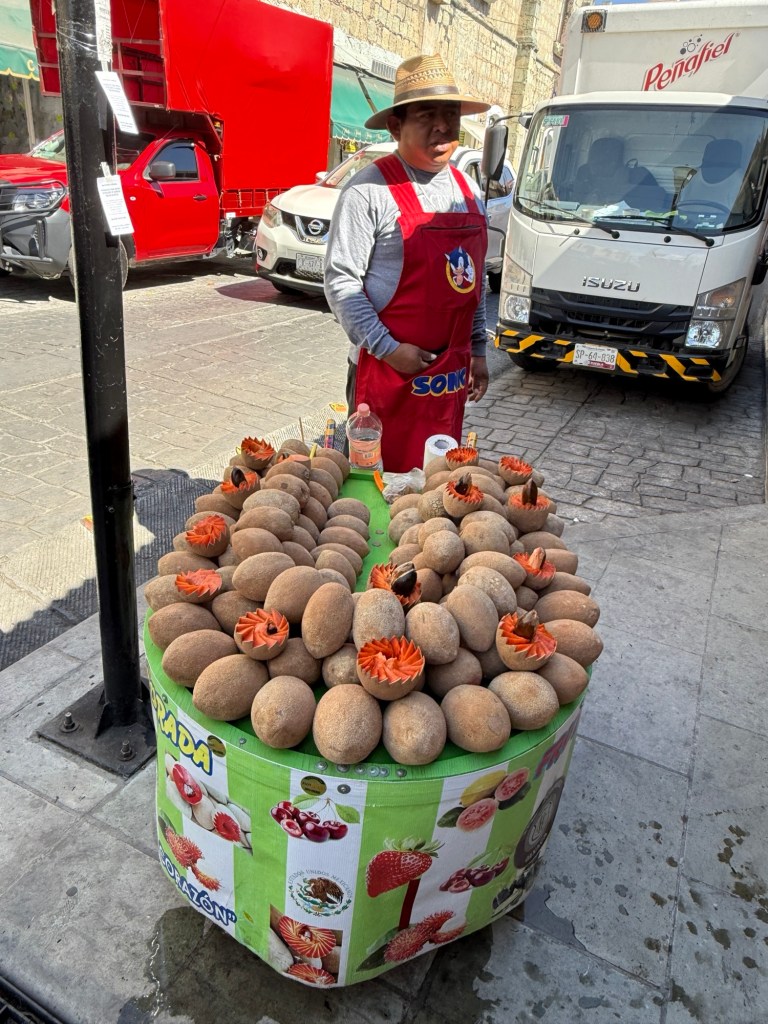
Mamey fruit seller. Everyone seems to be an artist in Oaxaca…
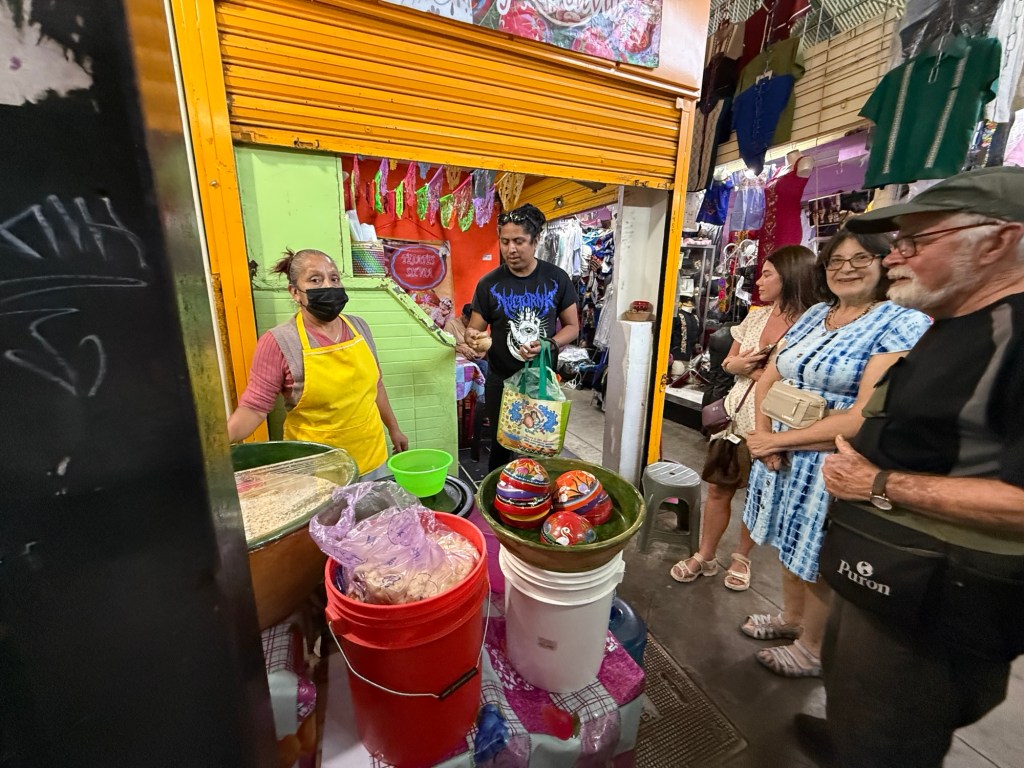
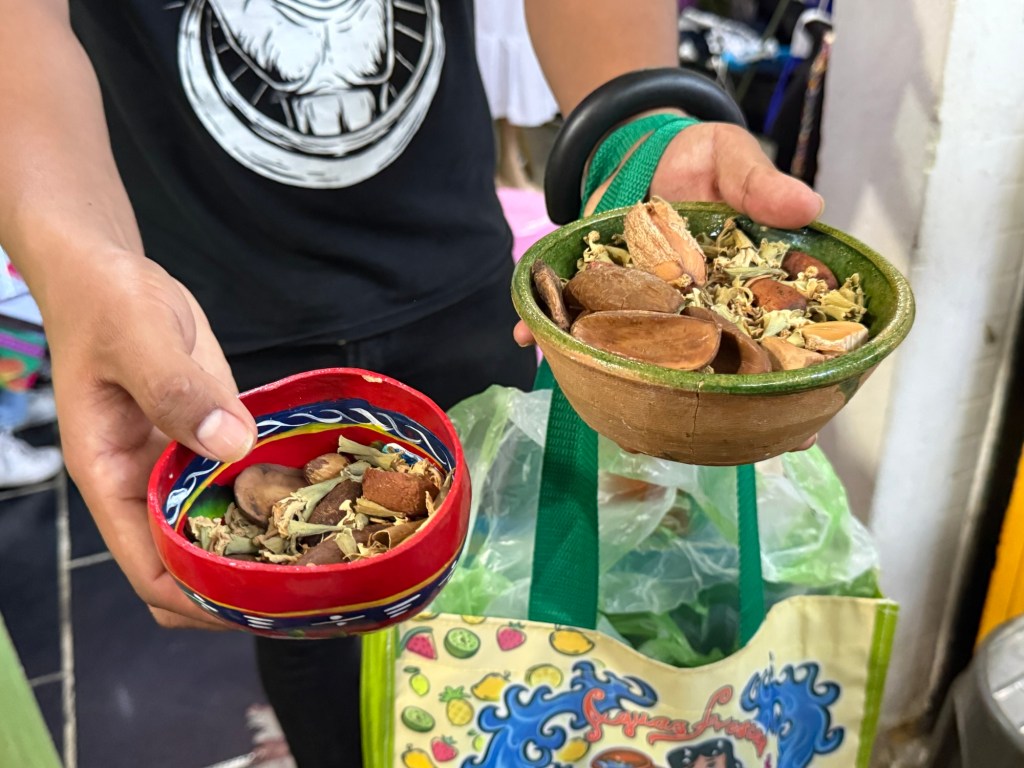
First stop was to taste tejate, a Oaxacan drink made with corn, cocoa, and a bunch of spices (see image below) that is whipped (foamy top under plastic). We also had a drink made of squash pulp, panela (delicious brown sugar from cane), cinnamon and maybe other spices. I didn’t get a photo, but later we had horchata, which I think of as milk, rice, cinnamon, and sugar (and water), but here is made with milk and the red pulp from a prickly pear fruit (the nopal cactus fruit).
Can’t remember them all: cinnamon, the flower of some kind of tree…maybe Anita will remember and I’ll update.
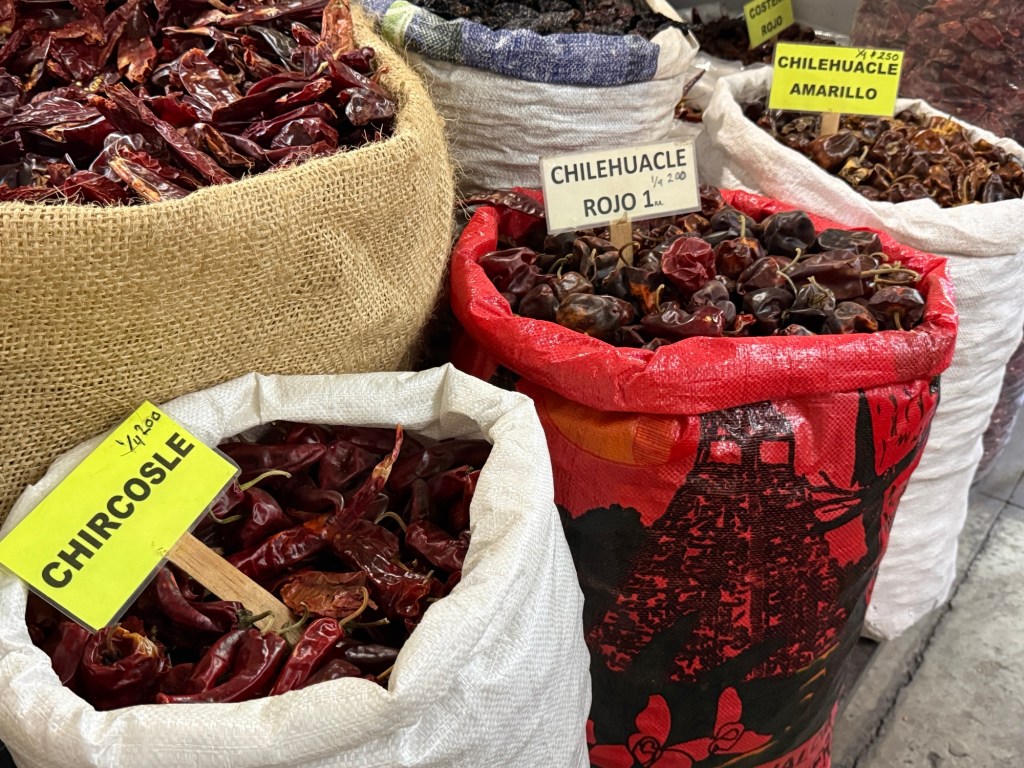
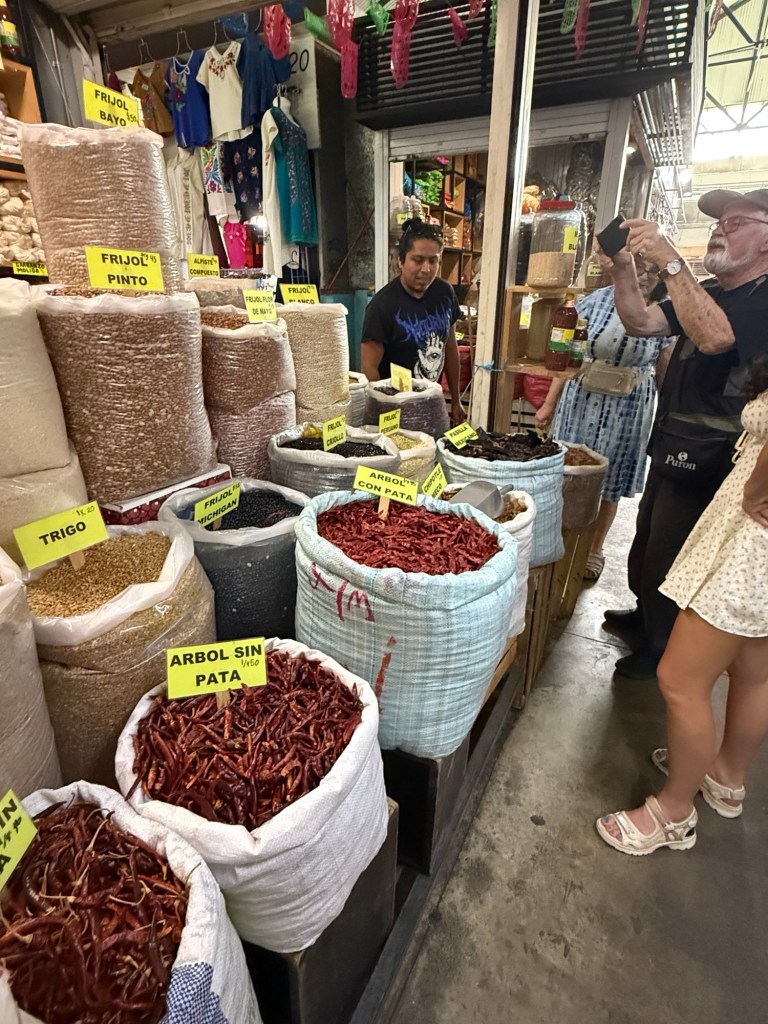
Intro to some of the peppers used for mole (special thick sauces whose primary ingredient is often pepper).
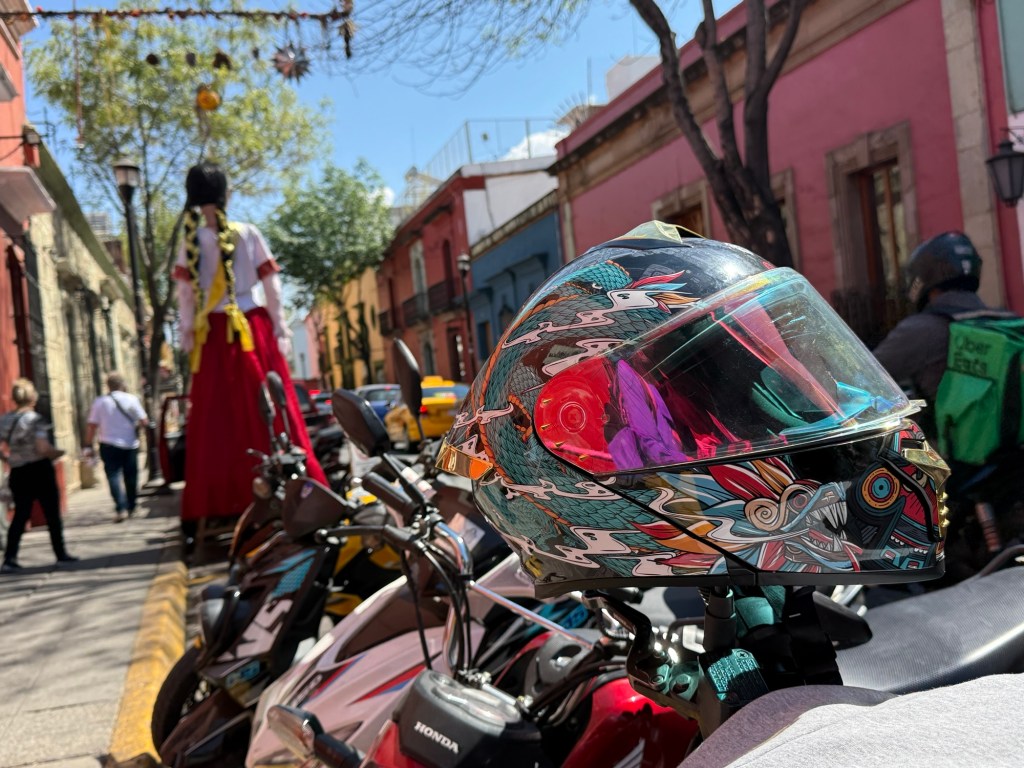
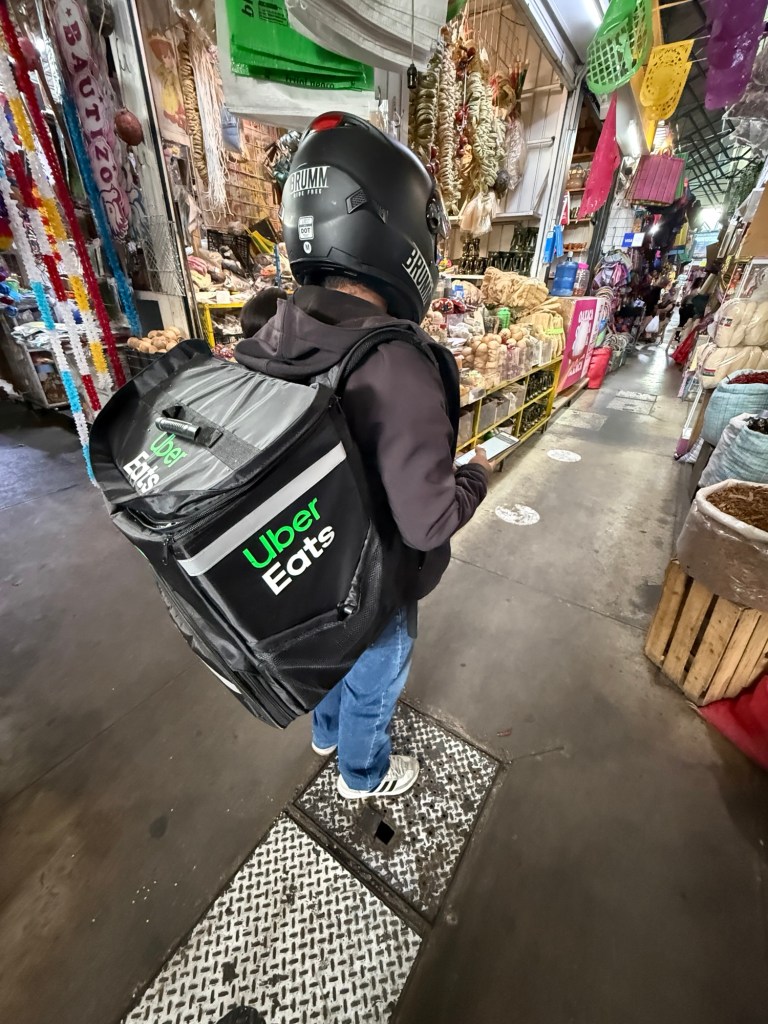
An Uber Eats delivery guy asking for directions.
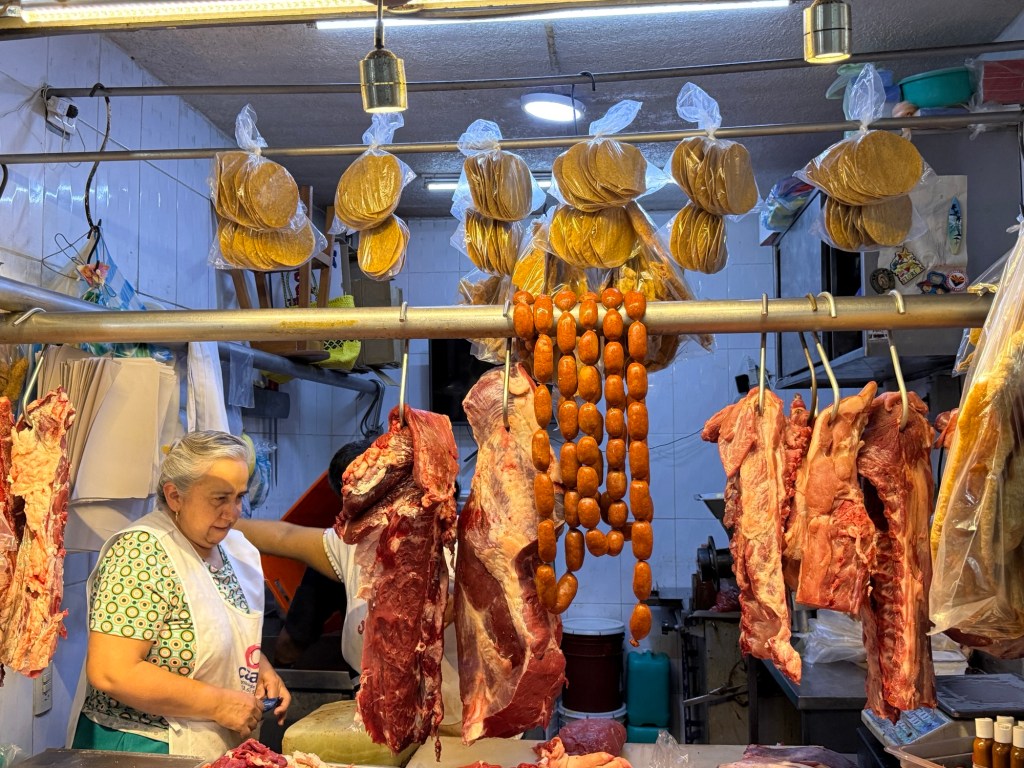
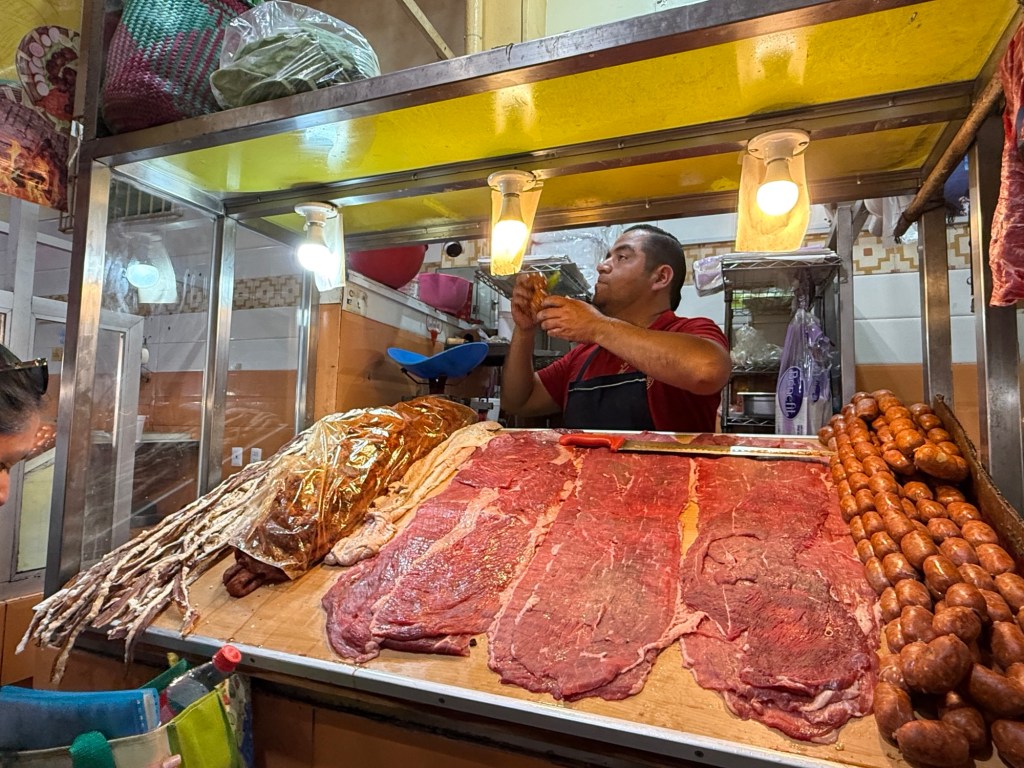
We tried their chicharrón (deep fried pork rind), pate (pork parts blended to make what Anita said we call head cheese), and dried (cured) beef sausage.
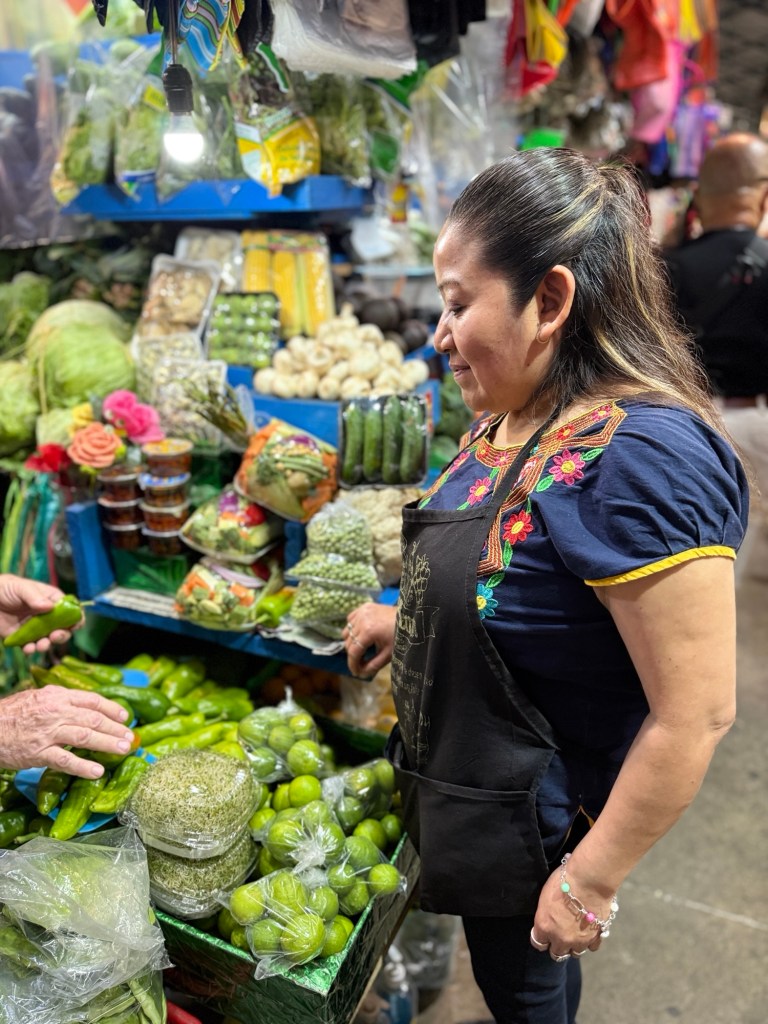
And picked up veggies to go with meat and other dishes for a meal later. Coyote said this vendor, whose name I am not remembering, taught him how to judge the peppers’ (in Dave’s hand) hotness by how heavy it is.
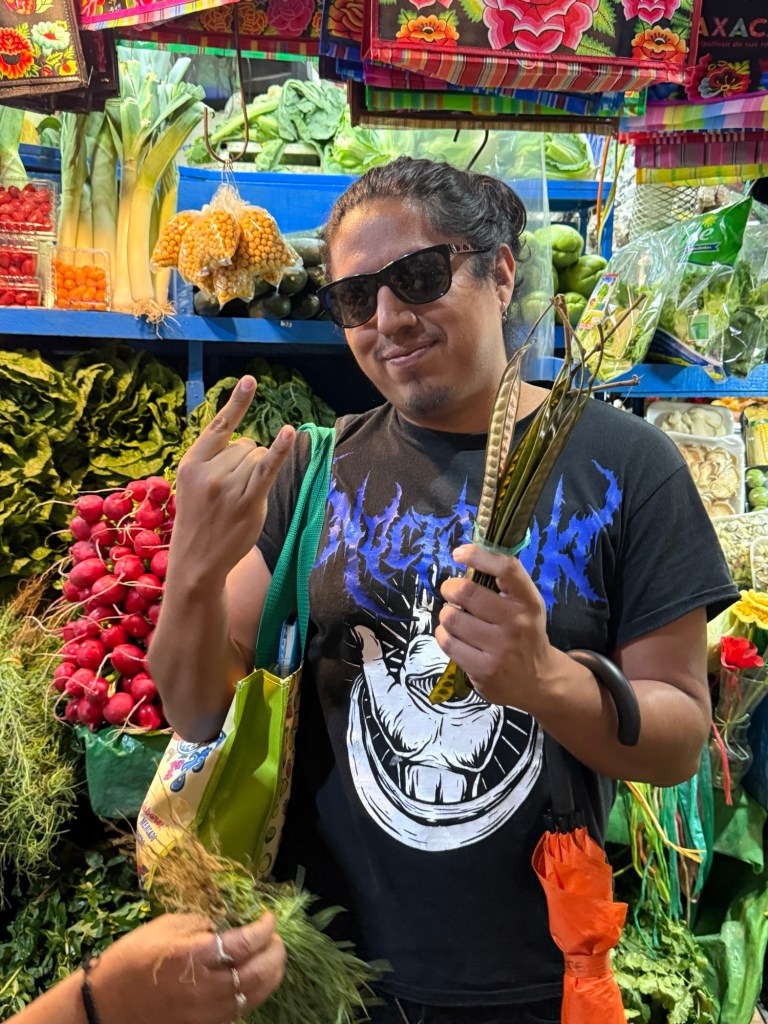
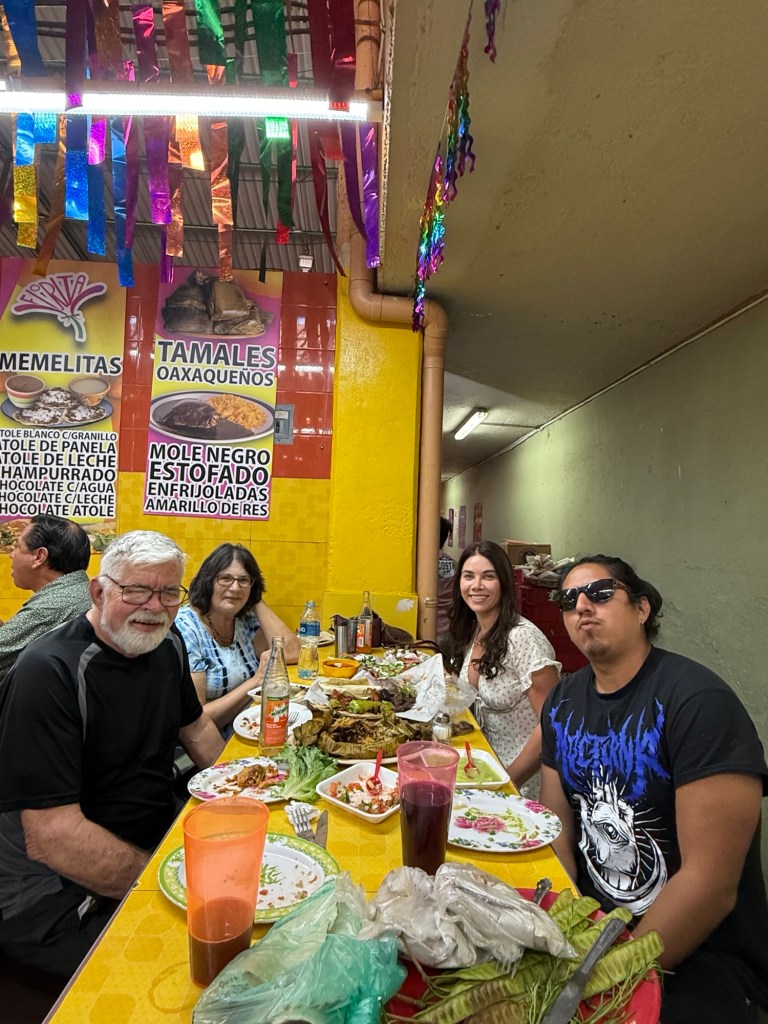
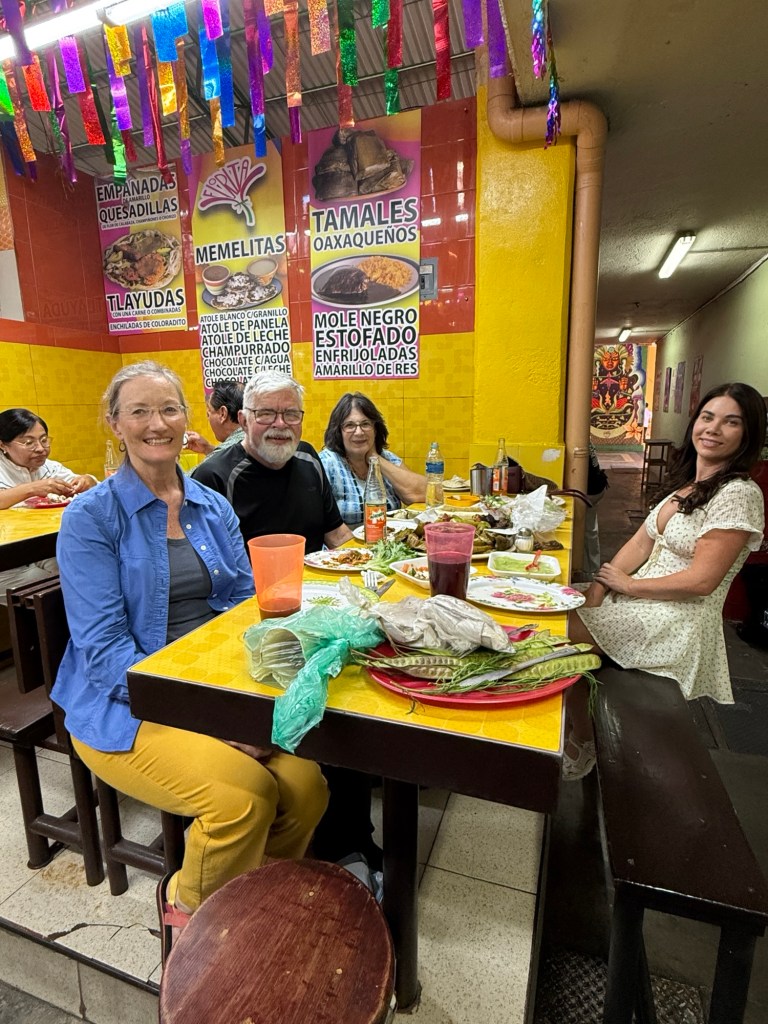
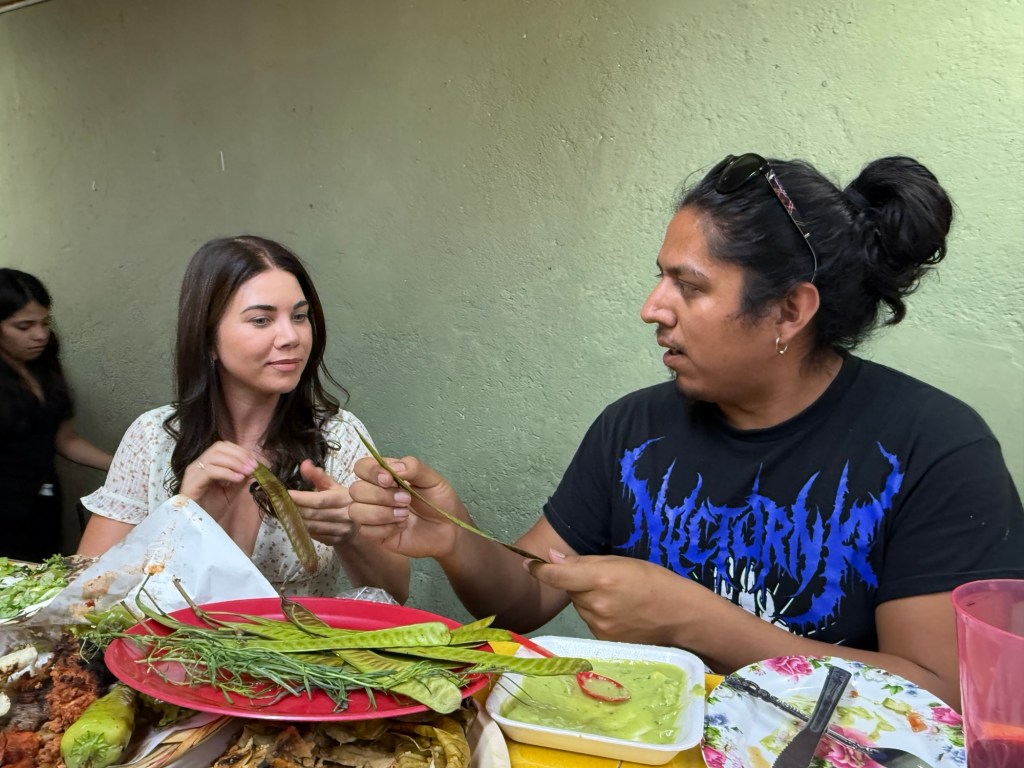
These beans, called huaje, help with digestion and we opened them at the end of our meal and ate the seeds fresh. In case, like me, you wonder what that gesture means, it’s “hang loose” and is the official hand gesture of Hawaii meaning “aloha spirit, love, and local pride” according to Wikipedia.
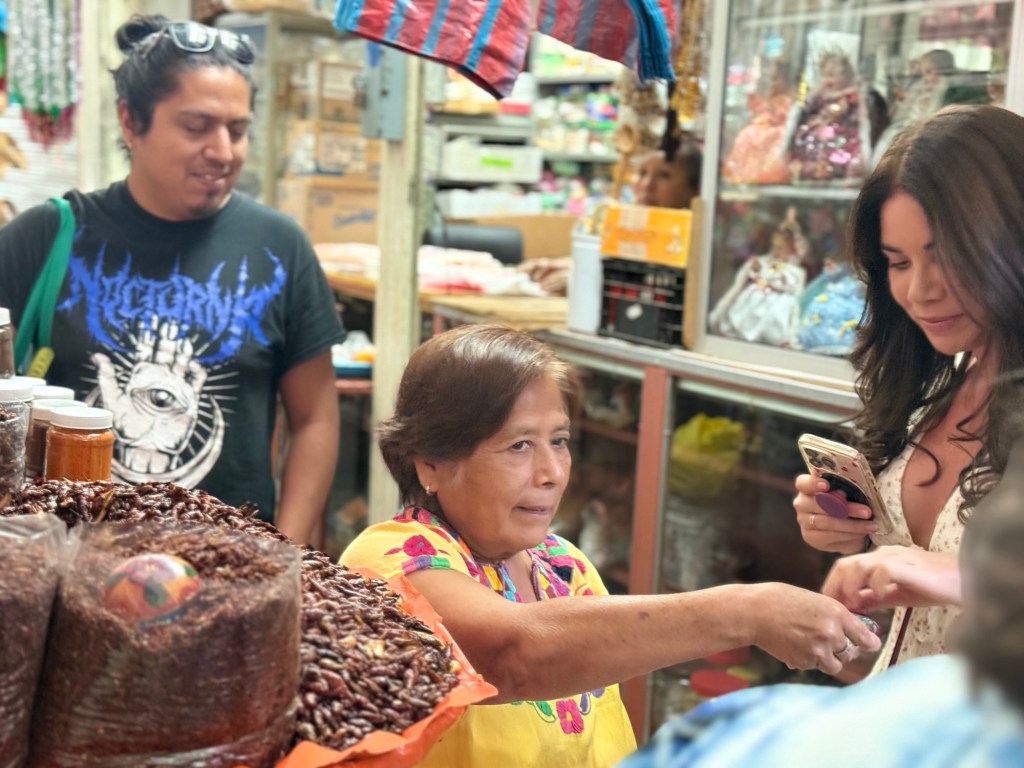
Next stop was trying fried and boiled crickets. We learned she and other cricket sellers get up at 3 am to collect the crickets when they’re easier to catch). The fried ones are made with chile, garlic, and other spices.
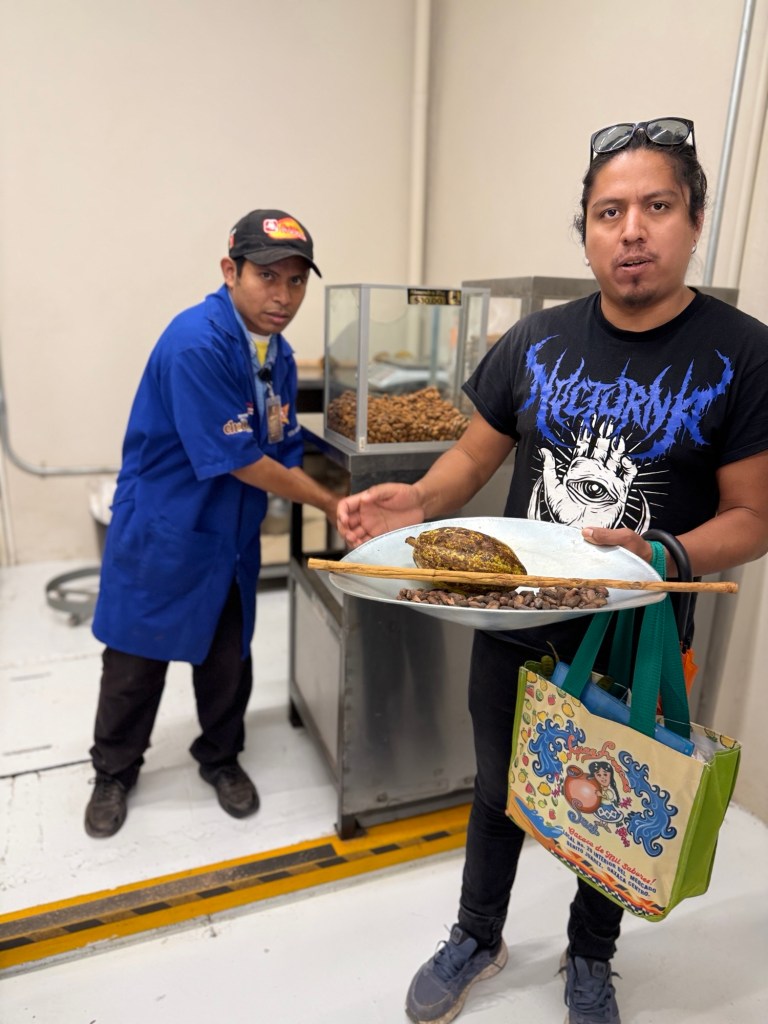
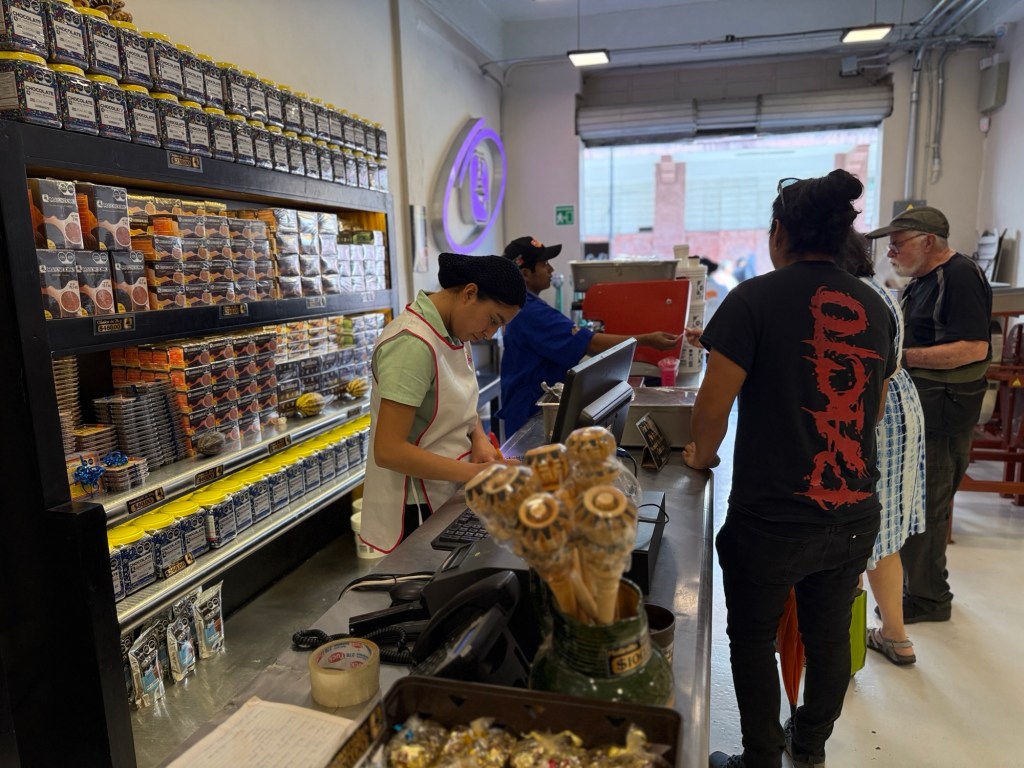
Brief stop to learn about cacao roasting and other ingredients (cinnamon and almonds). Cacao is pollinated by a tiny fly!
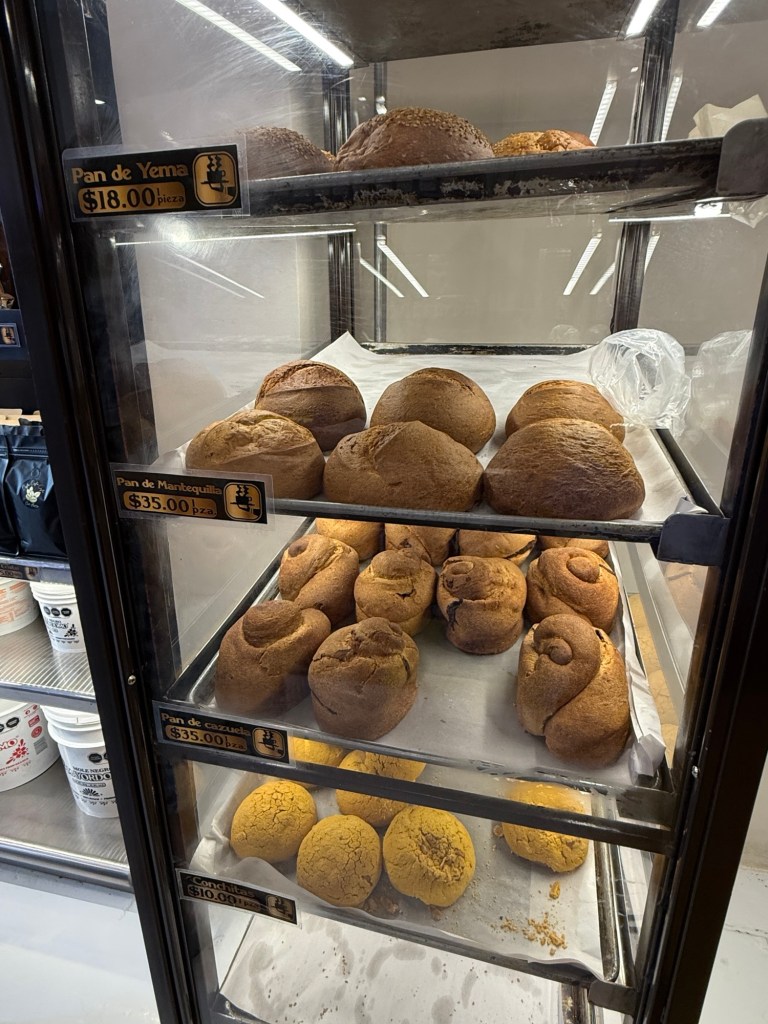
Oaxacans typically have bread with their hot chocolate for breakfast.

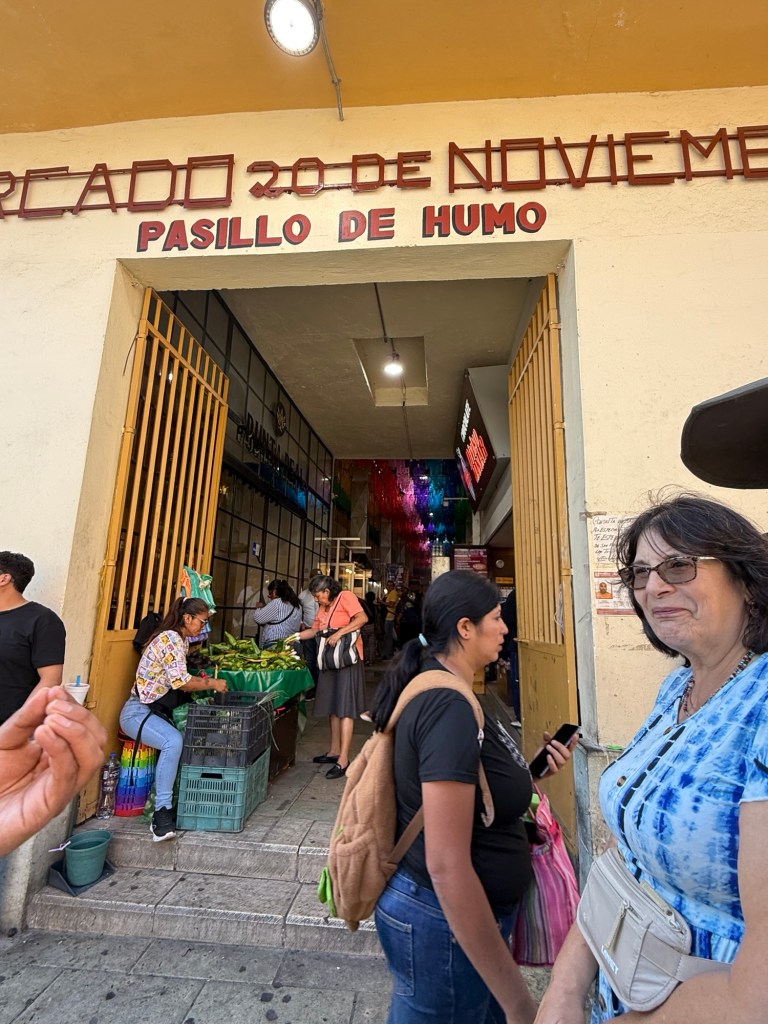
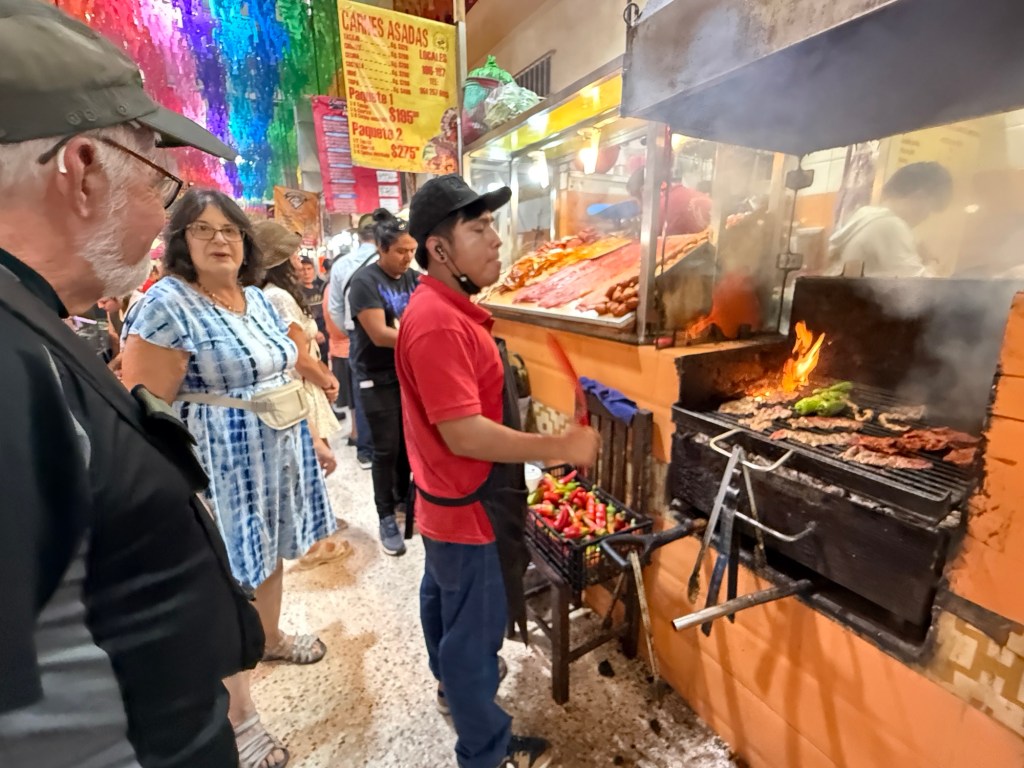
The passageway of smoke (grilling smoke) in the adjacent market, Mercado 20 de Noviembre (the date of the Mexican Revolution that is considered the start of the modern Mexican era).

Coyote brought the peppers that were also grilled for us.

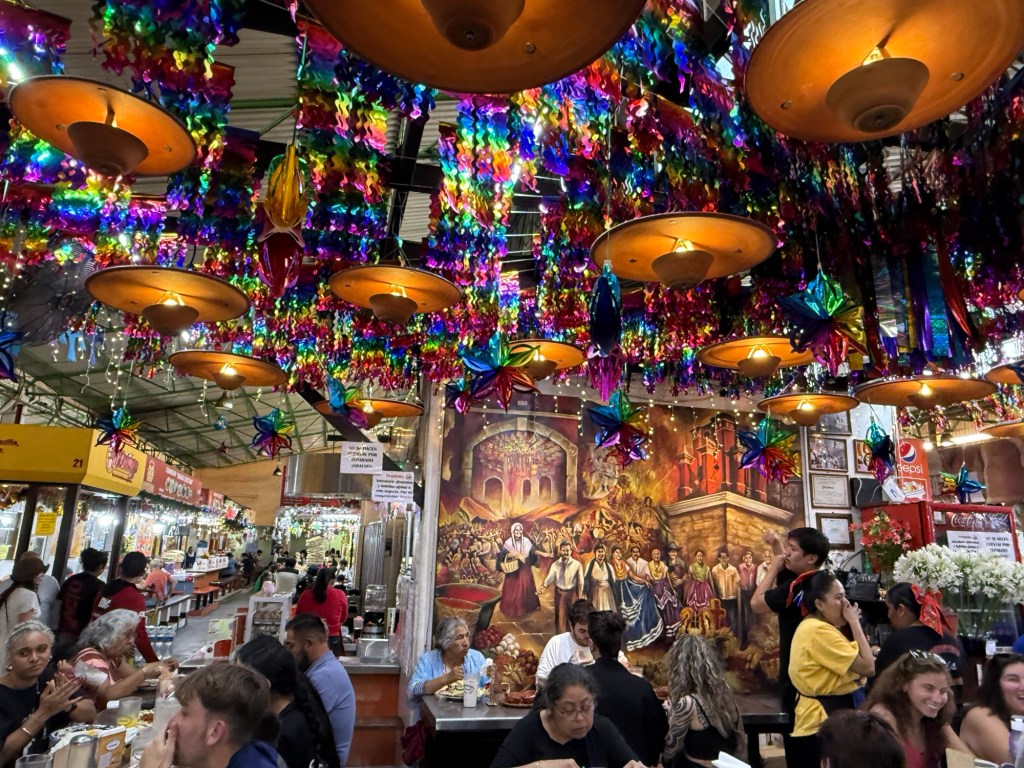
Magnificent interior
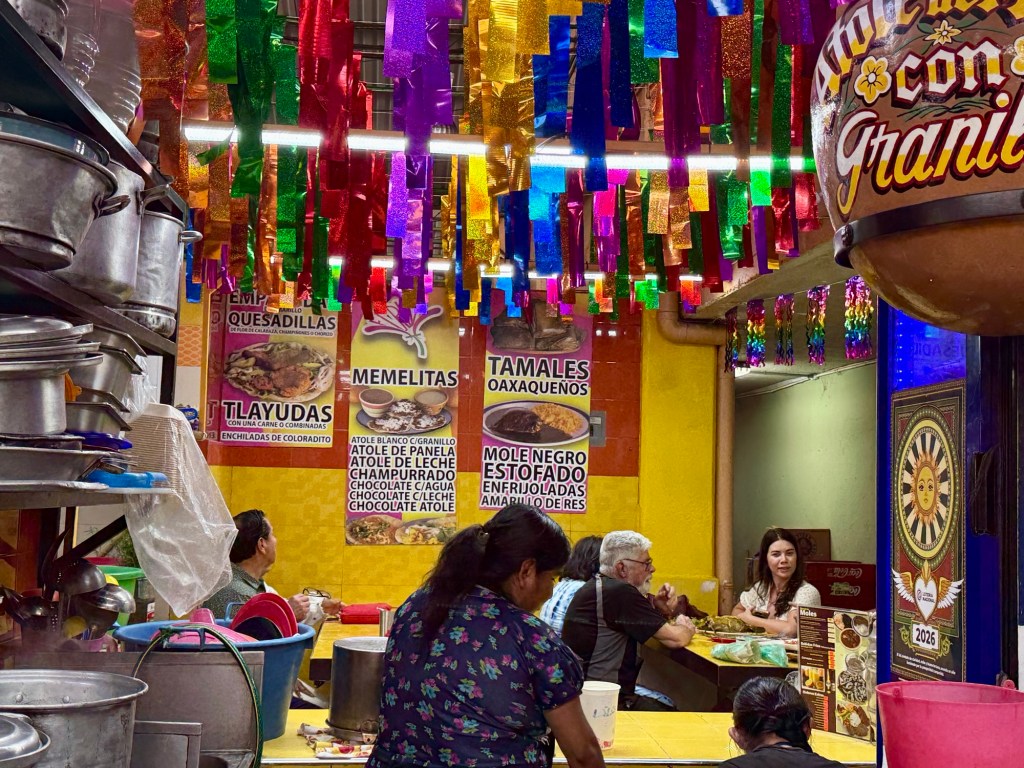
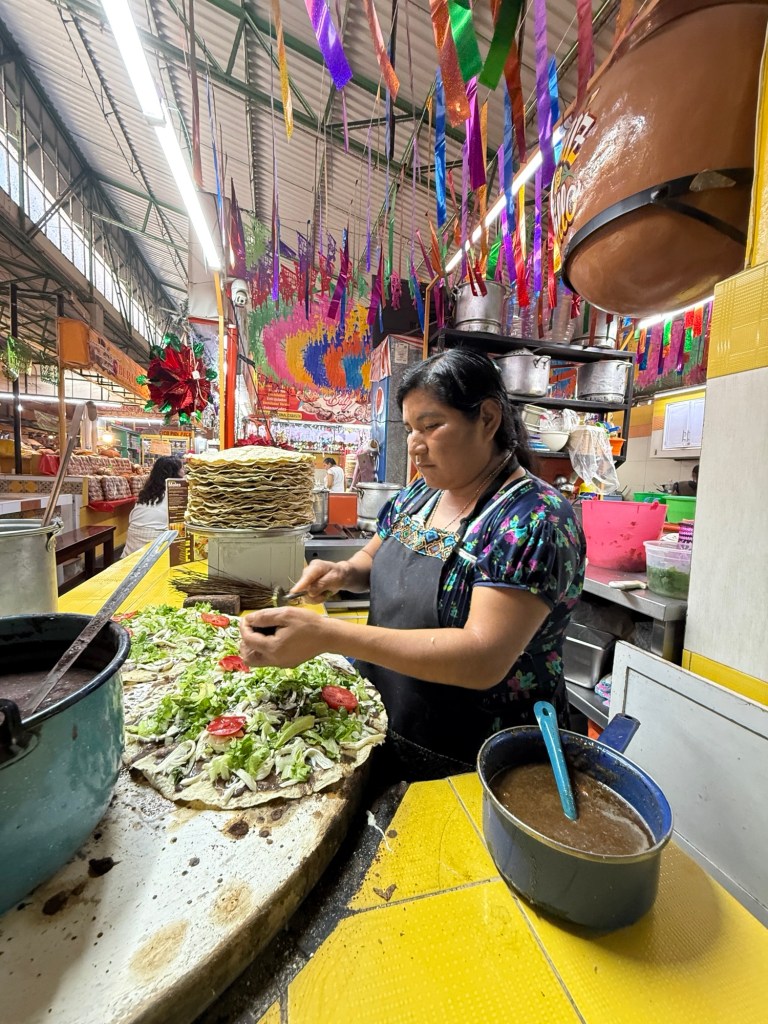
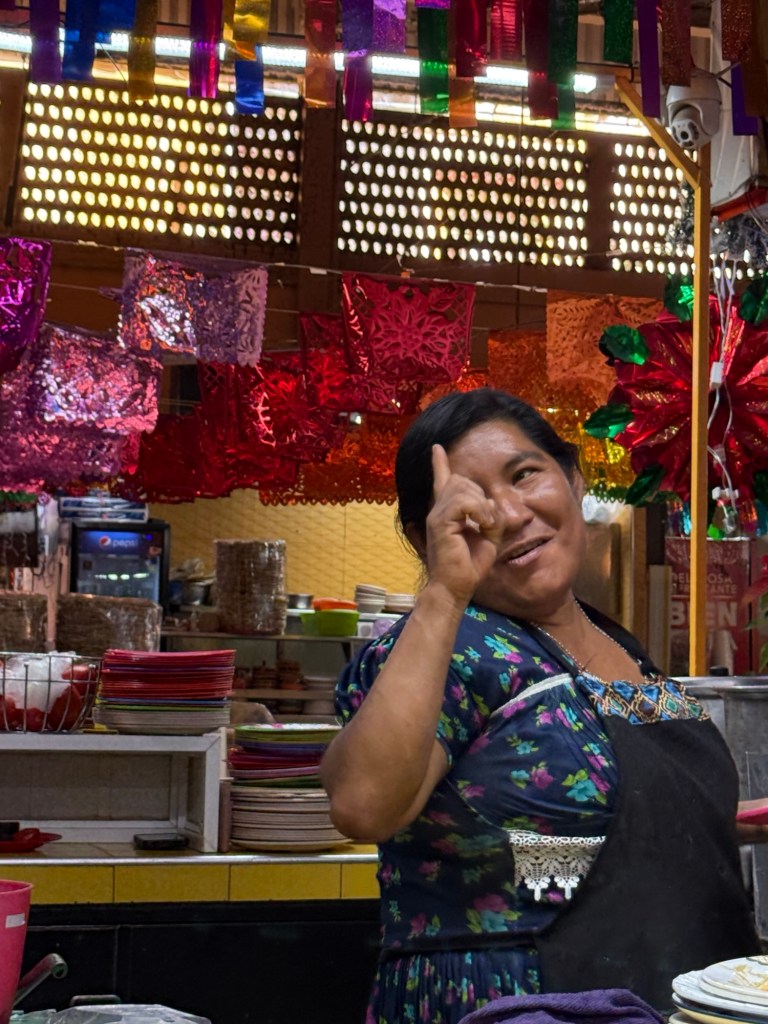
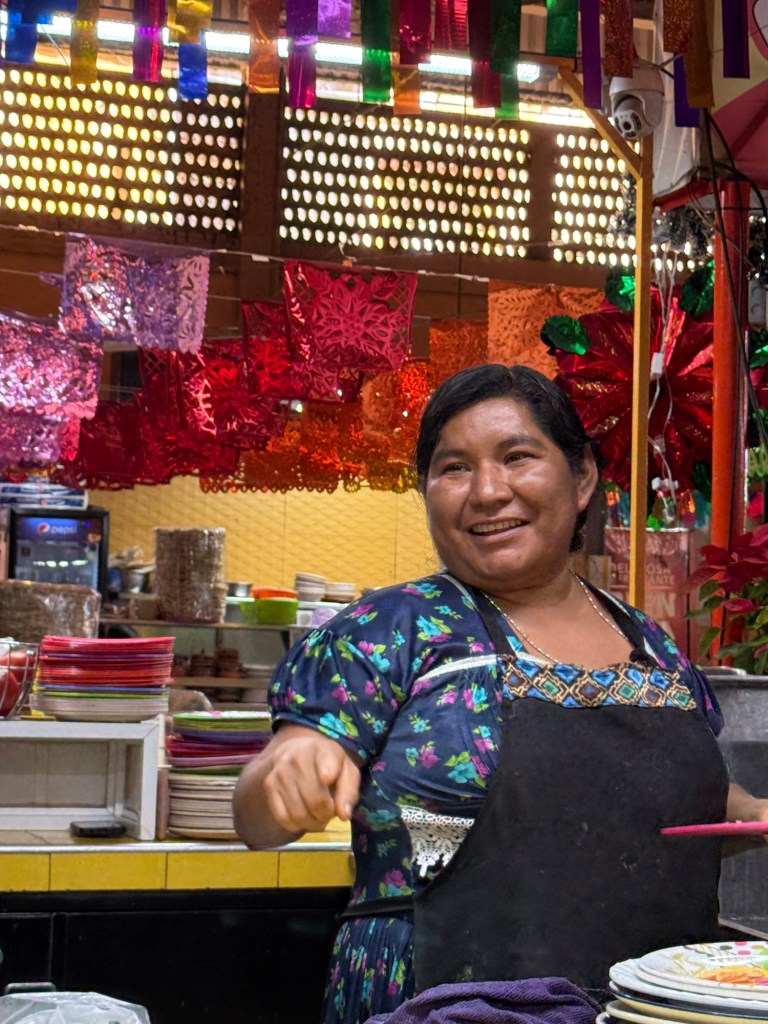
Benita prepared a large tostada-like dish called tlayuda that used to be eaten only for super but has become so popular it’s eaten any time of day now. She told me her indigenous tongue is Chatin and “thank you” in Chatin is “nii nii.” Though she looks very serious in the photos I captured, she smiled a lot…
Coyote didn’t realize she was Chatin, from a community pretty far from Oaxaca and, he explained, known for a special mezcal whose agave plants may only be planted by women.
The herb on the red platter, chapito, and the bean, huaje, both are eaten at the end of the meal and help with digestion. We learned Coyote’s main job is playing heavy metal music, mostly for school children. He writes lyrics about social issues, culture, and dinosaurs…His t-shirt is for his girlfriend’s heavy metal band called Noctorna.
The zocalo (main plaza) park picking up with evening strollers.
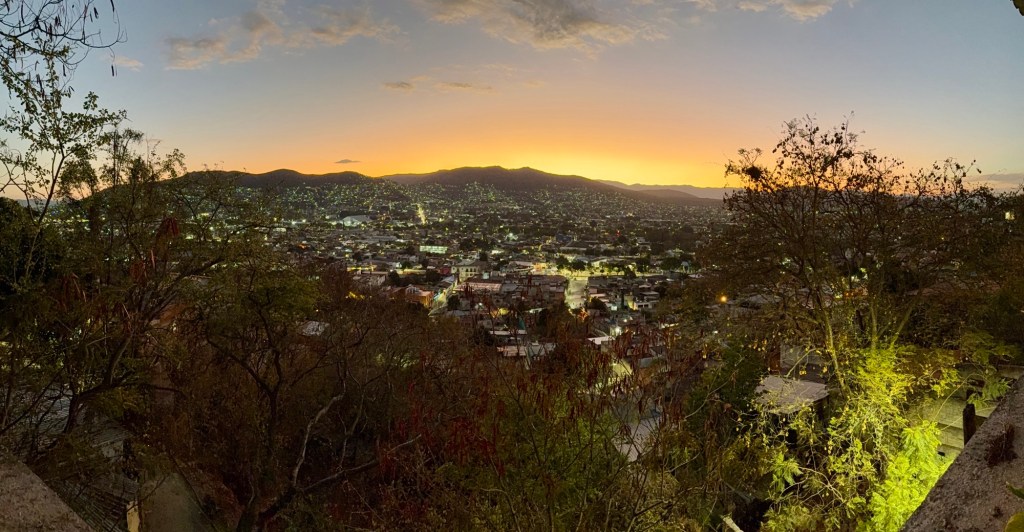
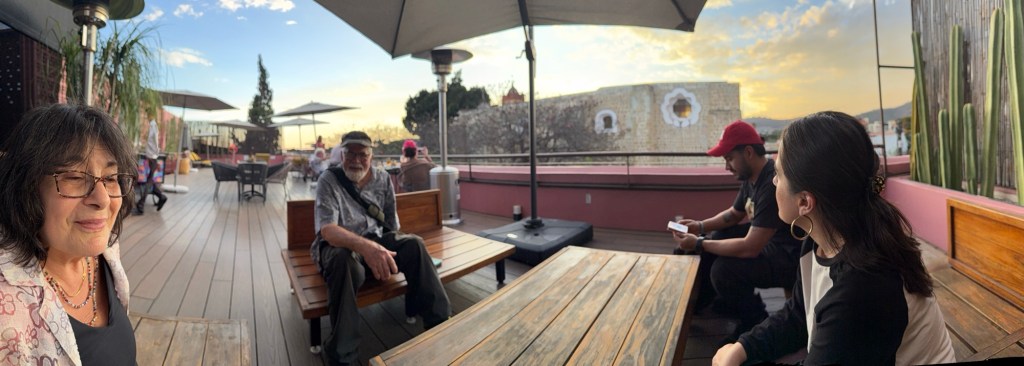
The view from Hotel Terraza Cielito Lindo (Hotel Beautiful Sky Terrace).

An architect’s favorite places

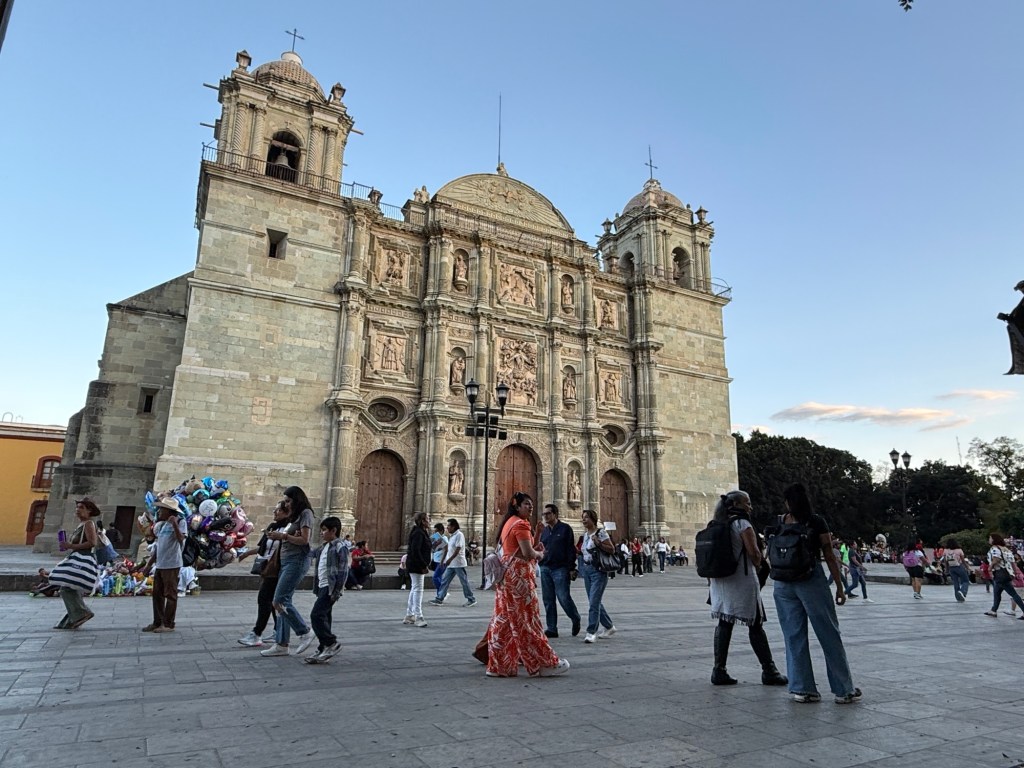
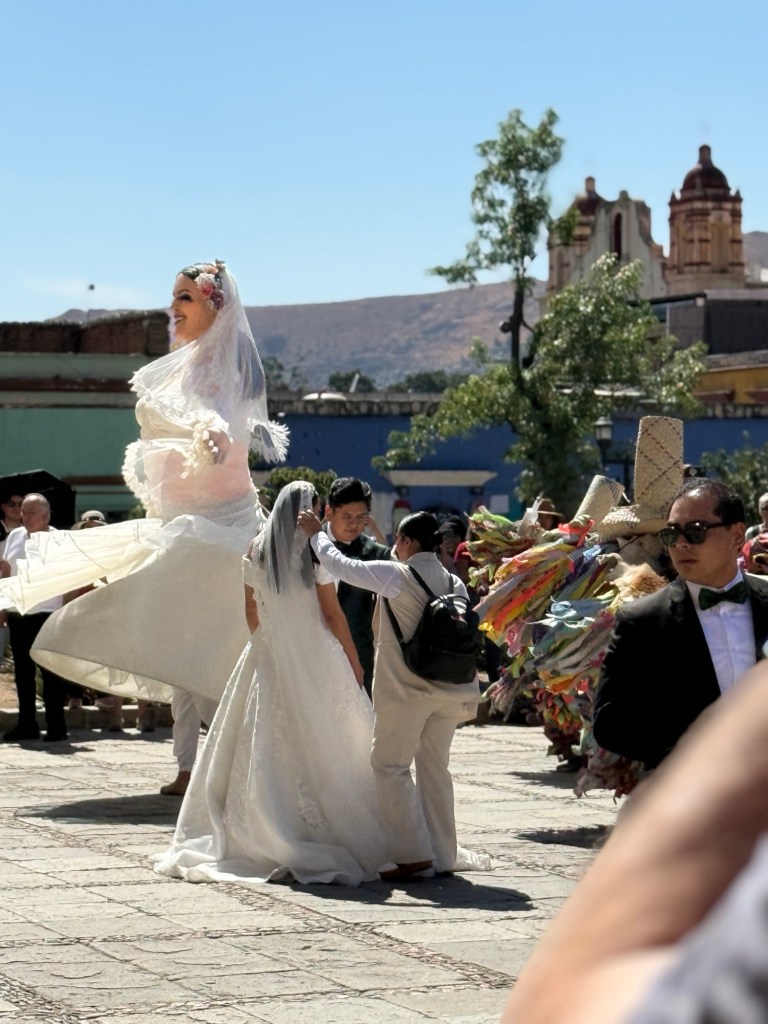
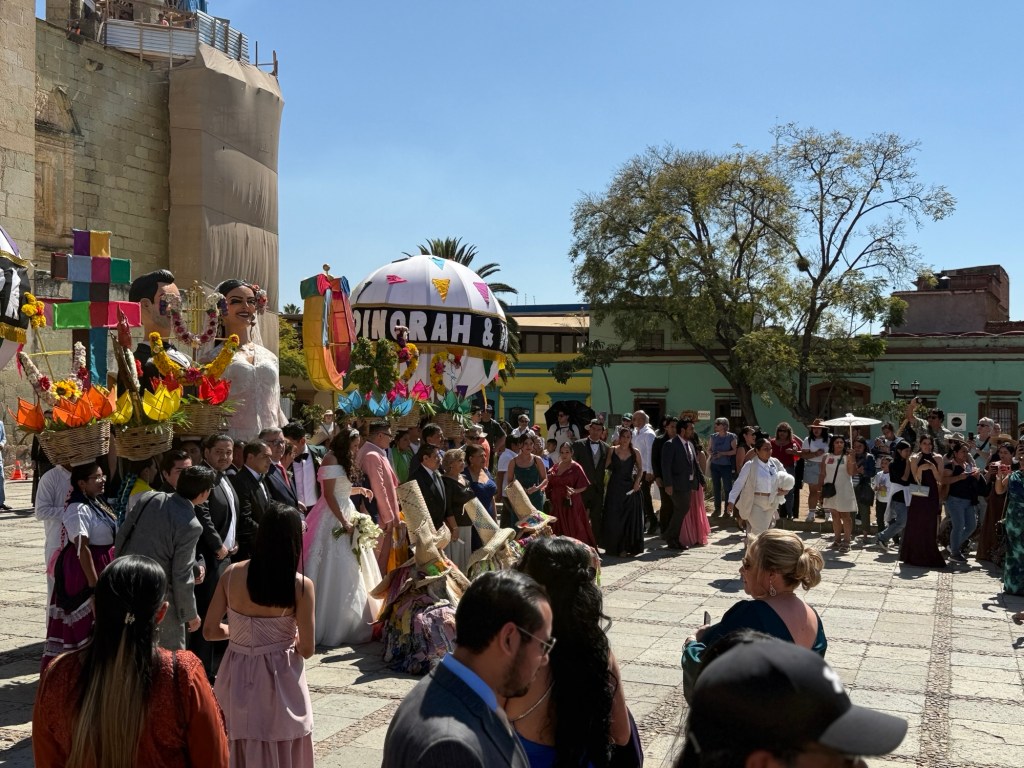
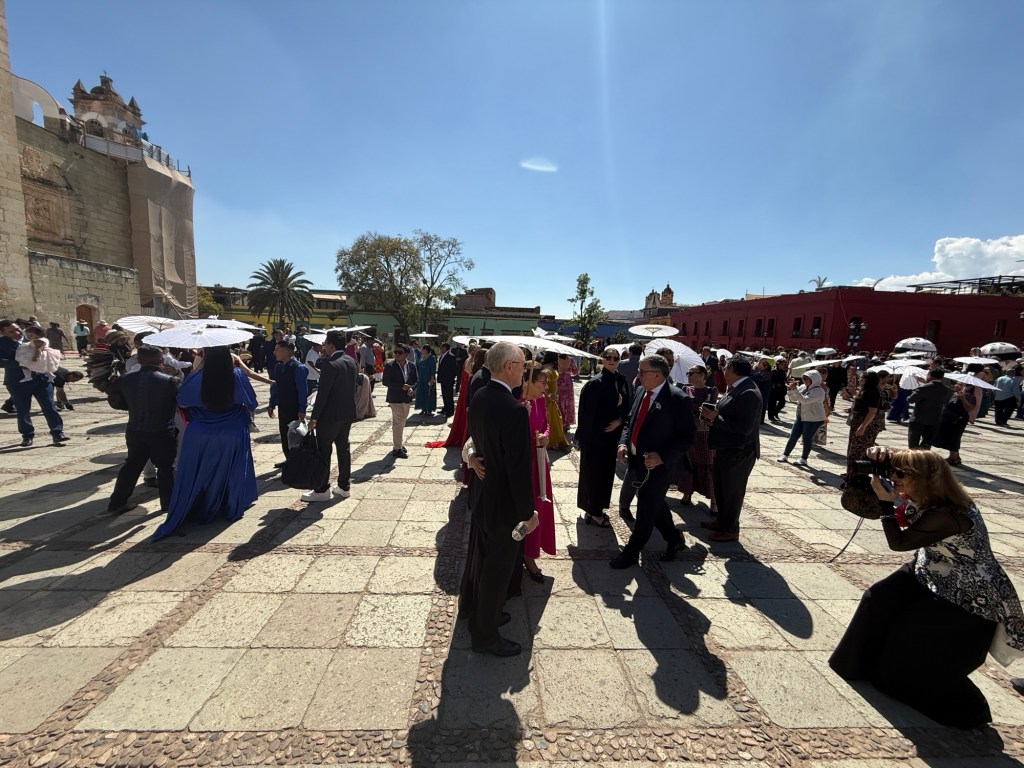
On the way to visit the cathedral and cultural museum, we learned a wedding was taking place and could see celebration preparations in the plaza in front of the cathedral. So we waited in hopes of catching a glance, not realizing they would lead a procession to through town. Dave got better photos after playing football with vendors’ son while we waited. Later we joined an architect for a tour of his favorite places around town.

The processional music once they reached the street was an Italian anti-fascist tune. Not sure I captured that in this clip—Anita’s Italian and recognized it.
Dave had perfect timing and captured the fireworks in this video. One poor fellow near us got hit in the face with burning debris…but it was spectacular!
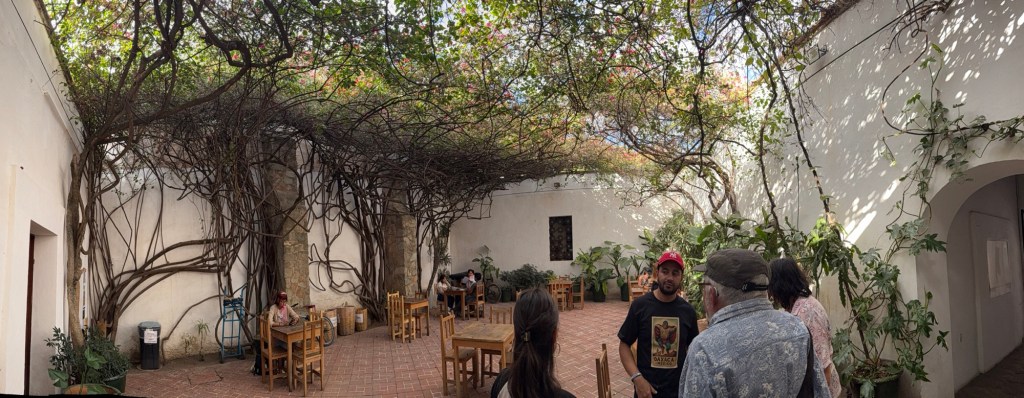
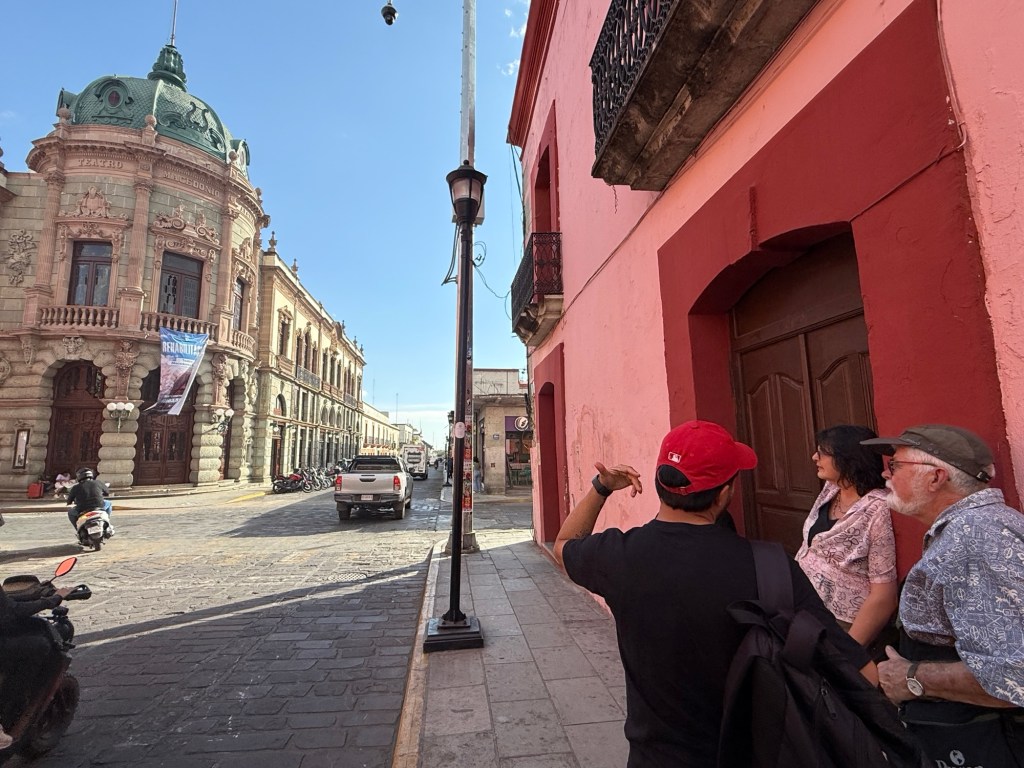
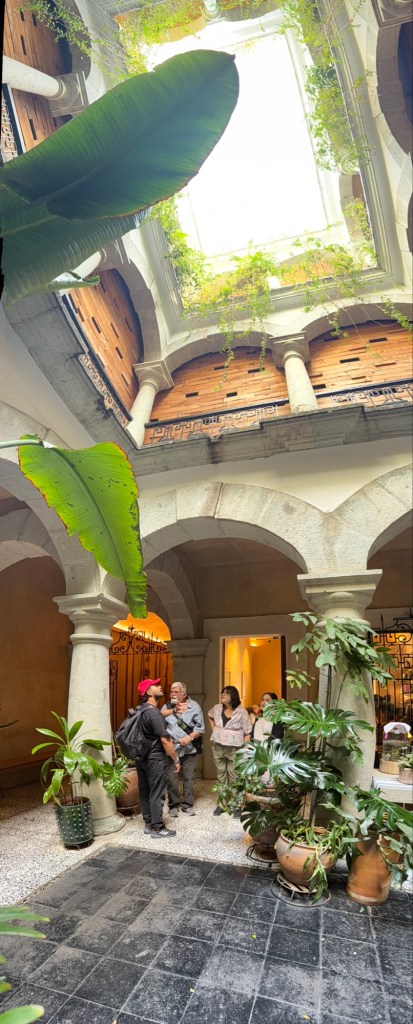
Our tour guide Fernando with the lucha t-shirt and red hat in a beautiful courtyard, part of an art center created by one of the city’s most reknowned artists, Francisco Toledo.
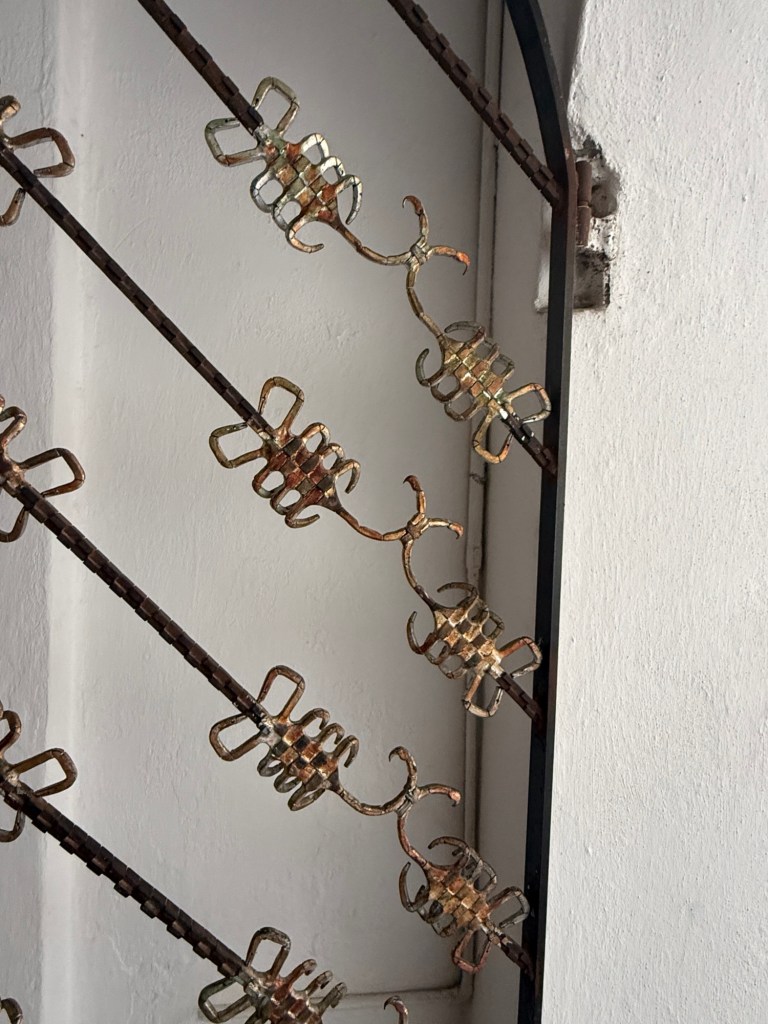
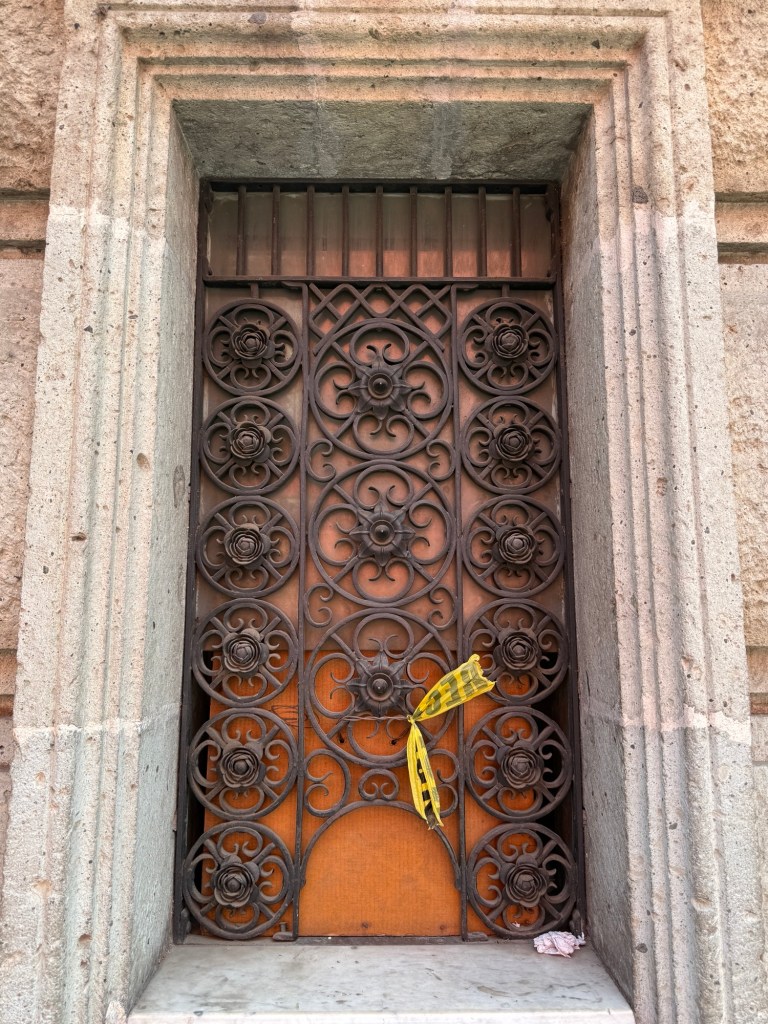
Part of a beautiful gate made by Francisco Toledo of a kind of scorpions found here that is smaller than scorpions in Texas, for example.
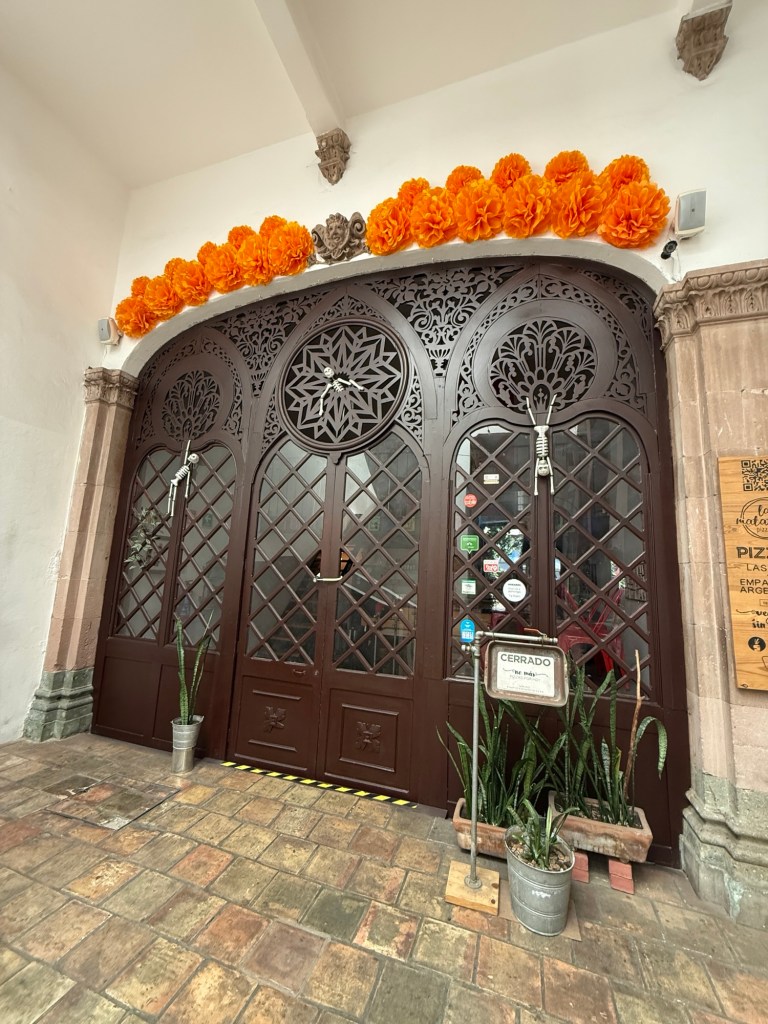
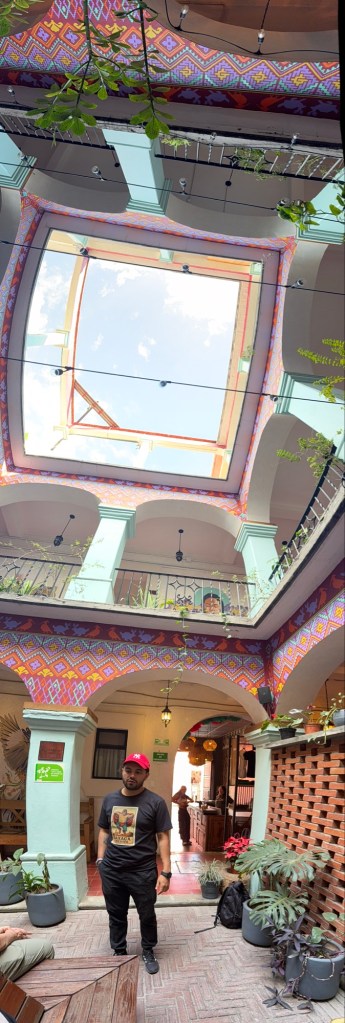
Fernando encouraged us to go inside buildings whose doors are open, as that signals an invitation. Often the exterior would give not clue to the beautiful interiors, usually with plant filled courtyards.
An art nouveau style theatre (teatro) being renovated.
A window on the teatro.
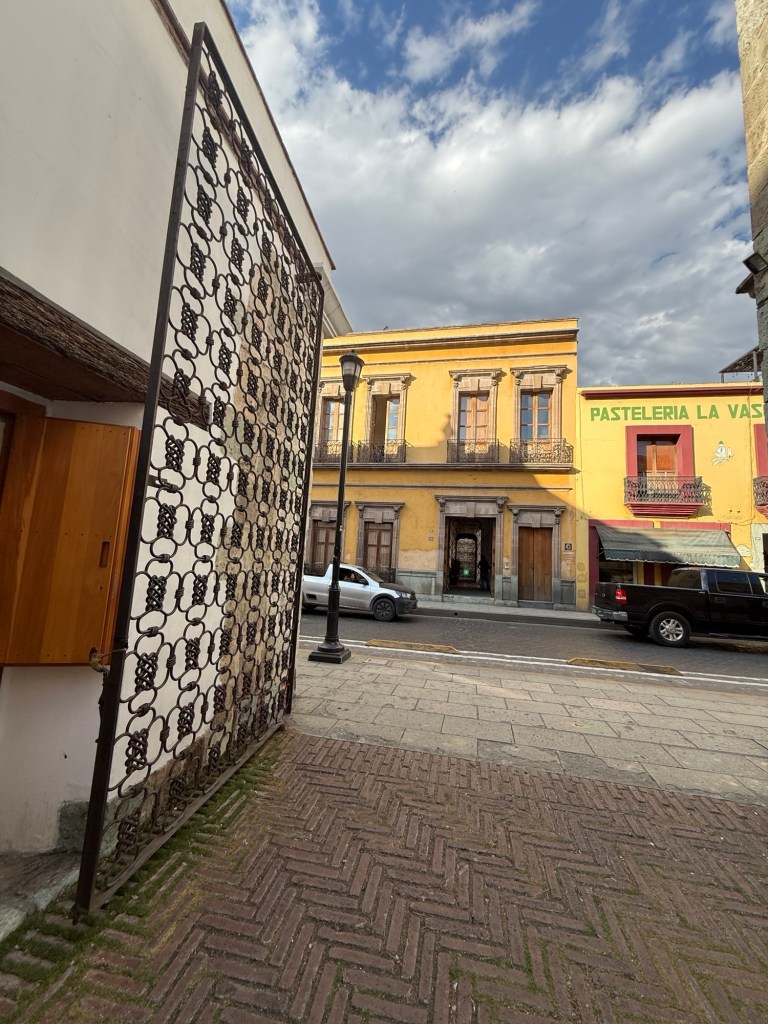
Another Francisco Toledo gate and wish I’d crossed the street to zoom in on a gate inside the building across the street with a beautiful cricket design. Notice the path is a porous design with grass growing between the bricks. This is the entry to a lovely cultural arts center.
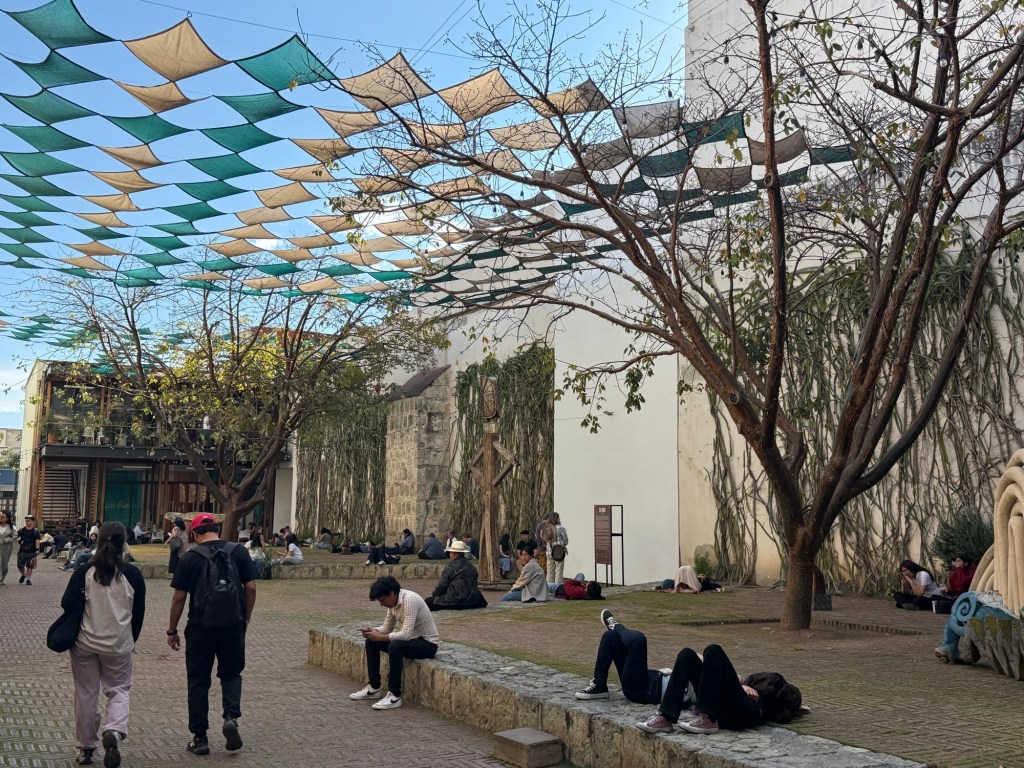
The site was the former convent that had been used as a parking lot until Toledo and his friend Alfredo Harp Helu renovated it with a beautiful mix of old structures with modern additions.
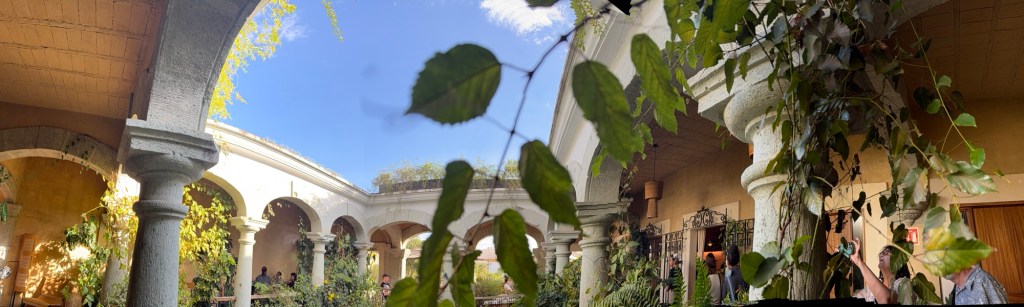
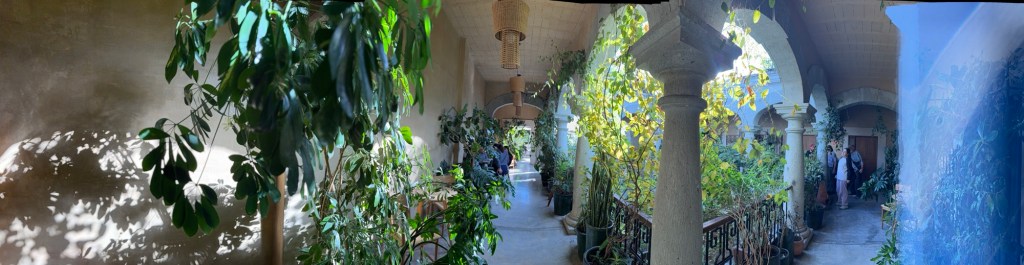
A hotel courtyard.
Fernando loves the play of light and shadow depending on the time of day.
The reflection of metal on the edge of the roof spells the hotel’s name only at a certain time of day.
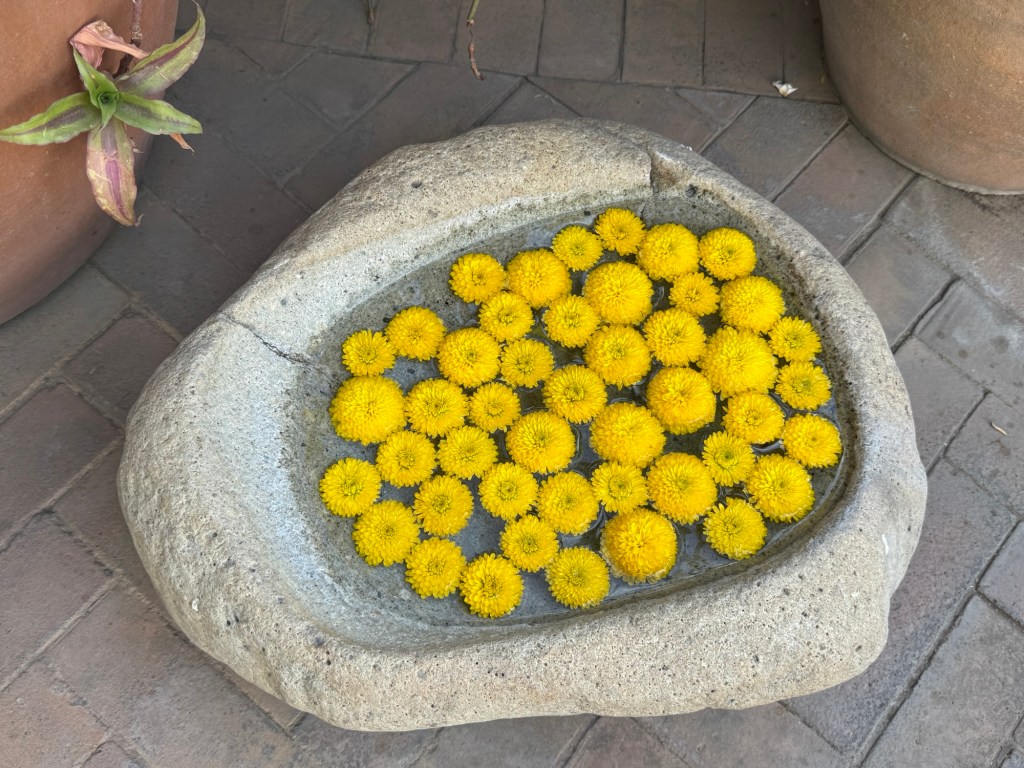
An ancient metate (for grinding corn) repurposed for flowers.
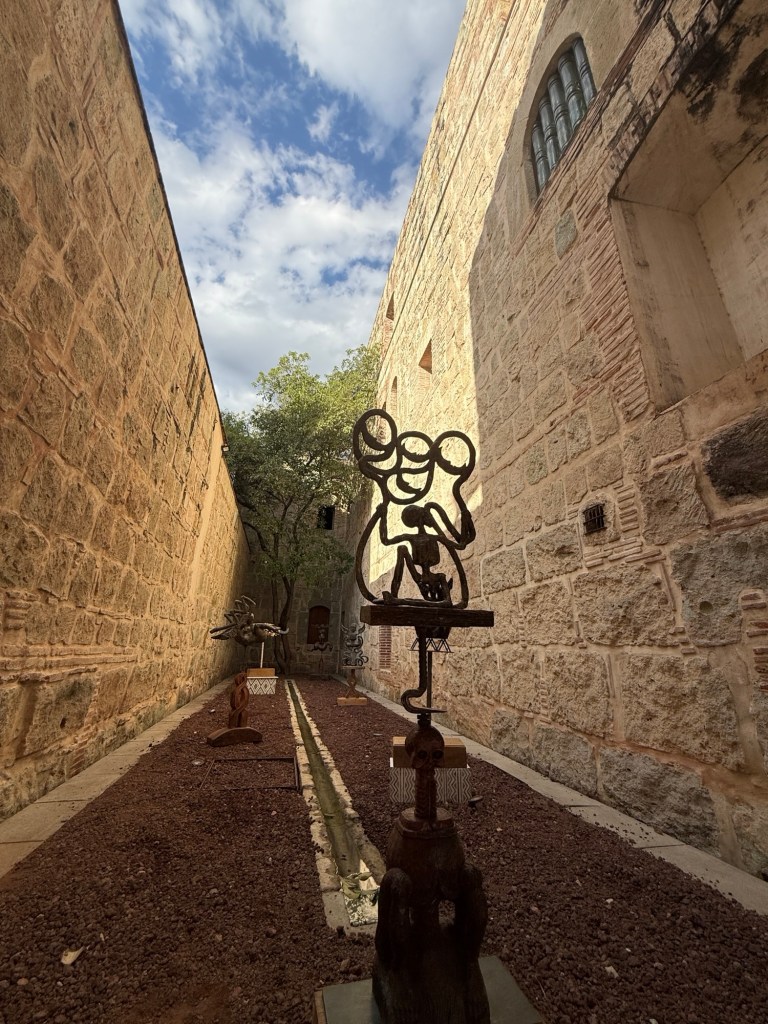
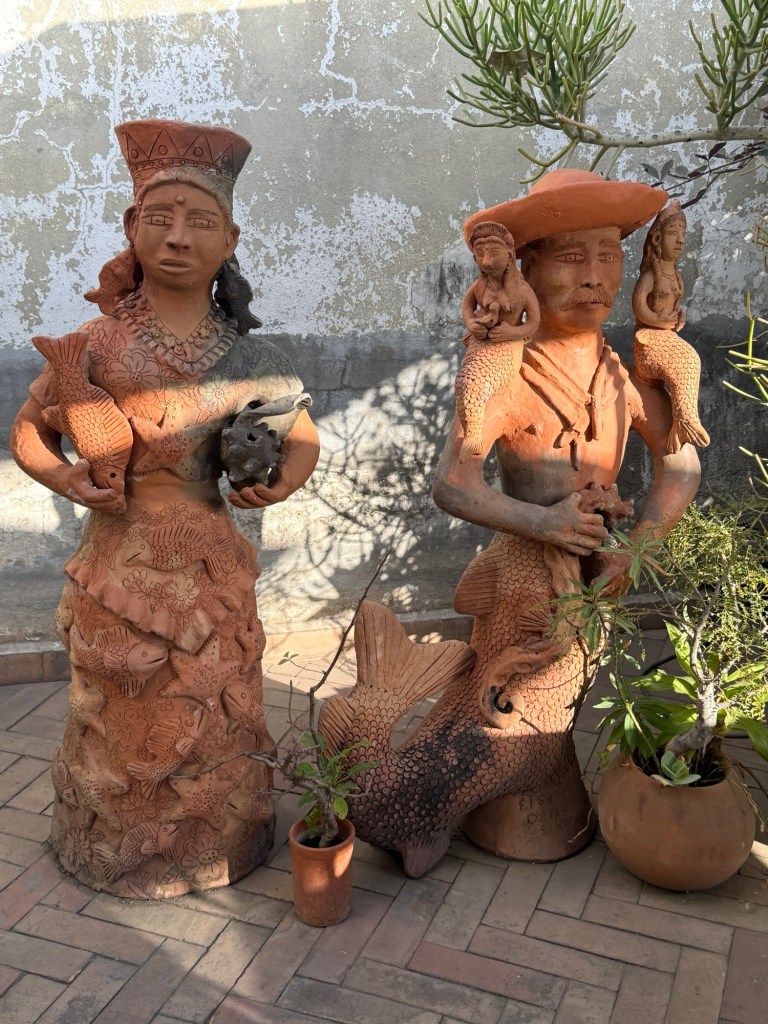
Sculpture made by a famous blind artist called el señor de las sirenas (mermaids).

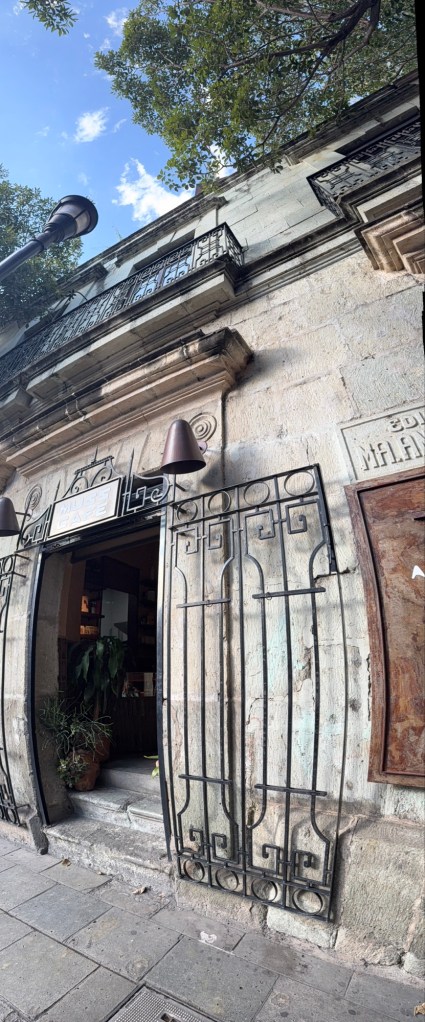
I love the ironwork…
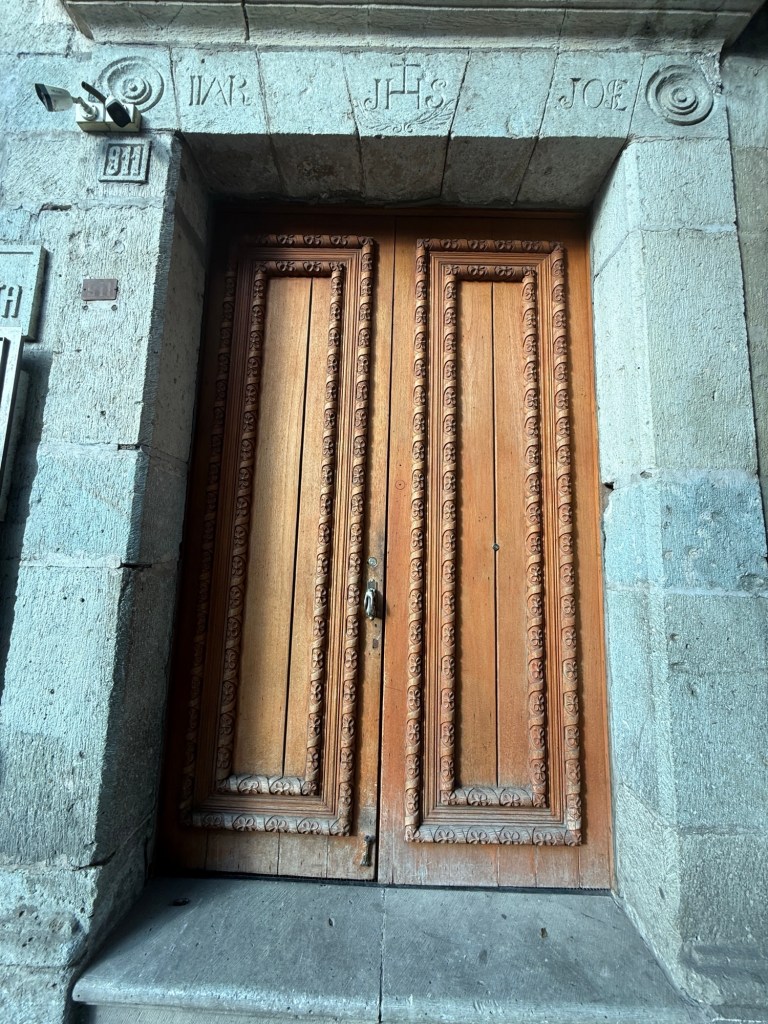
…and doors
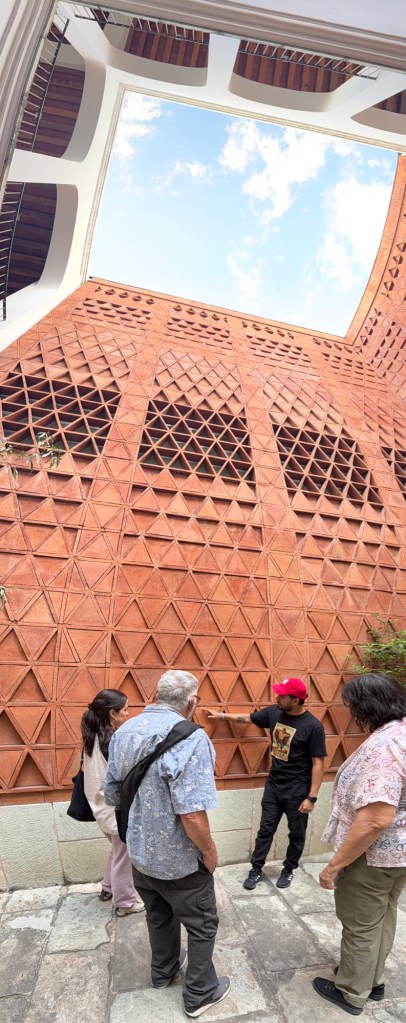
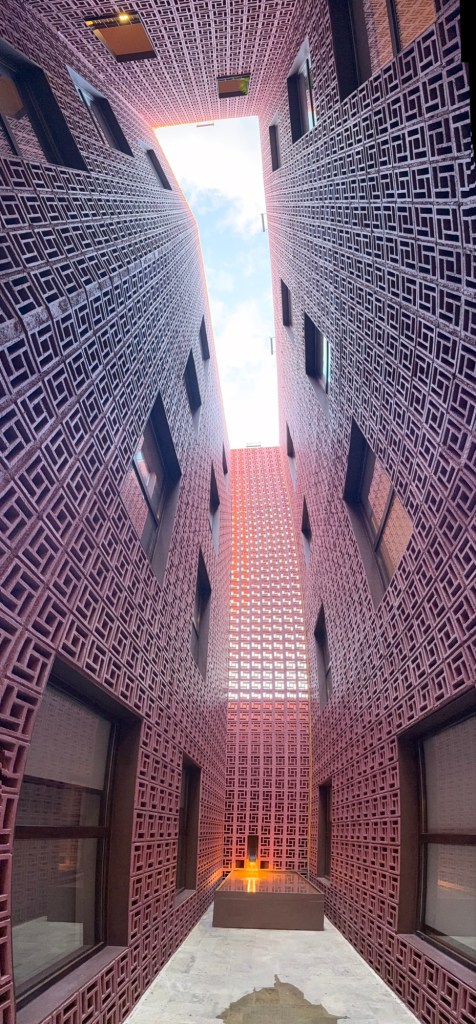
Fernando loves latticework that allows air and light (and in one later provides a place for birds to rest at night).
Just a pretty building..
Inside the stamp museum
Another chance for Dave to dance! Lots of families come out to parks at night. Besides dancers, there were roller skaters, and kids in electric cars. I remember in Cambodia parks at night filled with various exercise classes. So nice to have such beautiful tree-covered spaces where people come out to stroll, eat, play, and enjoy good company.
Interior courtyard of stamp museum
More trees growing out of buildings…
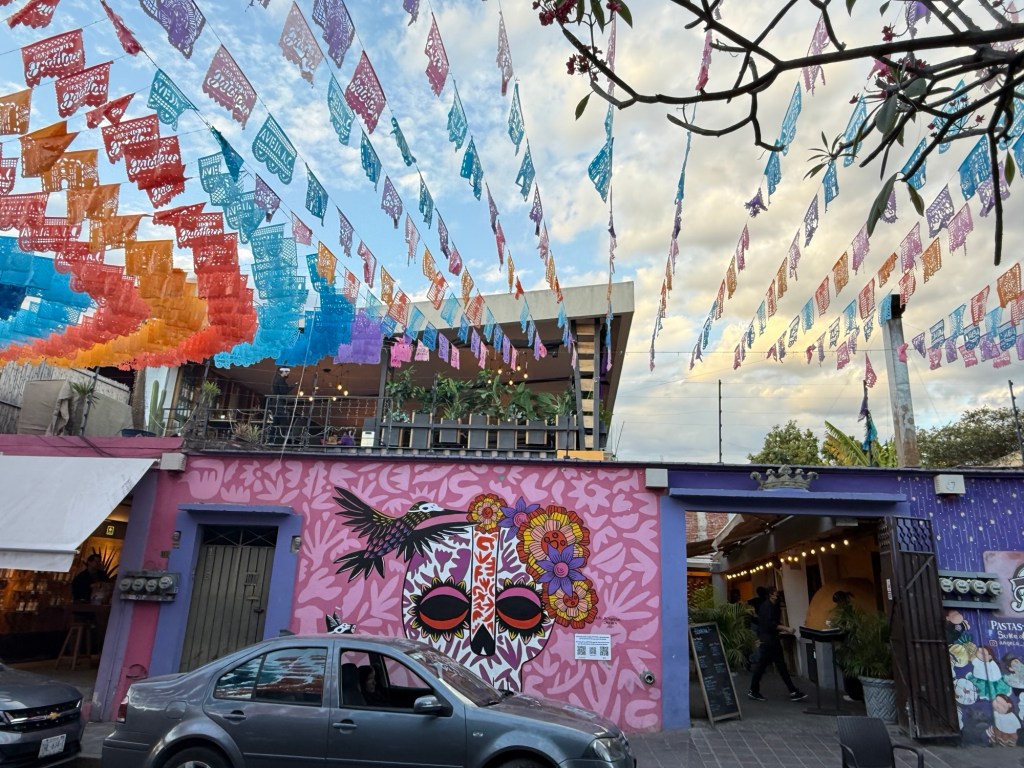
No murals in the historic center. Fernando took us east of town to a very colorful neighborhood
Just in time for the church bells
Marriot hotel interior courtyard that helps reduce noise
More wonderful fish for dinner!
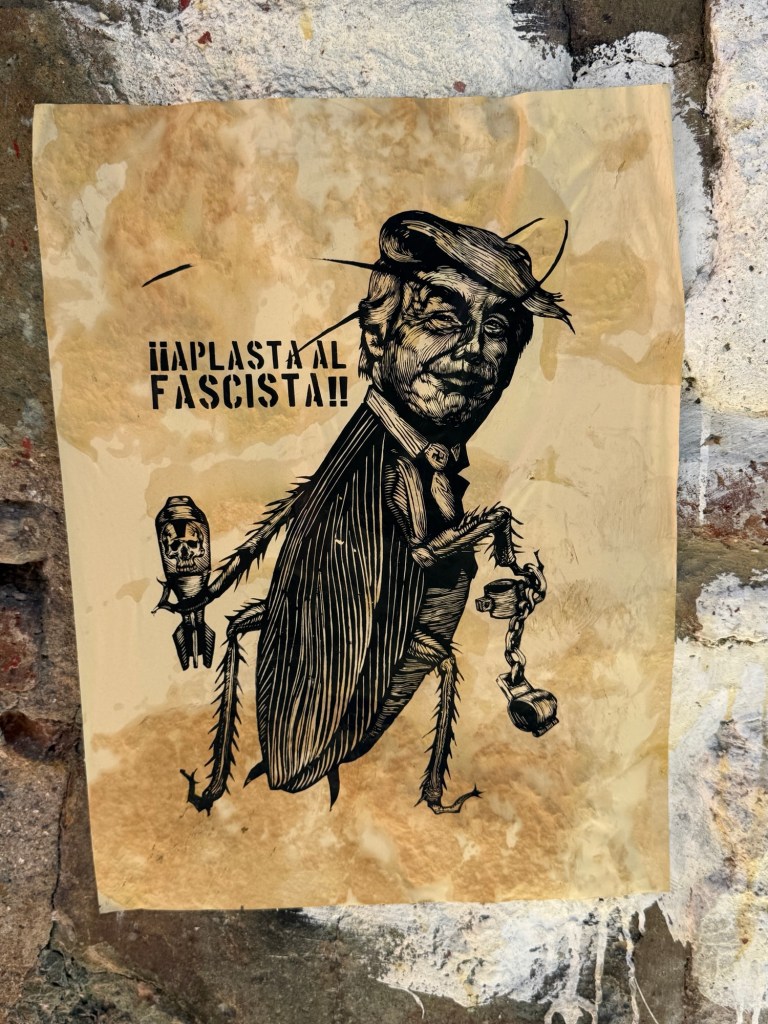
How folks feel about our president…
Another chance for Dave to dance! Lots of families come out to parks at night. Besides dancers, there were roller skaters, and kids in electric cars. I remember in Cambodia parks at night filled with various exercise classes. So nice to have such beautiful tree-covered spaces where people come out to stroll, eat, play, and enjoy good company.

On the way to Oaxaca

An auspicious start to my trip—pianist playing Besame Mucho live in the airport in Atlanta!

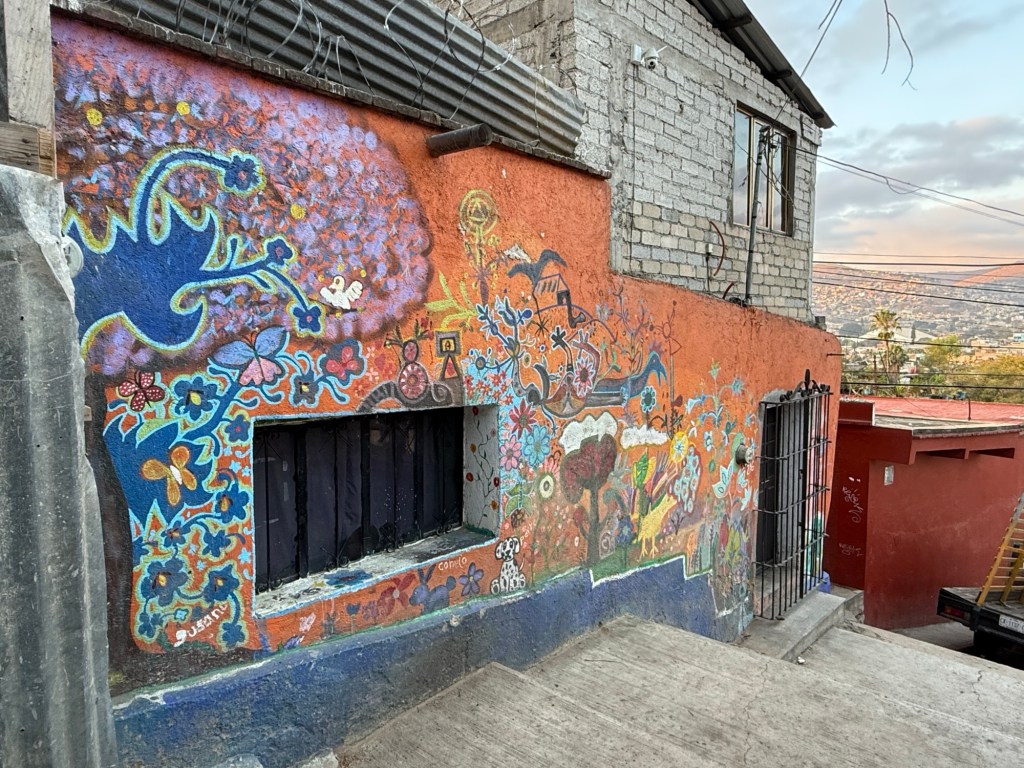
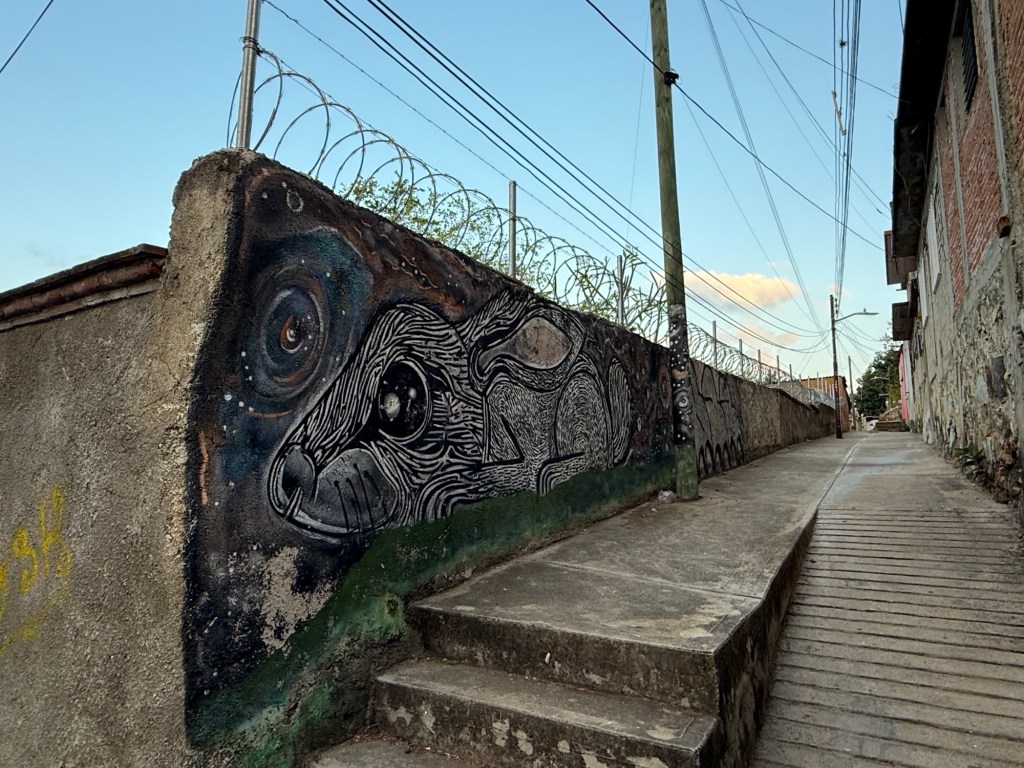
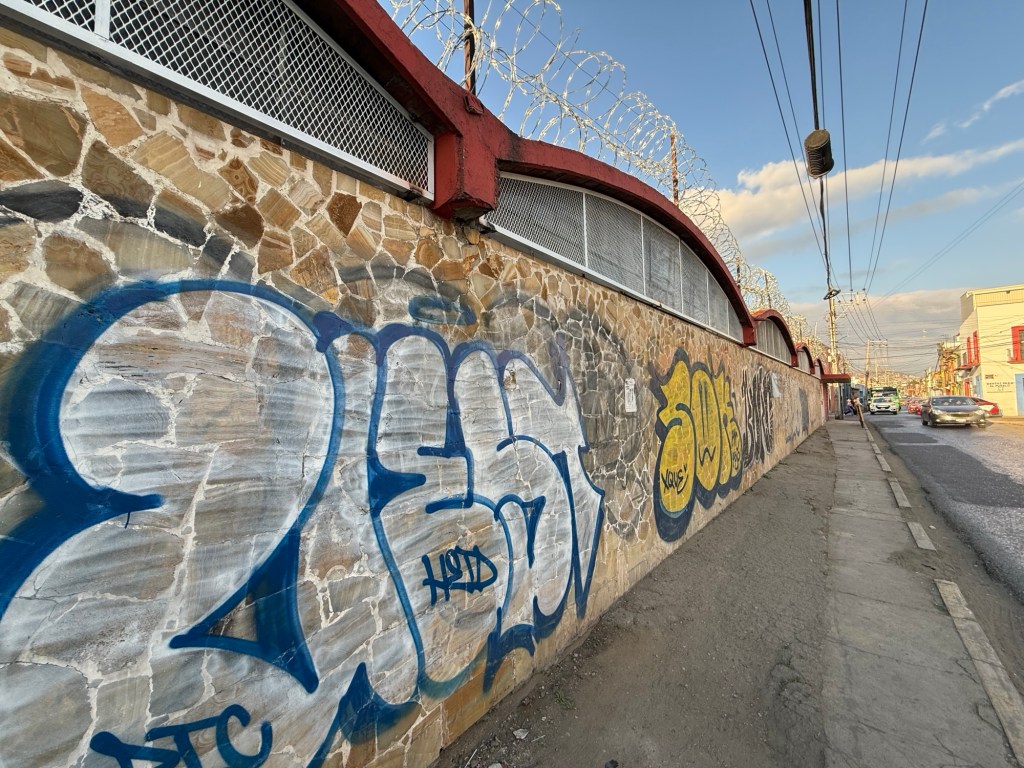
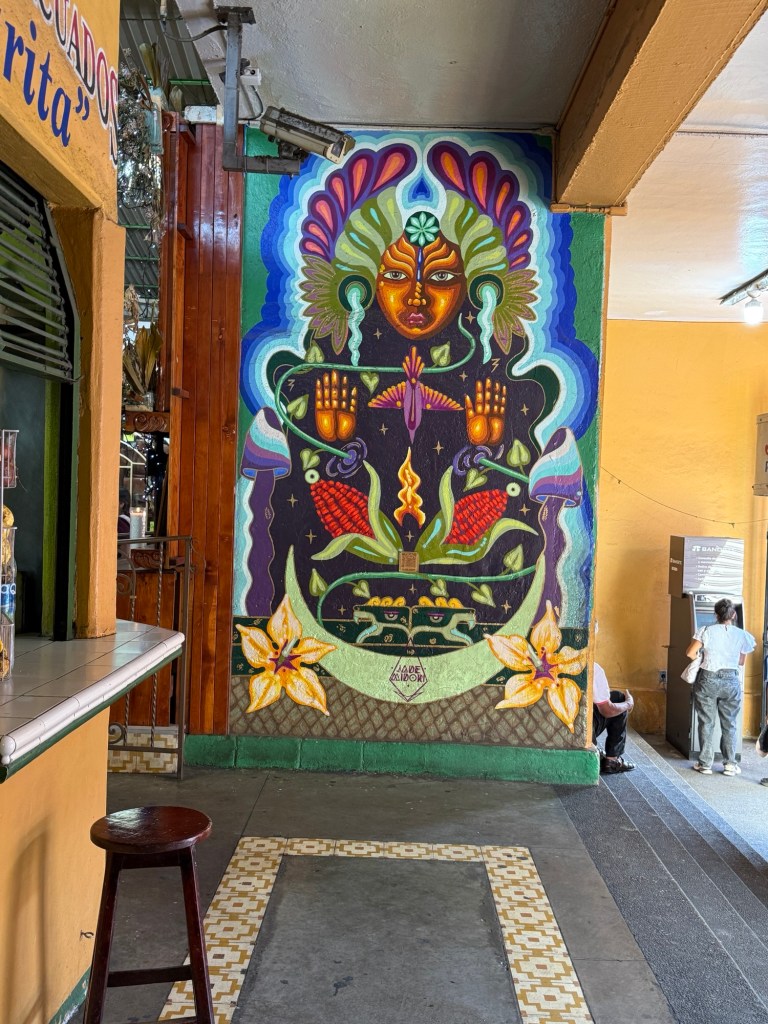
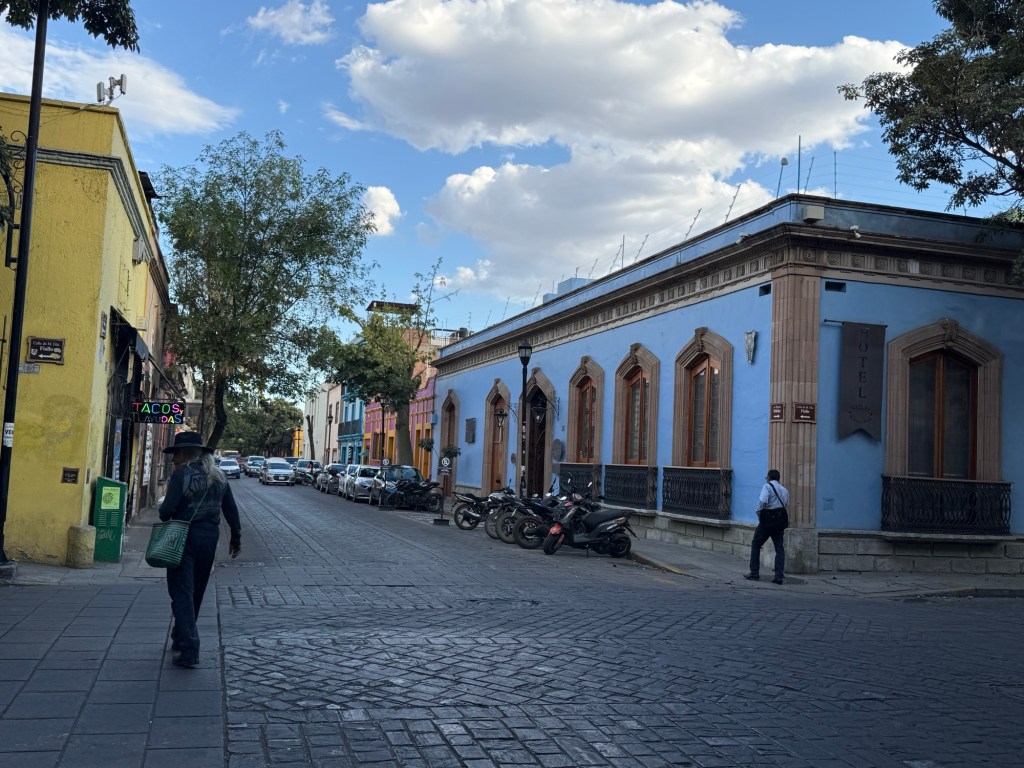
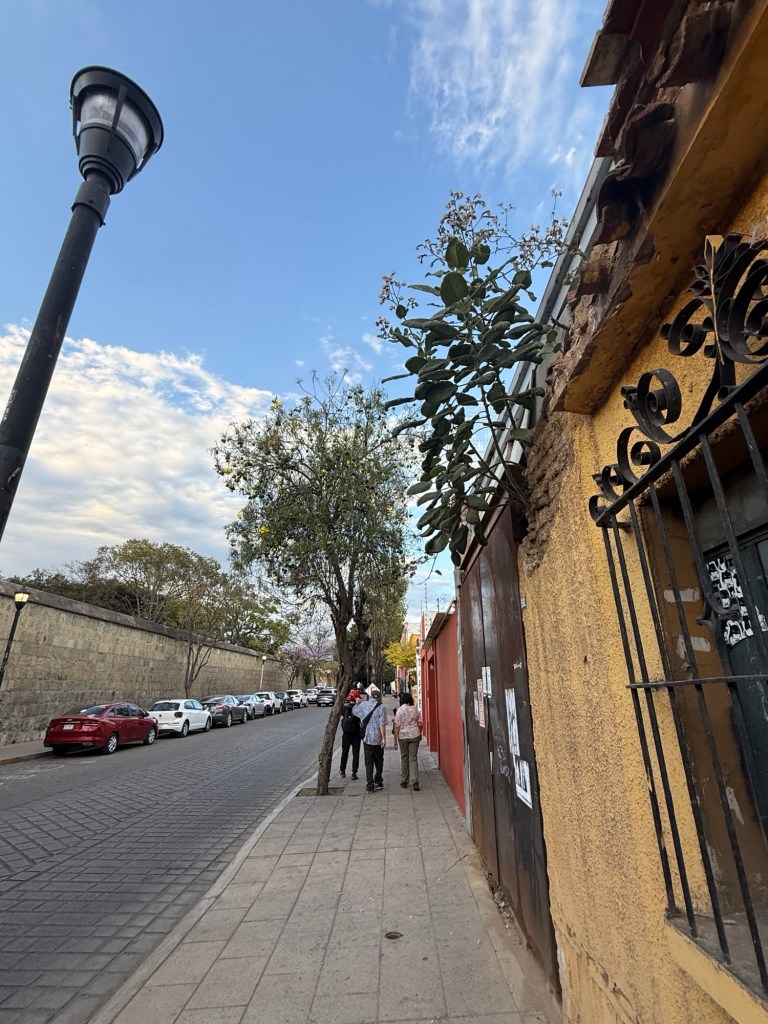
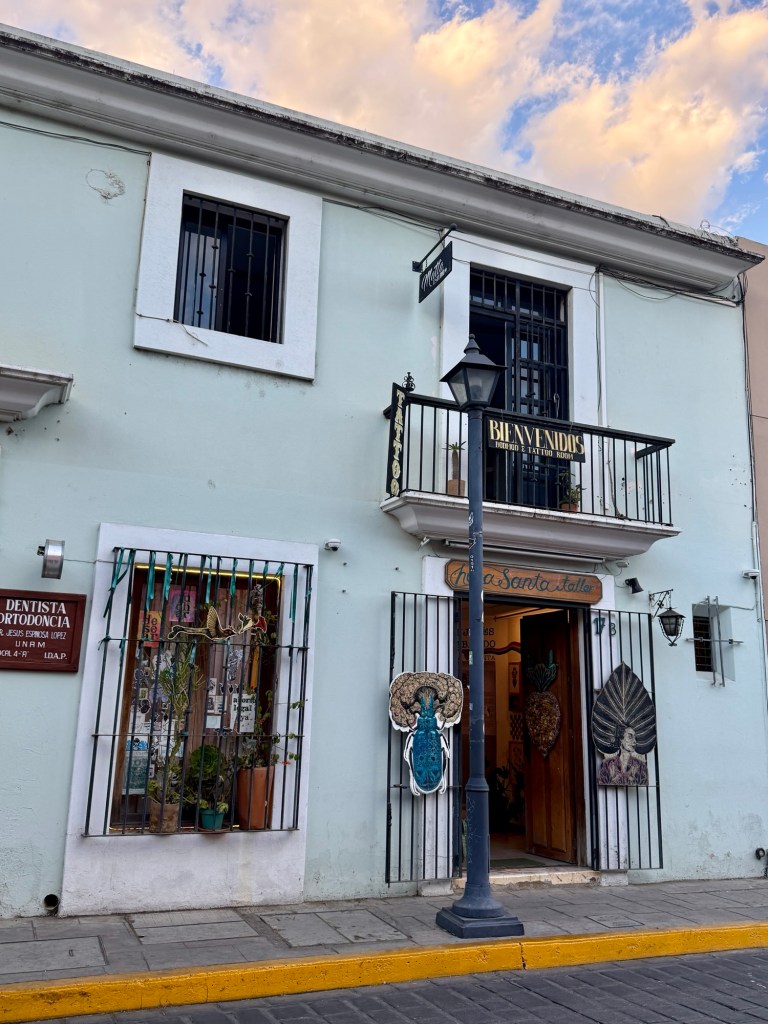
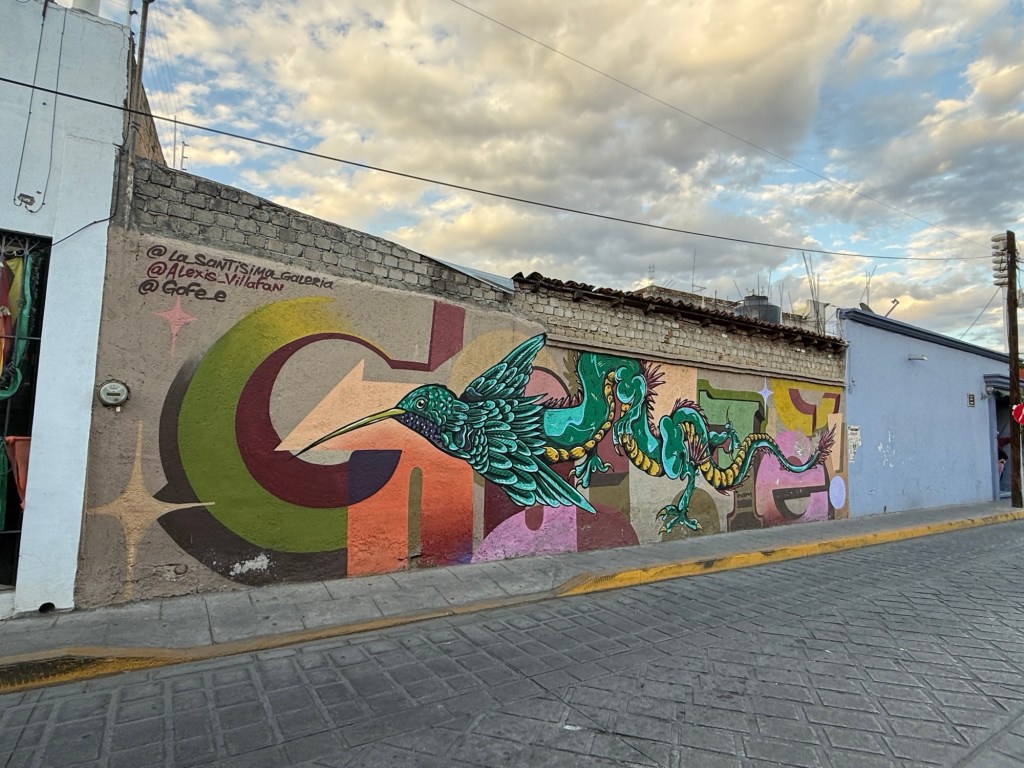
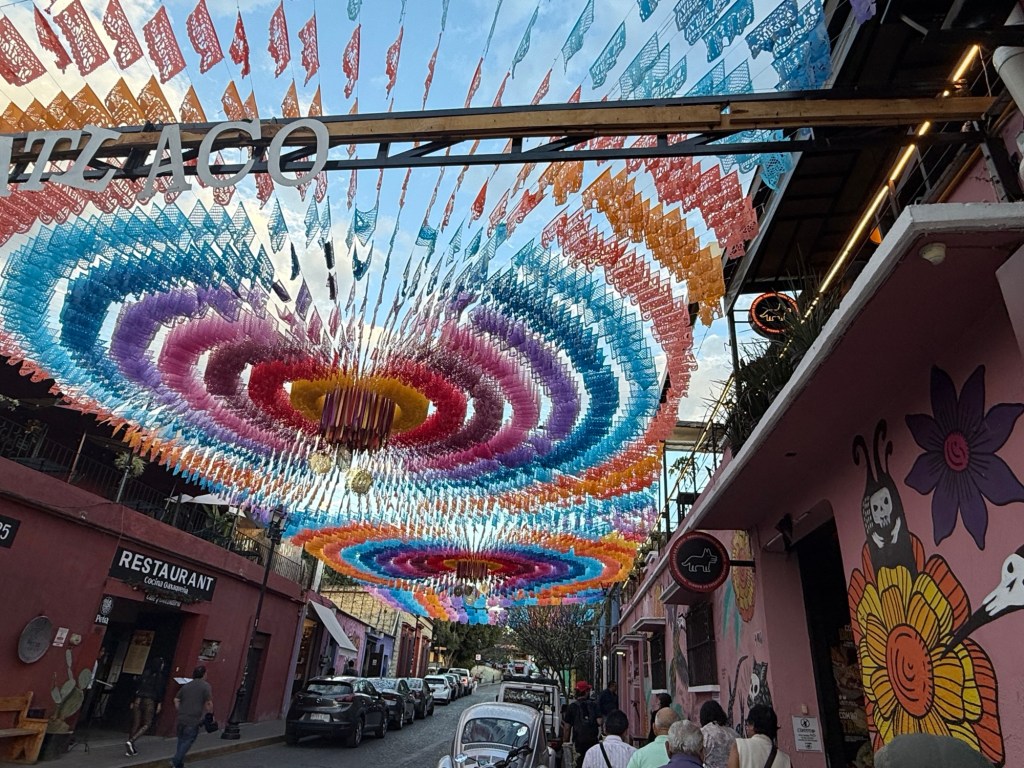
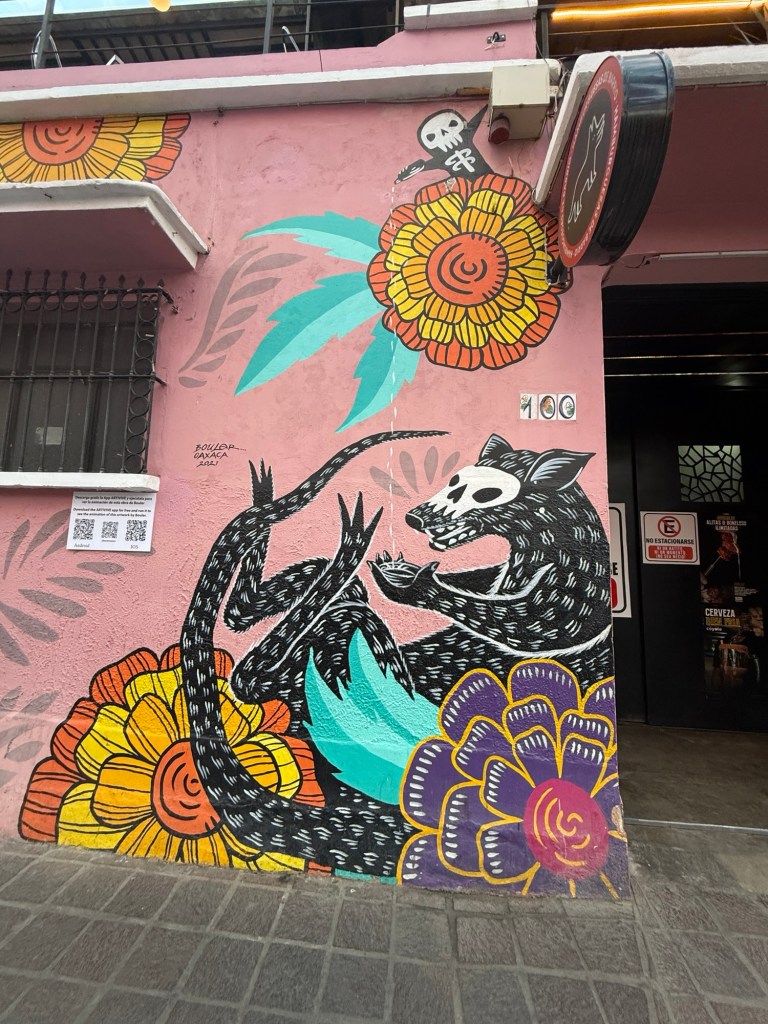
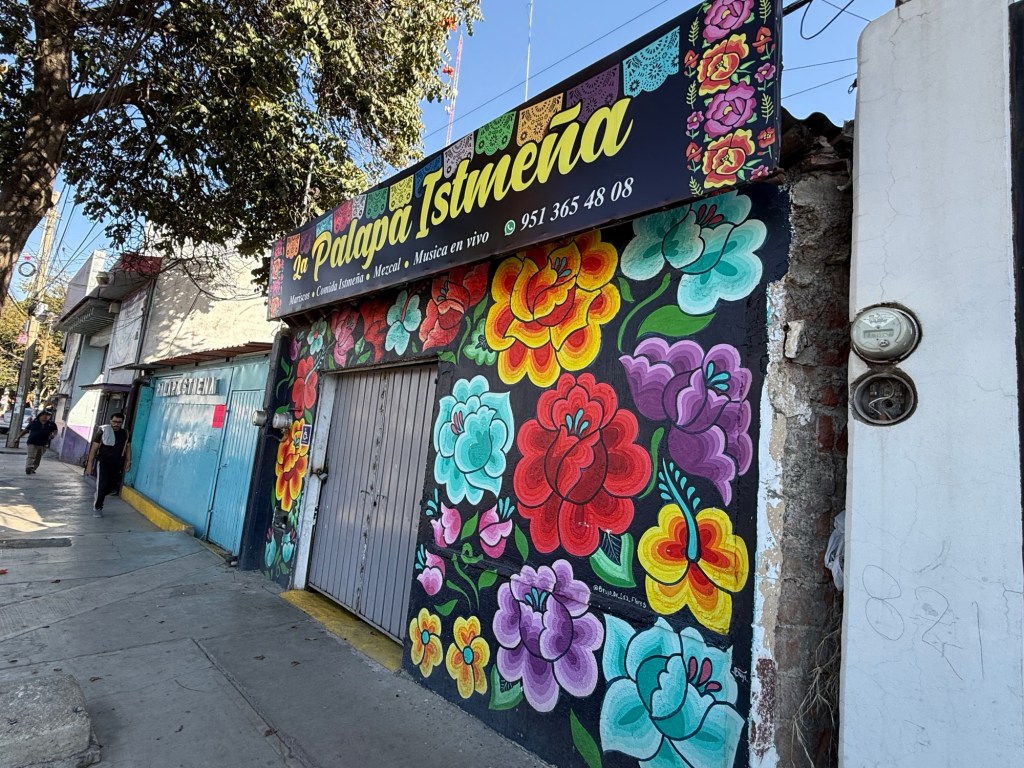
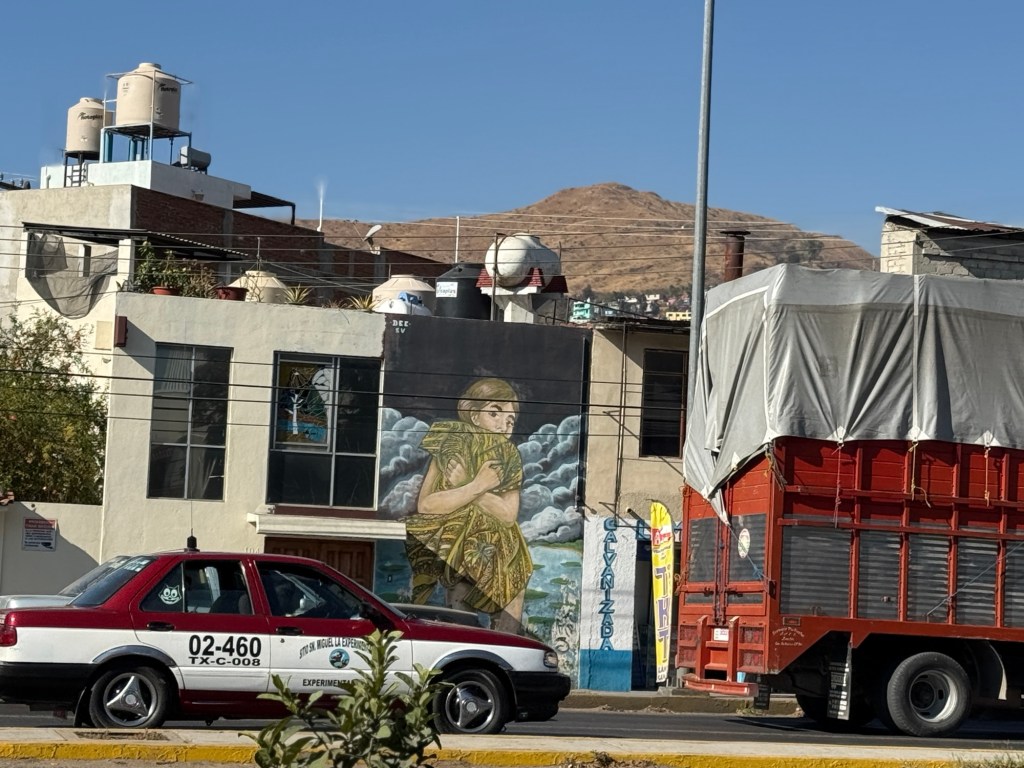
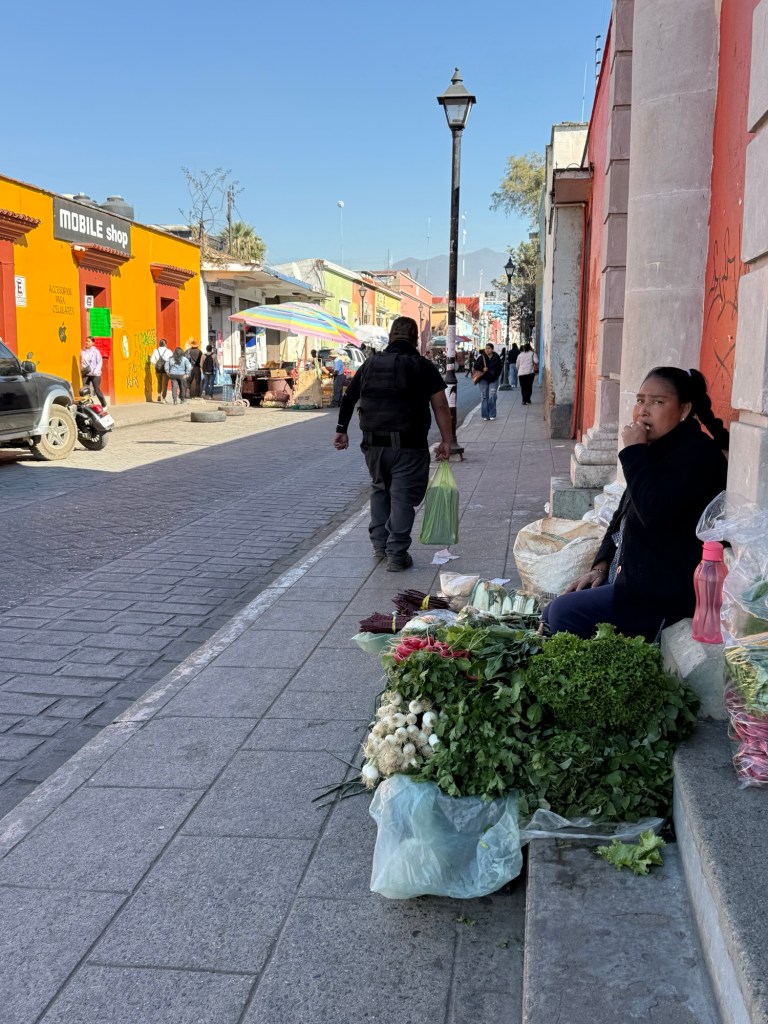
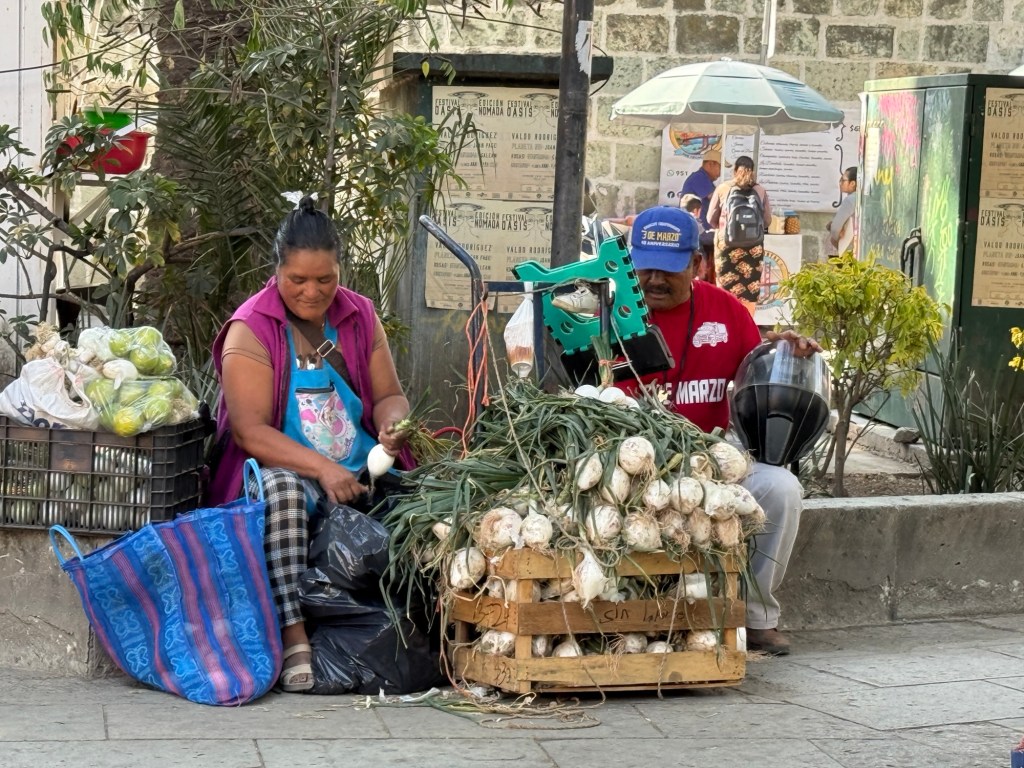
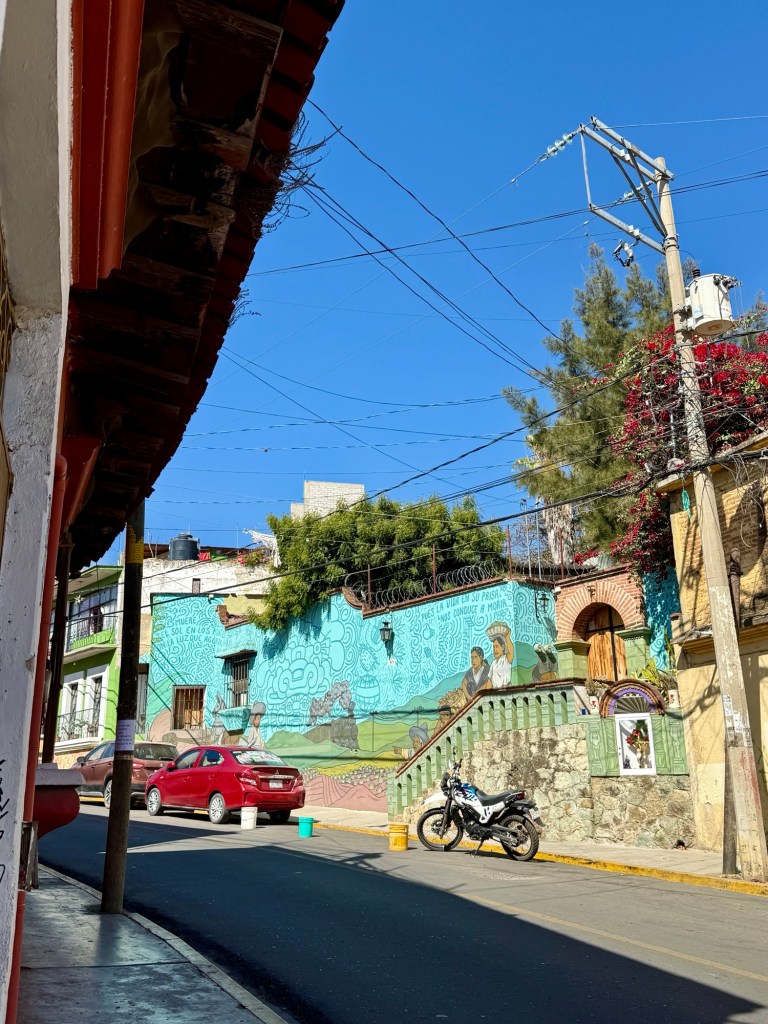
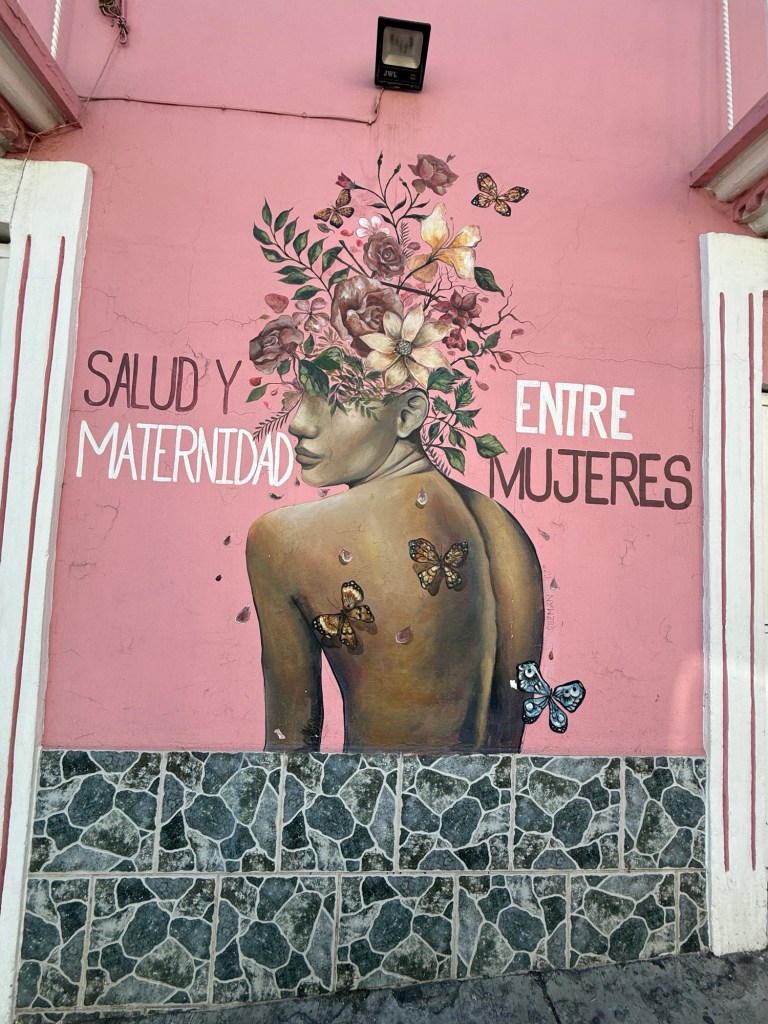
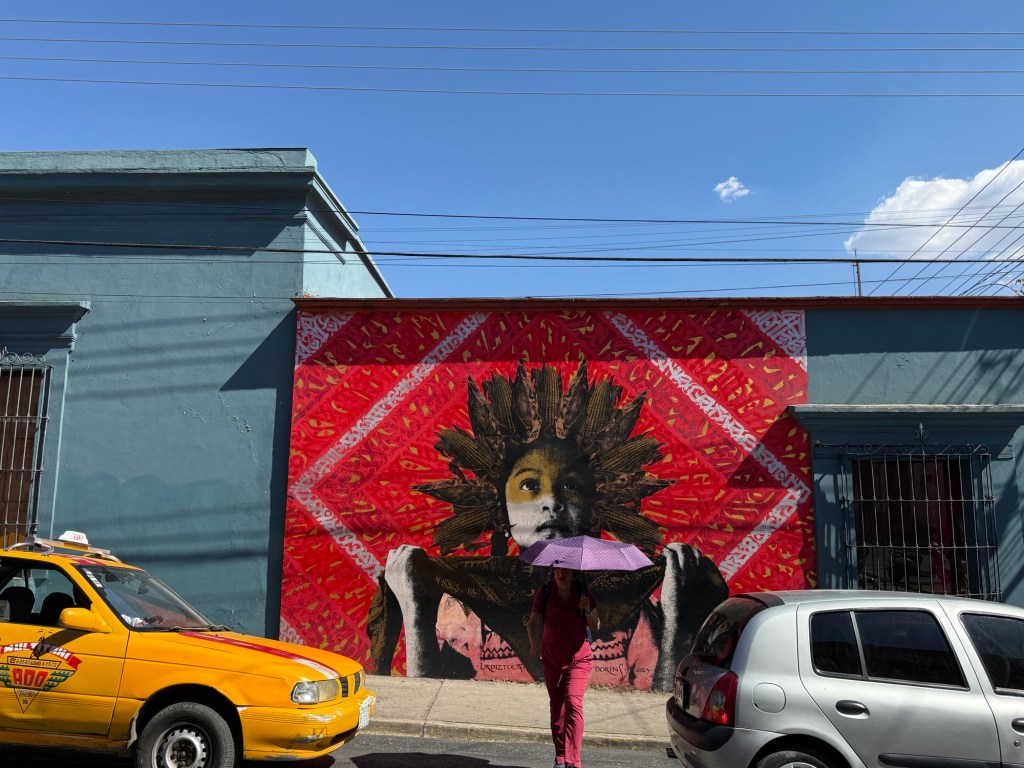
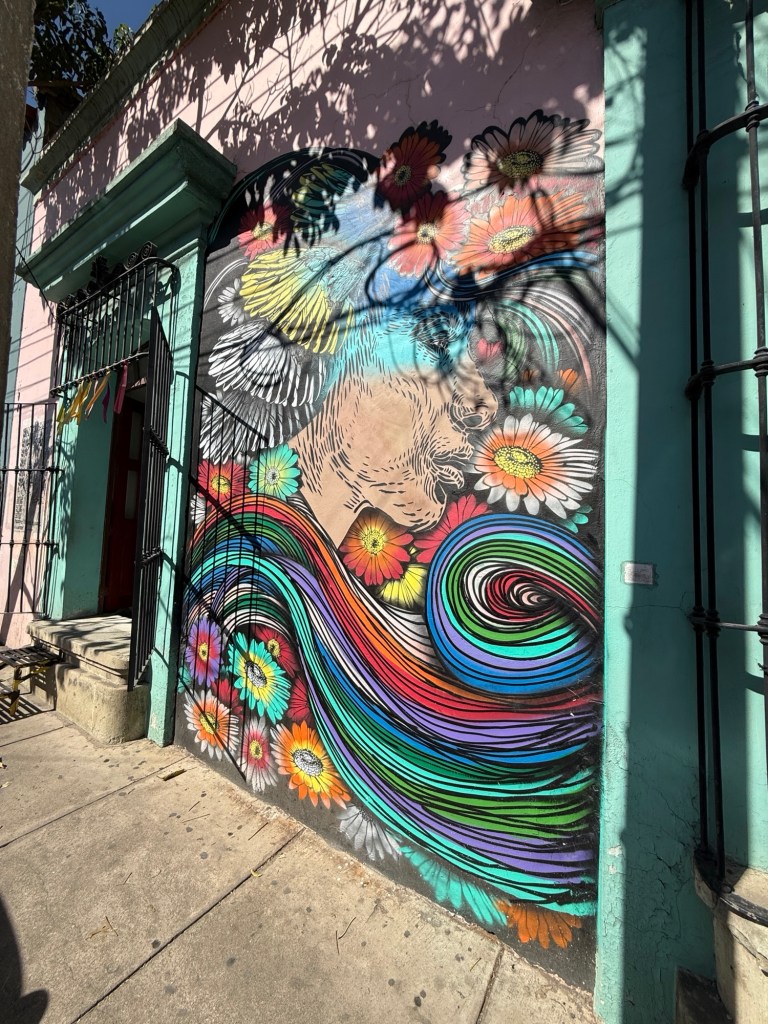
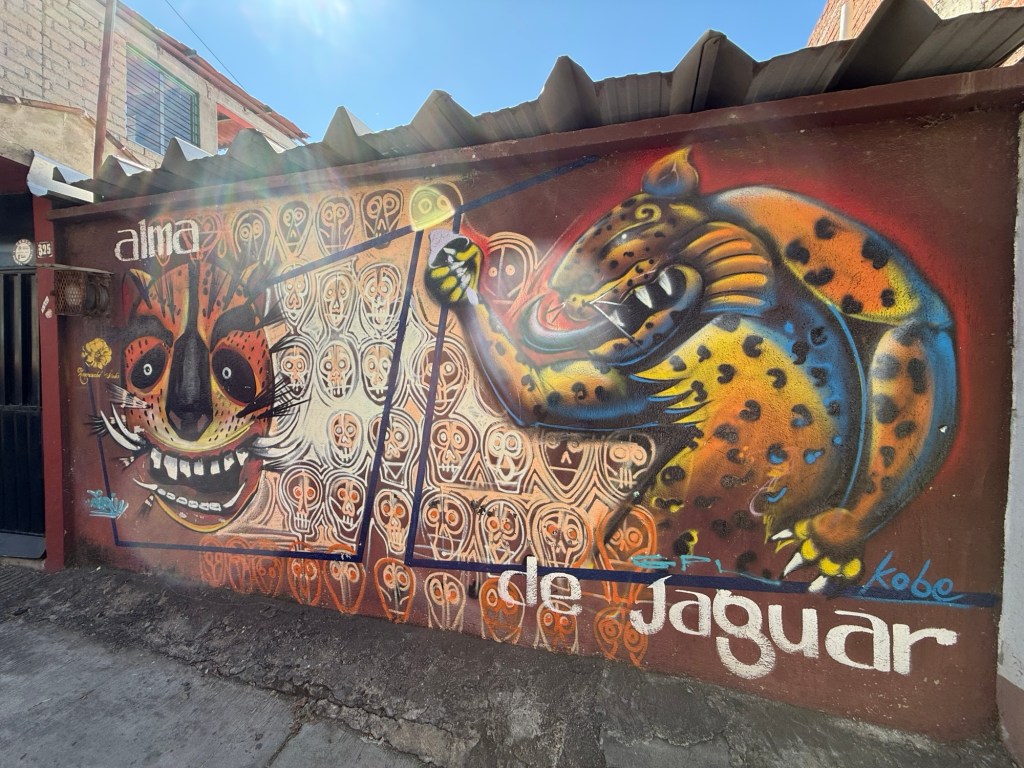
Oaxaca is full of street art and lots of indigenous folks selling vegetables or crafts on the streets.

Just going to post photos here and won’t always include captions, but if you have questions, happy to explain if I can…

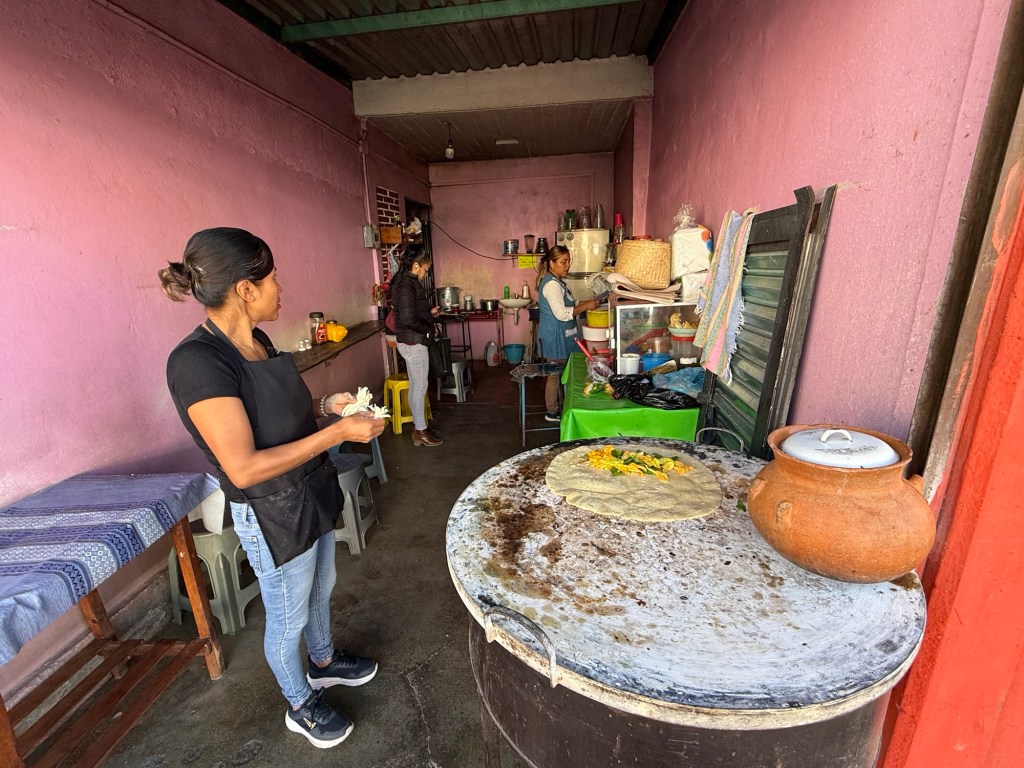
This gal said she didn’t mind me photographing this empanada with squash flowers and I thought she didn’t mind me photographing her, but she looked away, so maybe so.
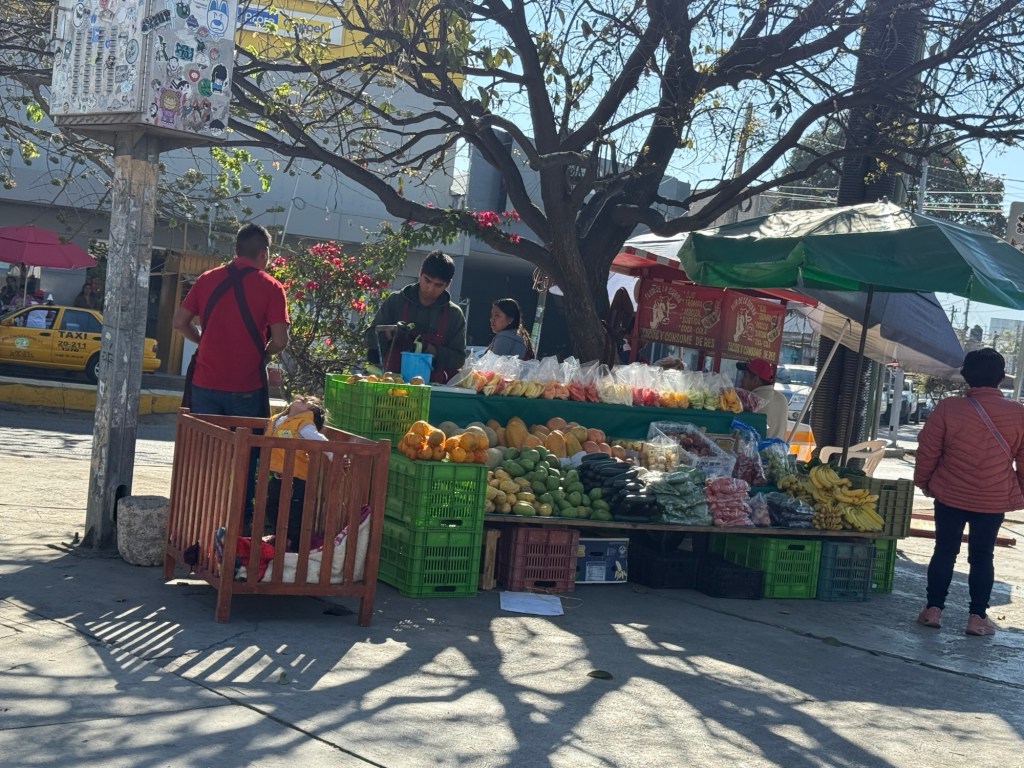
Did you notice the playpen?
These gals laughed a lot saying I wanted photos of beautiful women to share back home and implying I’d find them good men!
Notice the plants growing from the awning above on left.
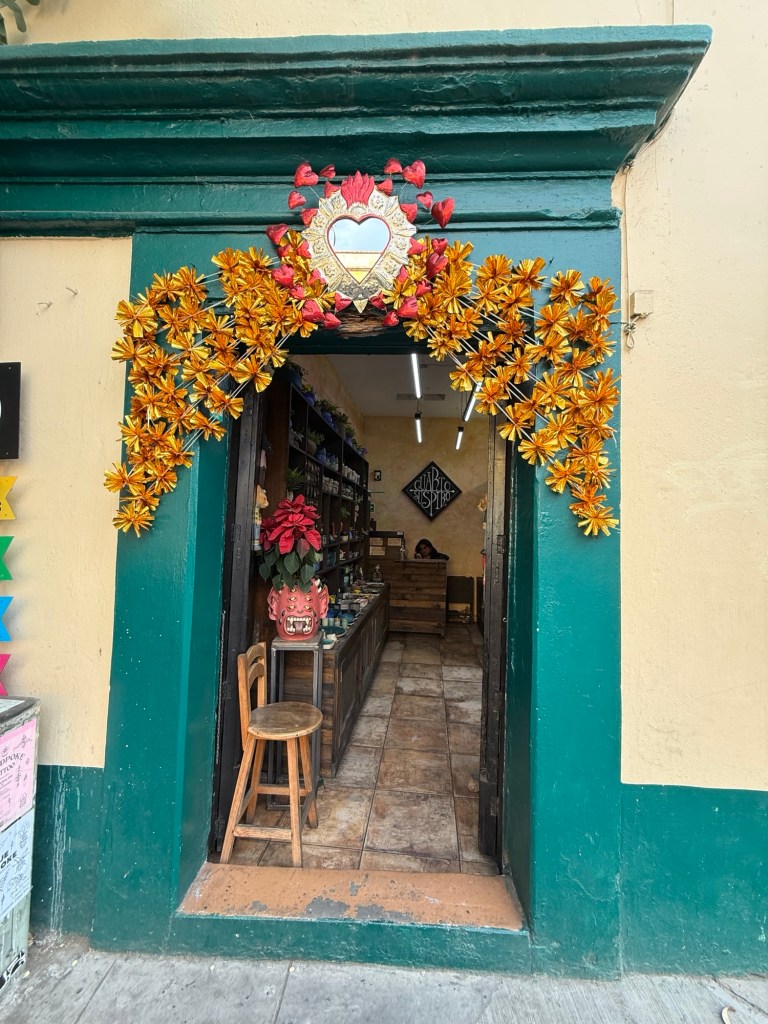
My hotel entryway
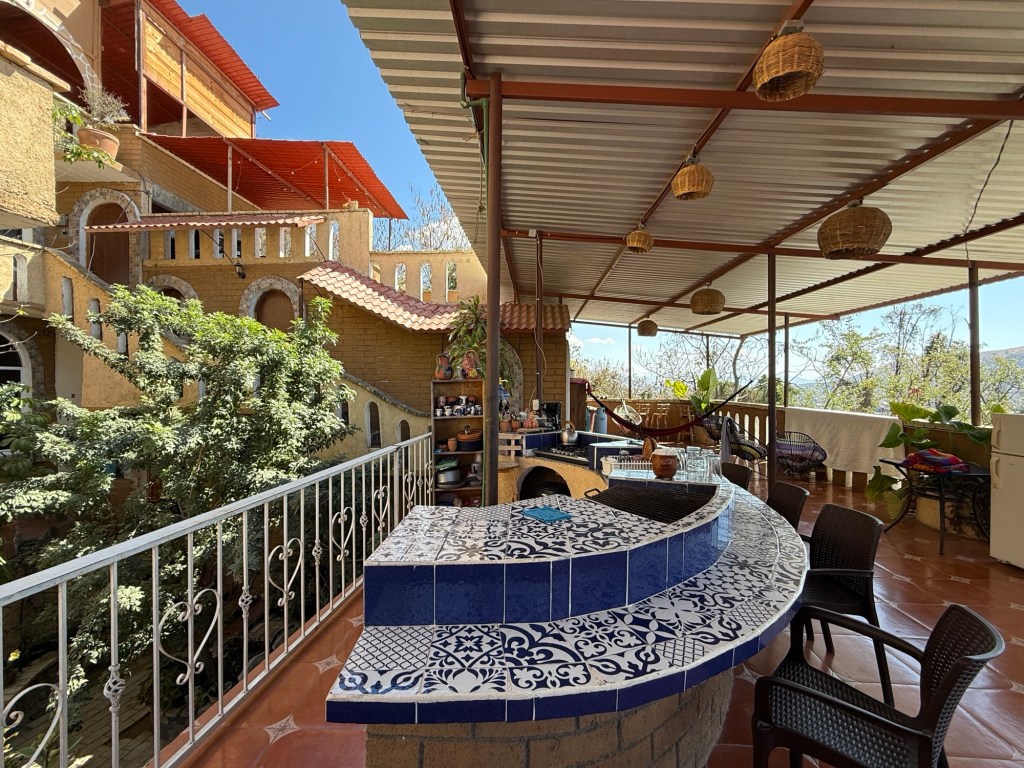
Hotel Terraza Cielito Linda terrace
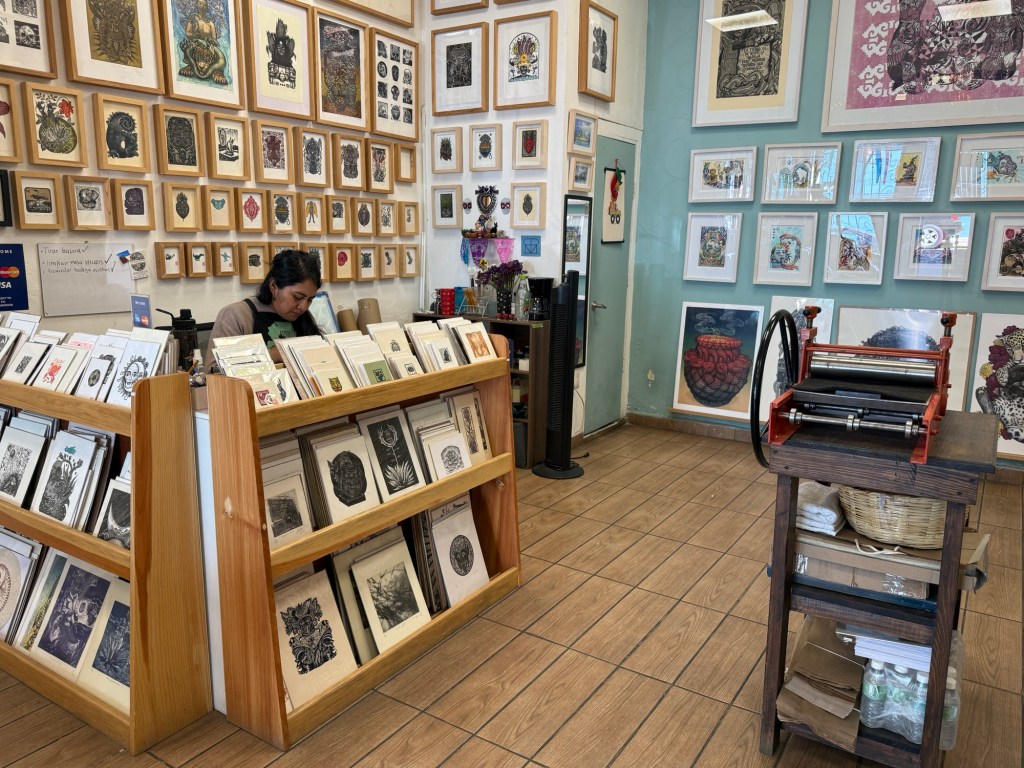
Fantastic print-making artist, Gabriela Morac (@moracgabriela on Instagram). She offers classes Wednesday through Saturday—contact her a couple days ahead c/o panopliagrafica.com).
Trees growing from the walls…
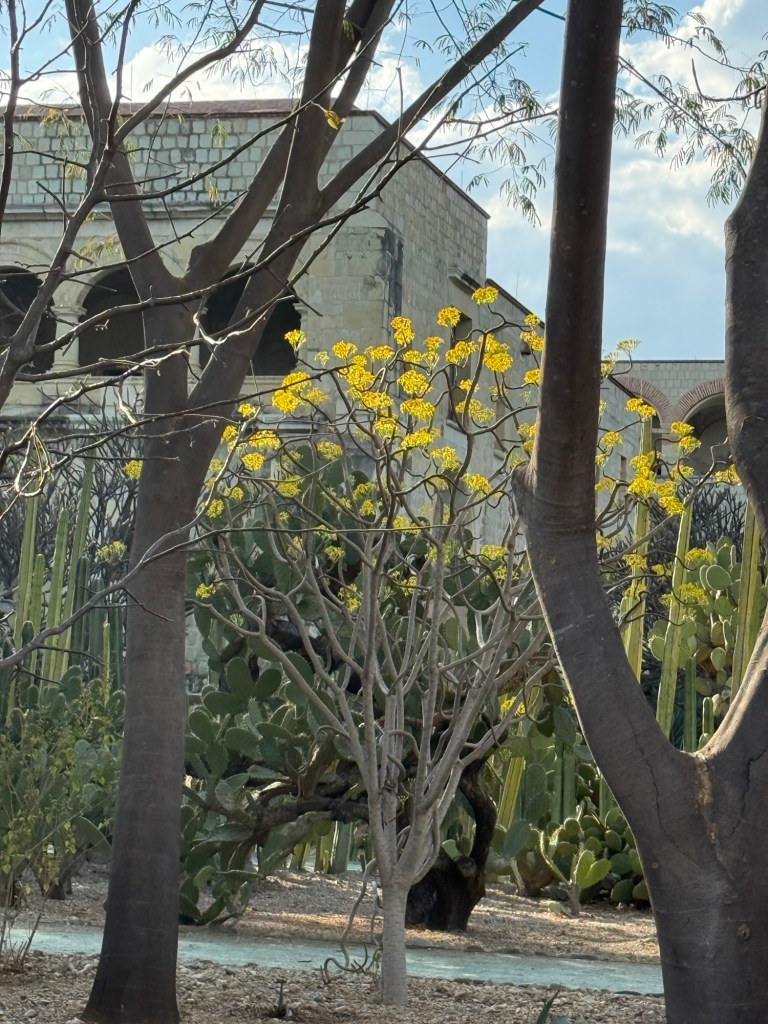
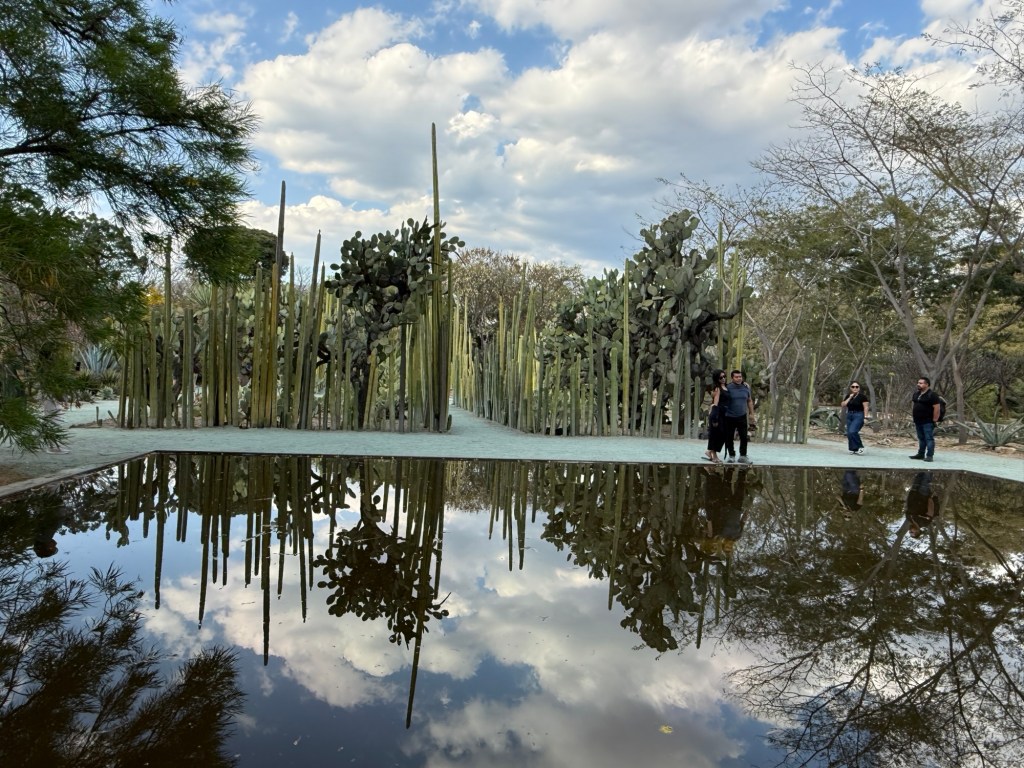
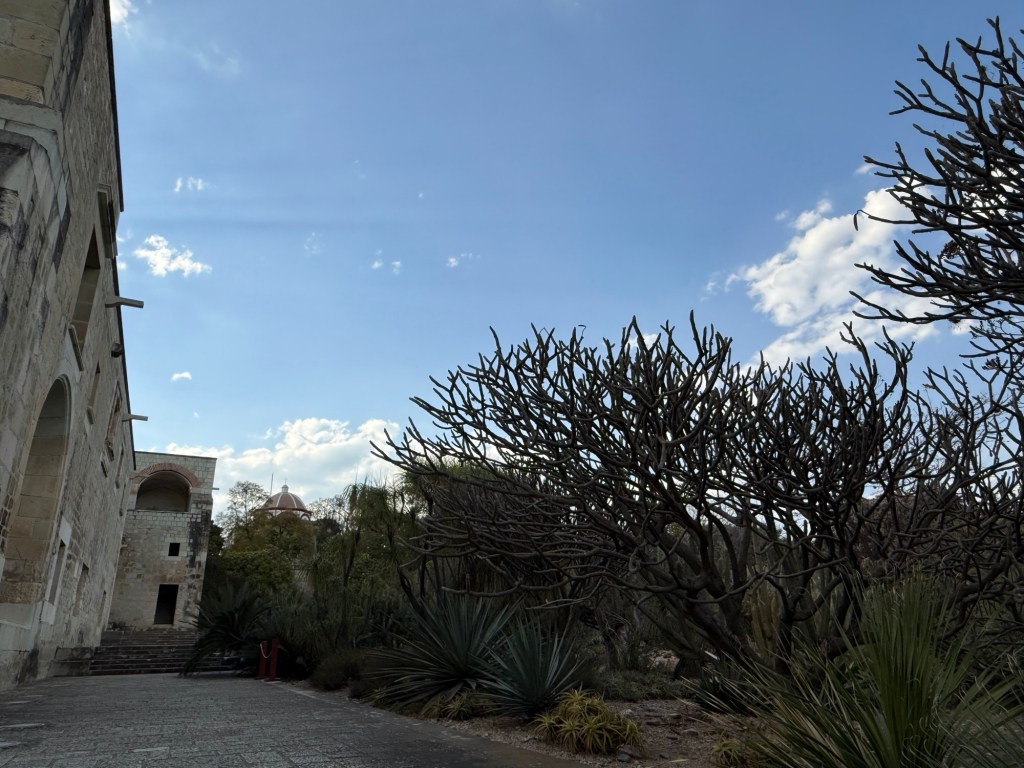
In the botanical garden. I took a lot more plant photos, but posting those in iNaturalist.
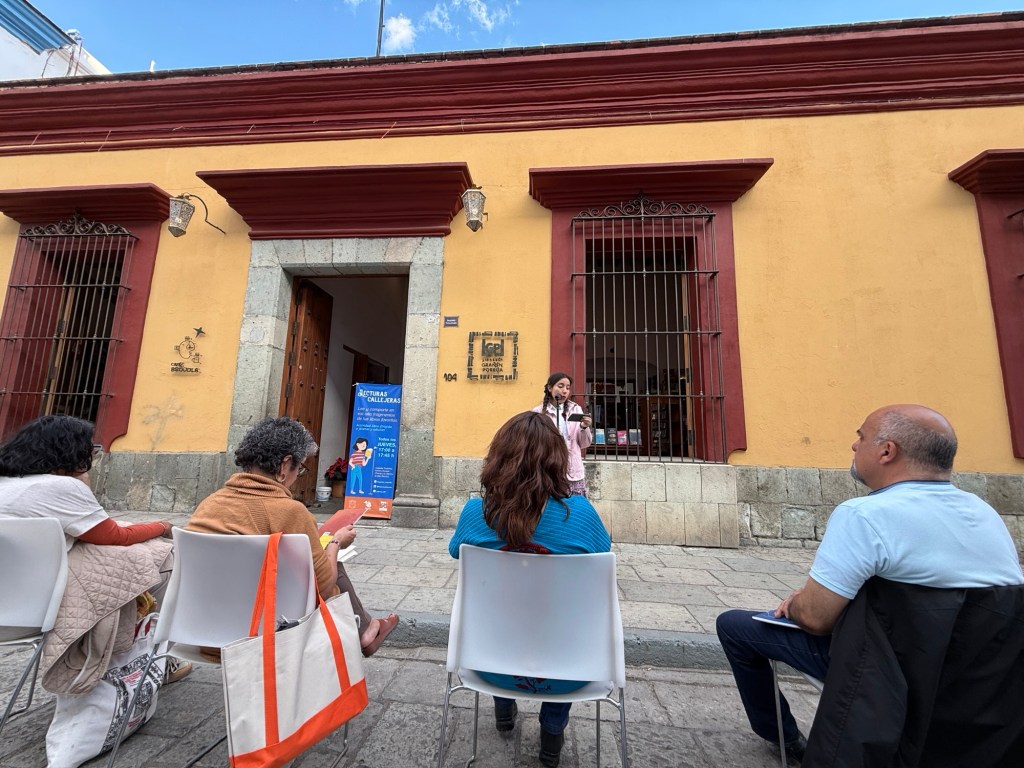
A poetry and prose reading that takes place every Thursday. There are also concerts every Thursday in the artist cooperative near the Textile Museum.
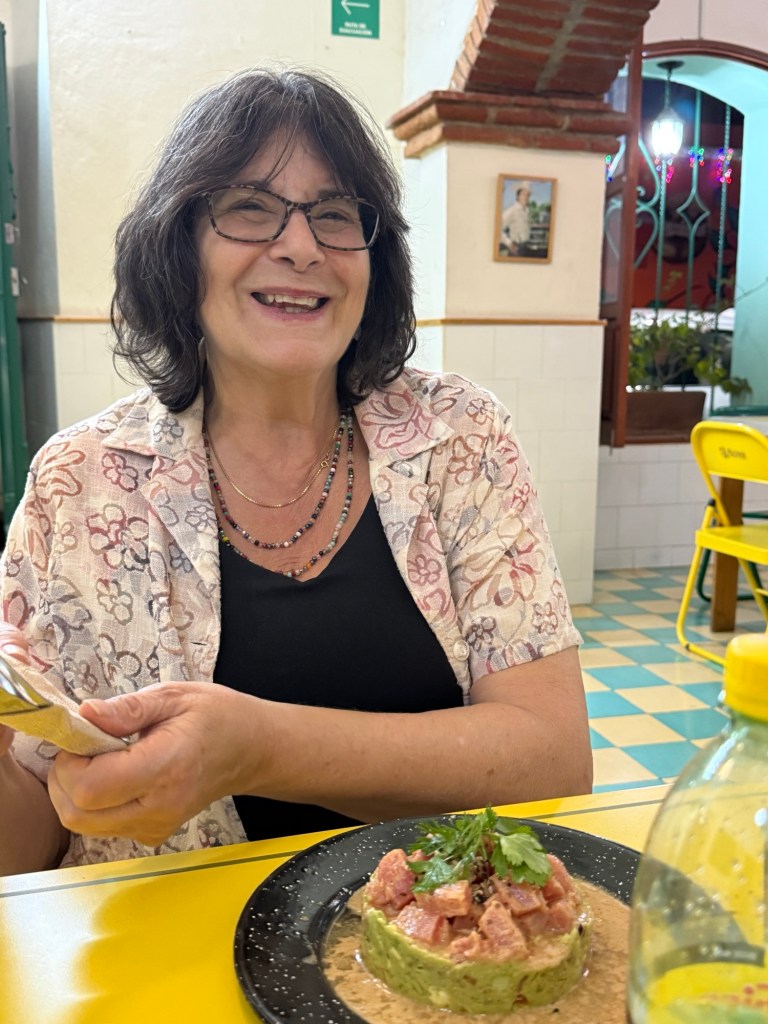
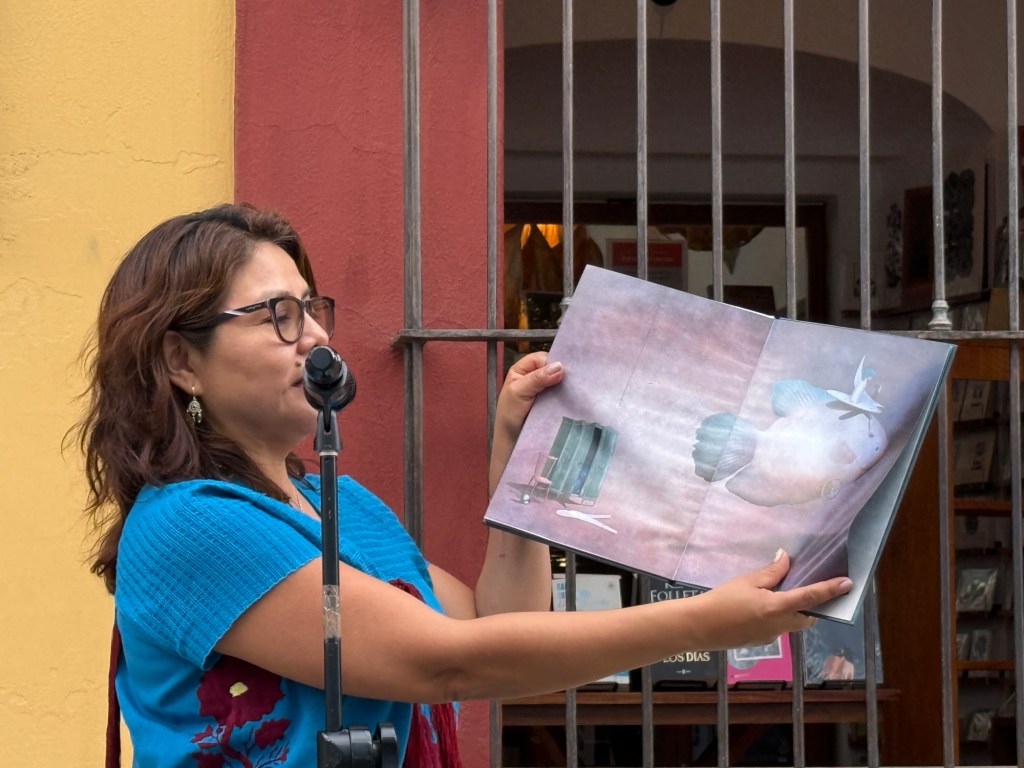
She read a children’s book about a cricket. Later enjoyed some grilled crickets on guacamole with friends Anita and Dave.
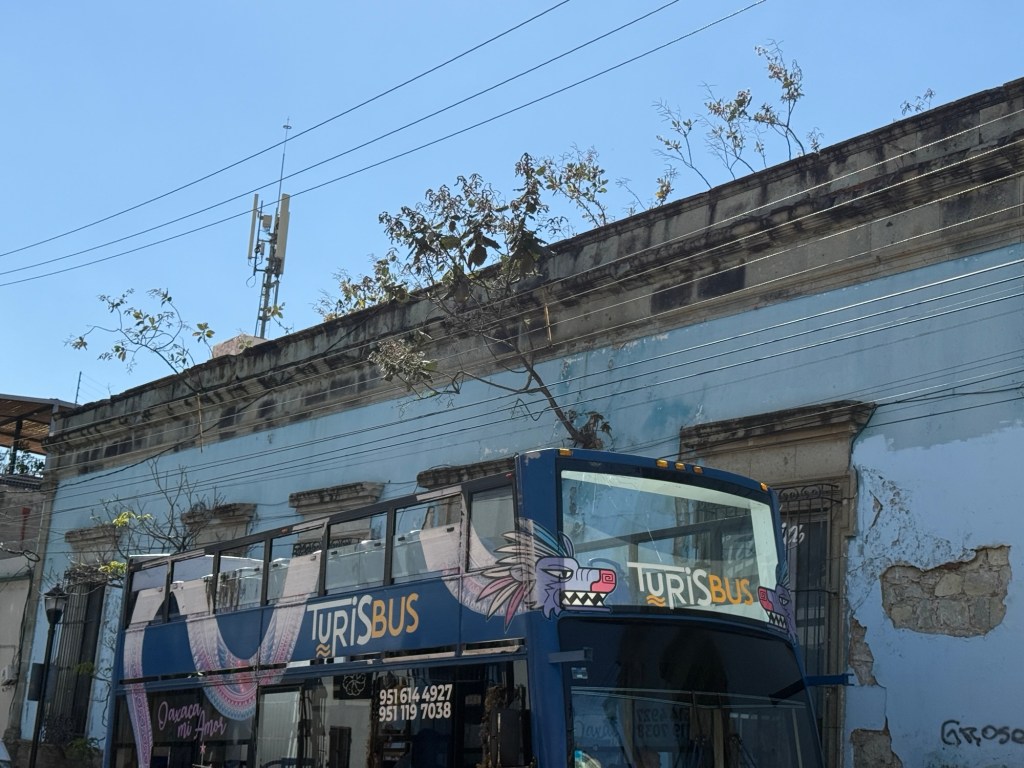
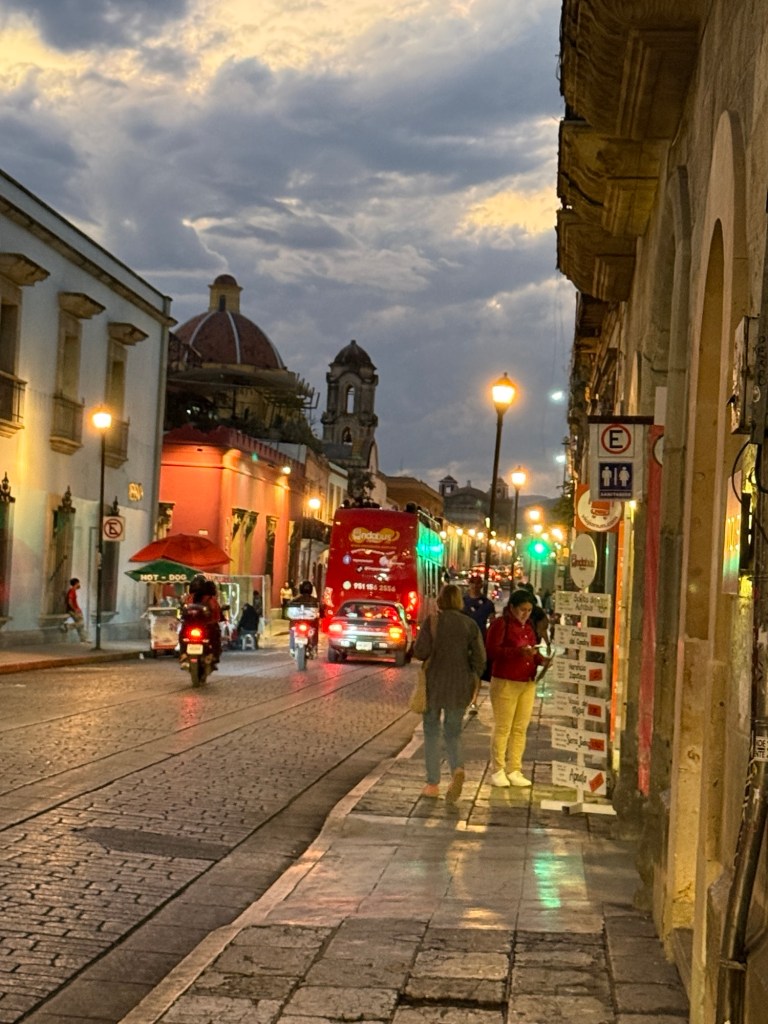
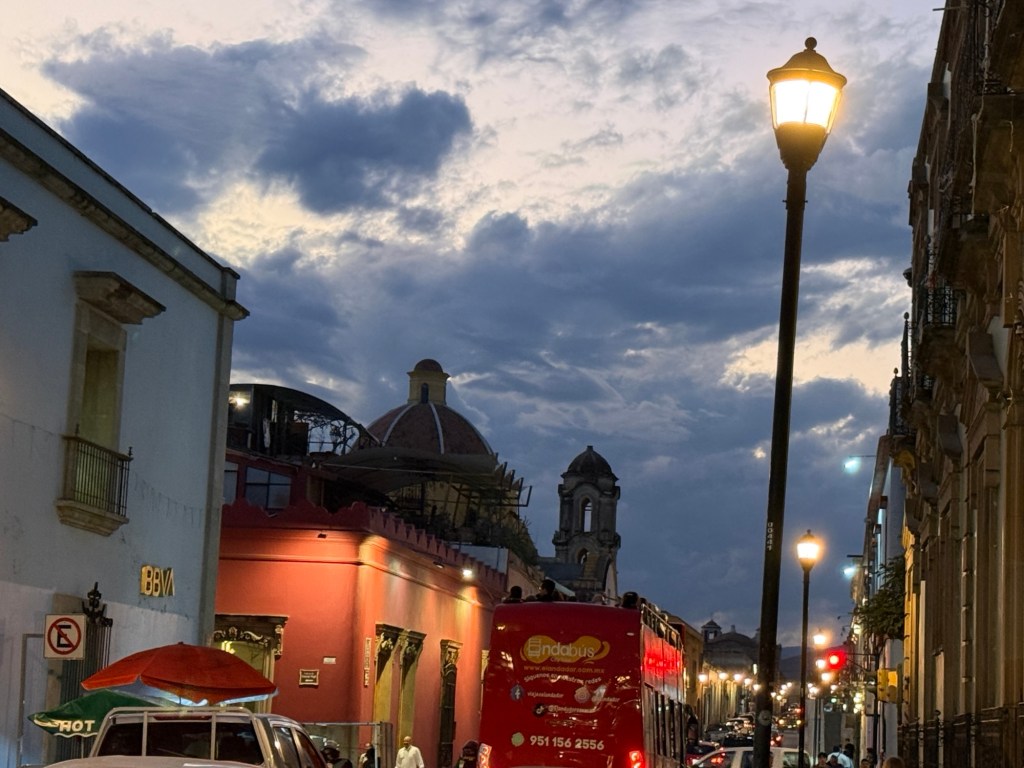
Evening rooftop tour bus
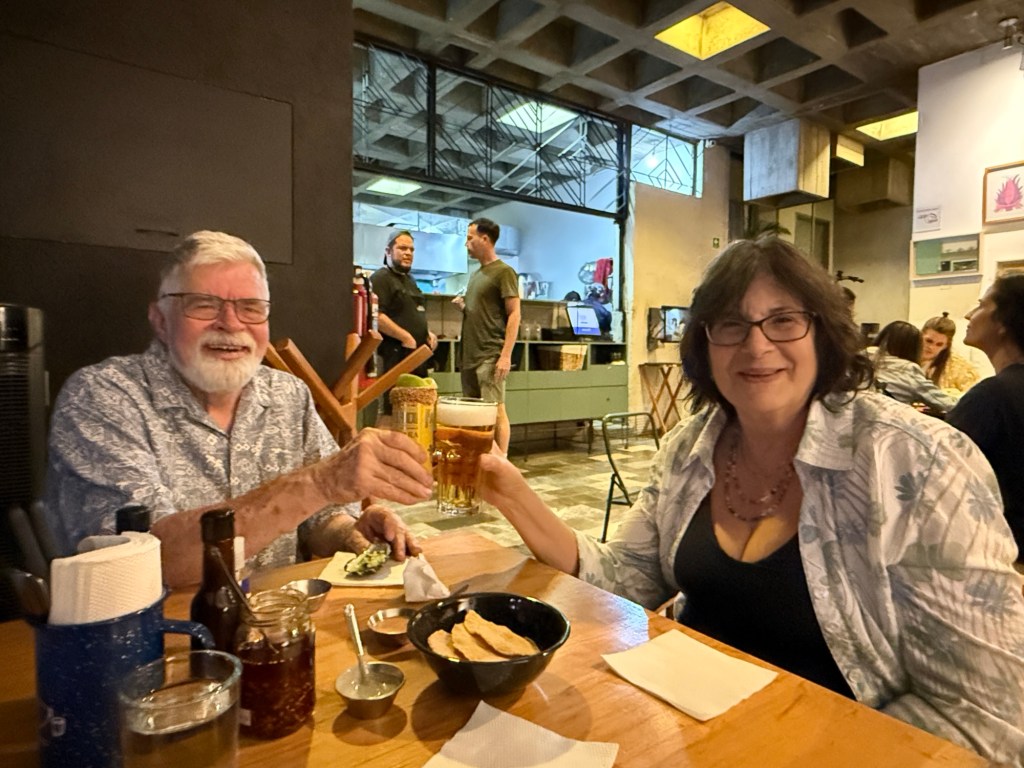
Dave and Anita at our favorite seafood restaurant, Humar.
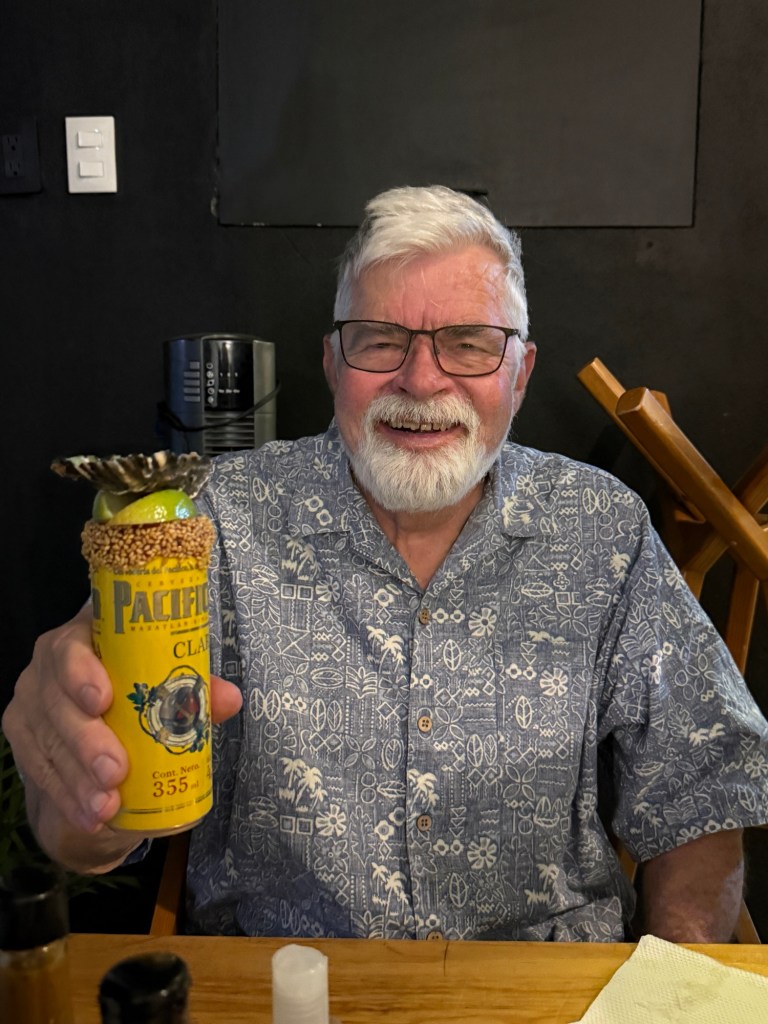
Dave trying the local oyster beer tamarind and sesame combo!

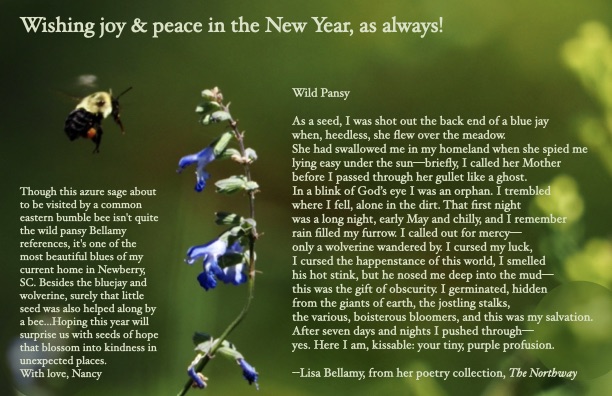
Wishing joy and peace in 2026!

Made it through my first year with the US Fish and Wildlife Service in South Carolina and looks like I’ll be here at least one more year. FWS is a lot smaller than Forest Service, and it’s been neat learning how things work in an agency whose primary task is protecting imperiled species.

Newberry, my home town about 45 minutes northwest of Columbia, has a wonderful Opera House with an amazing diversity of shows, though I still miss Marlinton’s Opera House and the community in WV, Greensboro, and other places that hold old friends.

An extra special part of SC has been exploring beautiful places with wonderful naturalist, native plant, and bird folks. And in August I got to visit an extraordinary bog in AL with an artist friend. We went to see white-topped pitcher plants under the full moon per suggestion by a beloved native plantsman in NC. 

Birds Tweeting in Fez

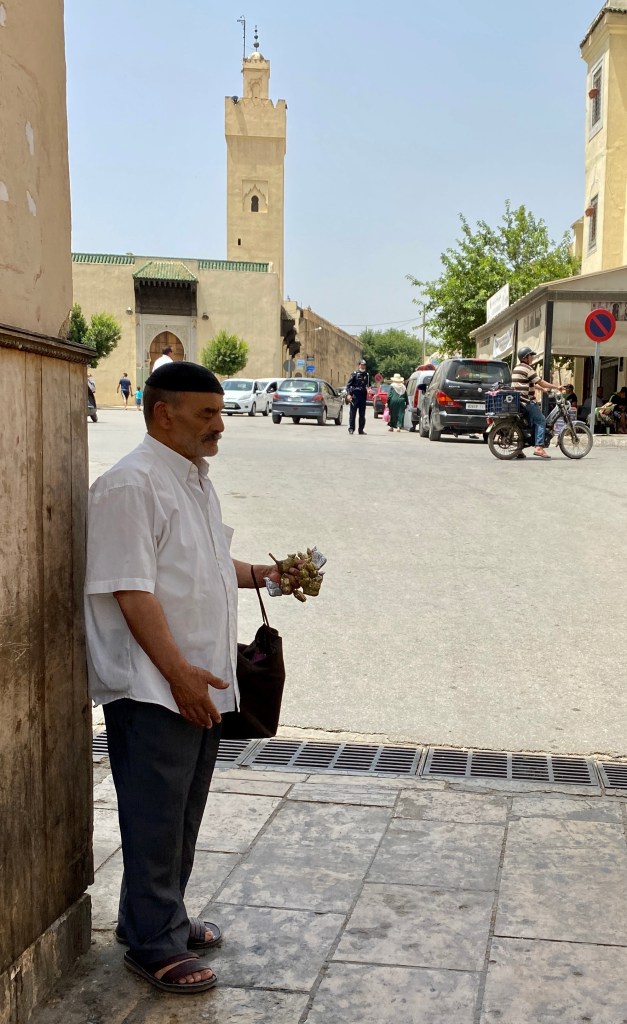
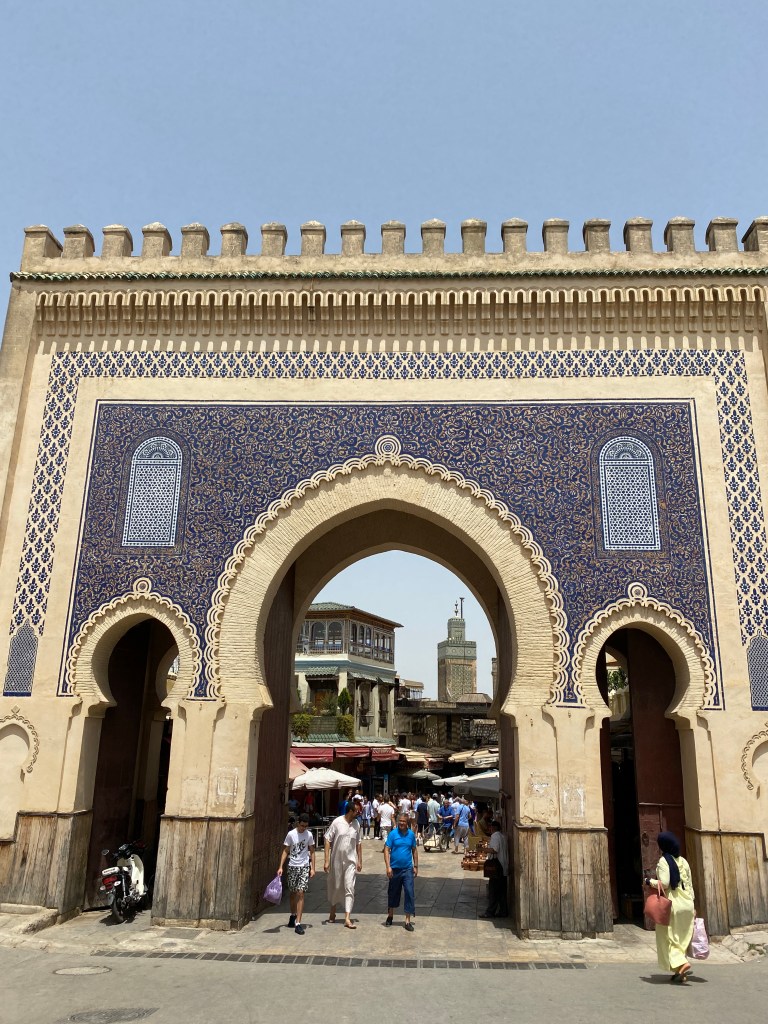
At the entryway to the big street in Fez, a bird call vendor was demonstrating his wares.
The bird caller is in the shadow of the center arch on the right.
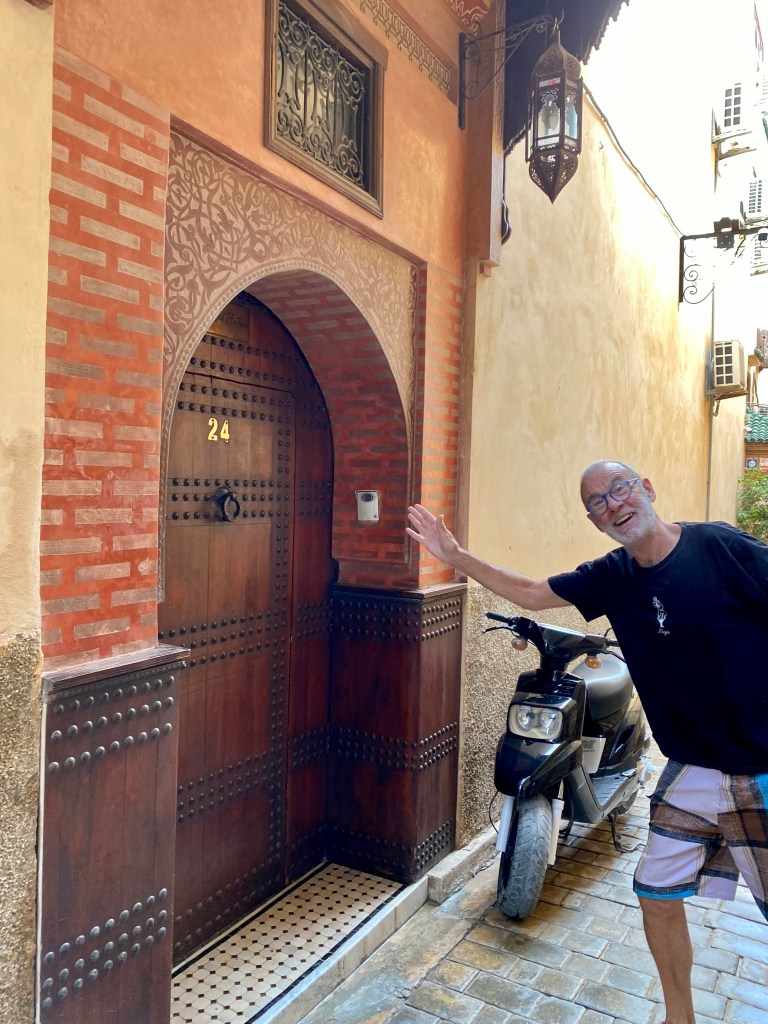
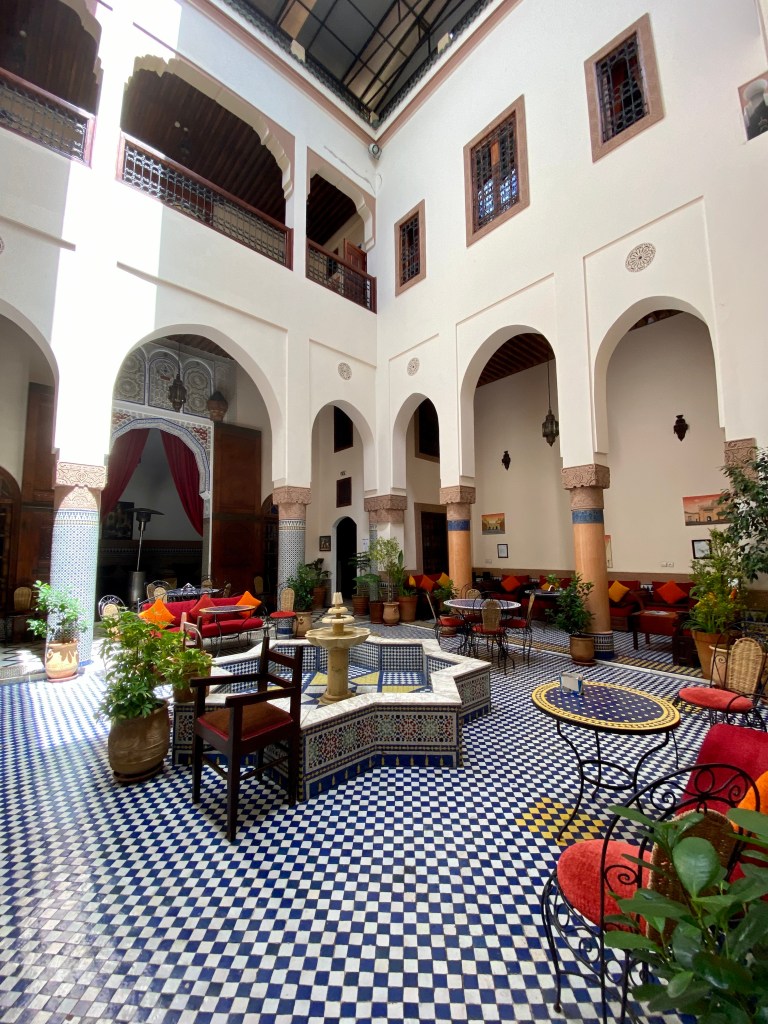
Kevin, my Air BnB host, in front of a nearby “riad,” a traditional home in the Medina with a beautiful interior courtyard that typically opens to the sky. This was the courtyard.