The folks at the Blue Ridge Discovery Center reached out to Mount Rogers Naturalist Rally trip leaders and other folks who might help write about the plants, animals, geology, and ecology of the region for a local guidebook they are working on. Since I’ve been helping John Kell, recently retired biology professor at Radford University, lead the wildflower walk along the Whispering Waters Trail in Grindstone Campground (part of Jefferson National Forest), they asked me to help with some of the wildflower blurbs. Since it’s not clear if they’ll use any of it, asked it if it would be ok to post here. I’ll try to add some photos of plants, too. It was written very quickly and may jump around a bit, as they had certain plants they wanted to include. Thanks to Executive Director Lisa Benish and Program Coordinator Ali Reilly for reaching out.
Fall and Winter Buds and Blooms
As winter approaches, some animals put away stores for winter and find crevices or underground nooks for shelter or hibernation. Many insects are protected in pupal cases for the winter underground, in or on twigs or in other cavities. The leaves, twigs, branches, mosses, and other plants that cover the soil feed a huge diversity of tiny animals while blanketing the soil. The vegetation helps slow and clean water, enhancing infiltration into soil and replenishing watershed aquifers. Diverse soil-dwelling micro-and macro-organisms ensure nutrients make it up the food chain.
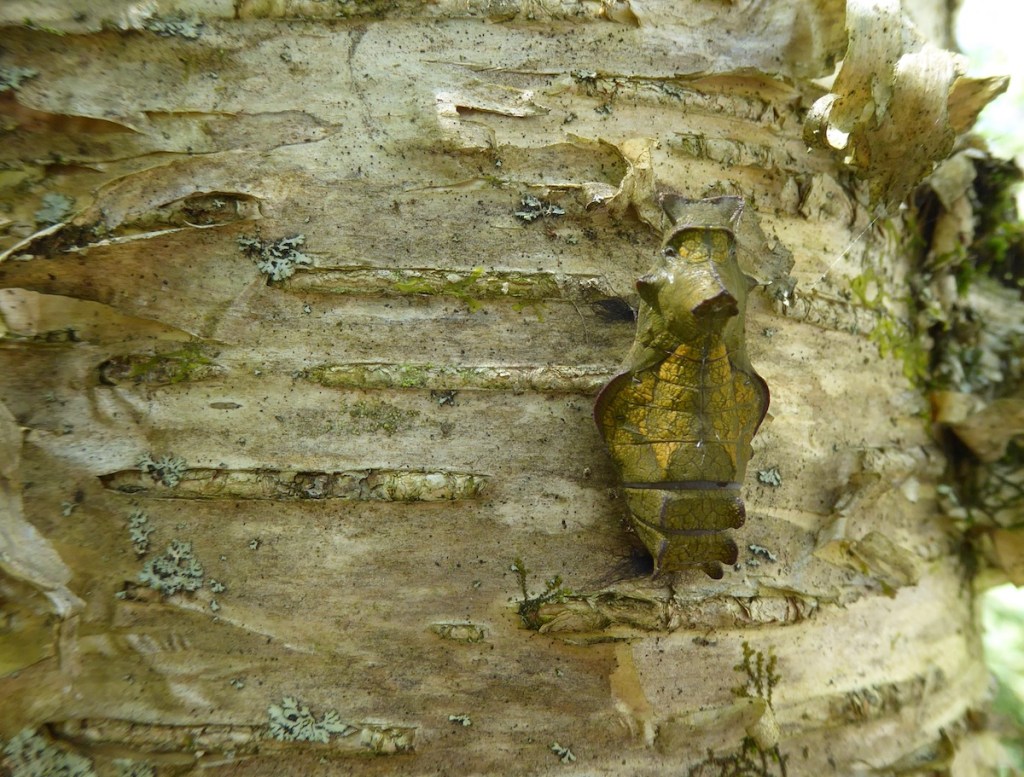
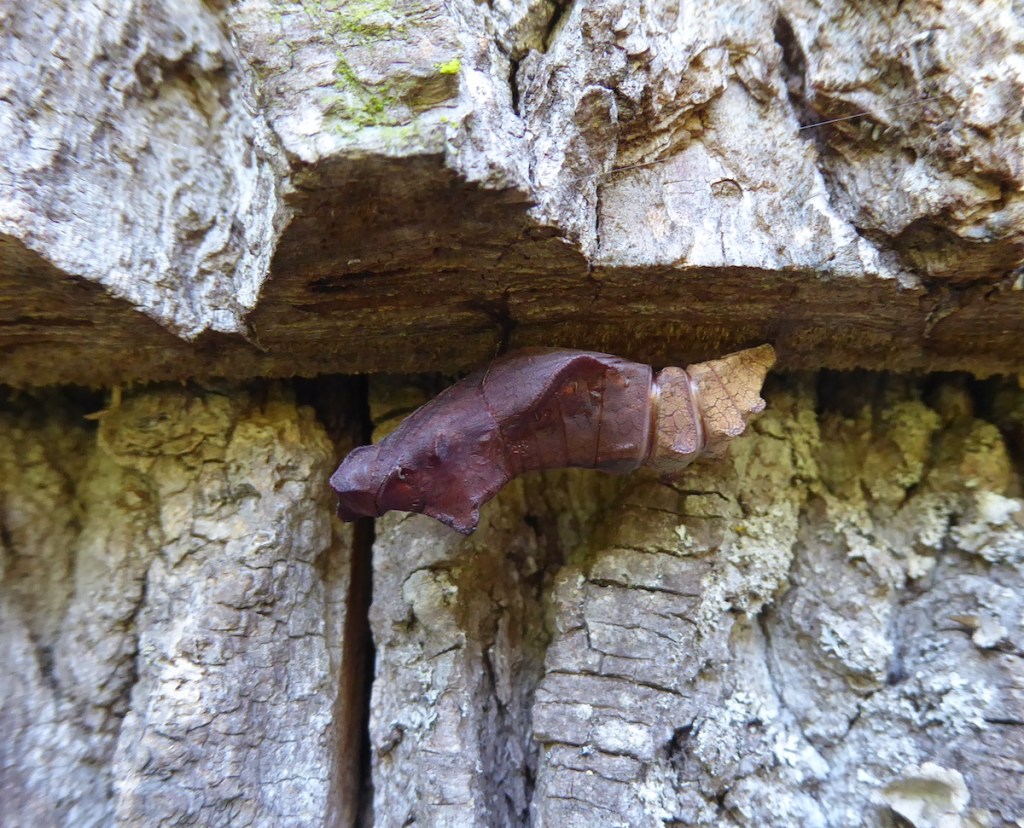
In fall, asters, goldenrods, mistflower, gentians, sunflowers, tickseed sunflowers, and many other plants provide nectar and pollen that is vital for insects that overwinter in the region and for insects and hummingbirds migrating south. Goldenrods (Solidago and Euthamia spp.) and tickseed sunflowers (Bidens spp.) are among the most important for migrating monarch butterflies. Sweet Goldenrod (aka Anise-scented Goldenrod, Solidago odora) and many others have medicinal uses (as poultices, for fever, etc.—see the Native American Ethnobotany database naeb.brit.org). Some you may see in the Mt. Rogers area are easy to grow at home. Both Heart-leaved Aster (aka Blue Wood Aster, Symphyotrichum cordifolius) and White Wood Aster, Aster divaricatus are beautiful woodland asters that are relatively small, and can make wonderful groundcovers, filling in open spaces in shade to part-shade gardens. Larger species you may see include Late Purple Aster (Symphyotrichum patens) and Wavy-leaved Aster (Symphyotrichum undulatum) in moist to drier upland areas and Purple-stem Aster (Symphyotrichum puniceum) in wetter areas. Blue Mistflower (aka Wild Ageratum, Conoclinium coelestinum) seems to bloom all at once in late summer or early fall, often growing in roadside ditches or in open wet meadows, and it does well in average garden soils, too. Like asters, its beautiful lavender-blue flowers attract many butterflies and other insects; it can be mowed or cut back, if needed, and will still flower.

As you walk the woods in late fall, you can see the flowers of one of our most beautiful mid-story trees, Witch Hazel (Hamamelis virginiana). Fragrant flowers with very long, thin, wavy petals, usually yellow, but sometimes dusky rose-yellow, cluster along the silvery branches. Often found along creeks, you’ll also see them in rocky outcrops at higher elevations, showing off their flowers against the backdrop of red, orange, and yellow autumn leaves. When the shiny black seeds ripen, the capsule shoots them out like tiny black torpedos. Flies, moths, bees, beetles, and wasps pollinate the flowers and it is a host plant for more than 30 kinds of moth larvae.
Winter is an extraordinary time to discover and learn about the trees. In summer, you might get away with just knowing the leaf shape, but winter helps you “see” the whole tree and notice the subtle and not-so-subtle differences in form, bark, branching, leaf bud, and leaf scar.
In late winter, skunk cabbage (Symplocarpus foetidus) flowers create their own heat and melt snow if present when they emerge in late January to March. The dark maroon color, heat, and moisture of the spathes (a firm leaf-like hood enclosing tightly clustered flowers known as a spadix) mimic fresh carrion, attracting diverse small flies and beetles for pollination. Besides hosting at least three caterpillar larvae, bears and snapping turtles eat the leaves. Another common name is Bearweed.
Early Spring
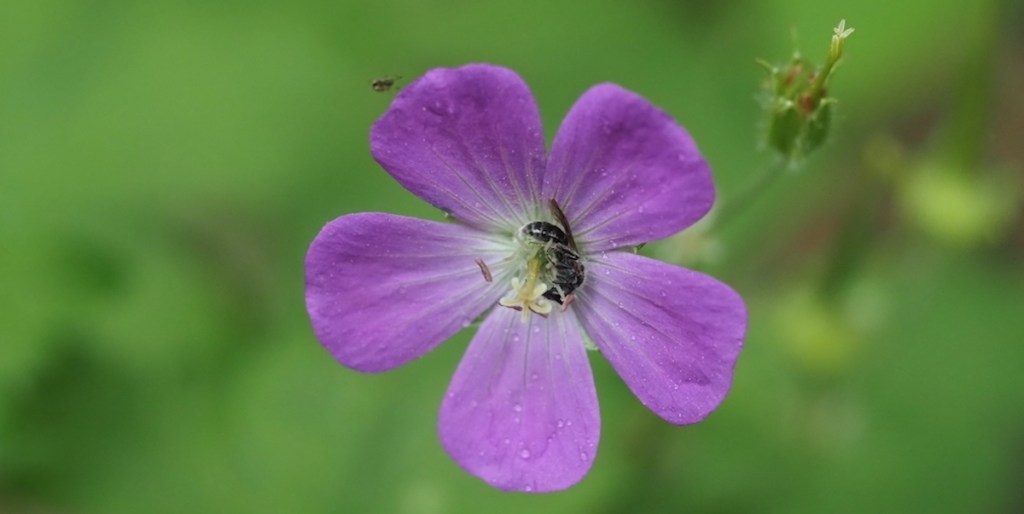
The Mt. Rogers area has some of the most spectacular spring wildflower displays of the Blue Ridge Mountains, due in part to the diversity of ancient rock underlying plant communities. Spring ephemerals are wildflowers in the understory that come up before overstory leaves shade the forest floor. They are called ephemeral because their leaves and flowers may die back once the trees and shrubs leaf out and summer brings drier conditions to the forest floor. Huge carpets of Trout Lily (Erythronium americanum and Erythronium umbilicatum) and the locally common, but state rare, Fringed Phacelia (Phacelia fimbriata) are breath-taking. Along with many other spring ephemerals like Spring Beauty (Claytonia virginiana), Cutleaf Toothwort (Cardamine concatenata) Wild Geranium (Geranium maculatum), Jacob’s Ladder (Polemonium reptans), Bellworts (Uvularia grandiflora, Uvularia perfoliata, and Uvularia puberula), Trout Lily and Phacelia are the hosts of pollen specialist bees who depend wholly on those plants for pollen to provision nest cells for their young. Many other pollinators visit the flowers, including tiny flies who are active in cooler, wetter conditions than many bees. Trout lilies, like many flowers, attract pollinators with color patterns that may seem dramatic, but if we could view them in the UV spectrum that bees see, would appear almost like neon trails screaming “this way to nectar!” Others, like some Clustered Sanicle (aka Snakeroot, Sanicula odorata), have inconspicuous, but wonderfully fragrant flowers that fill the trails with their sweet odor.
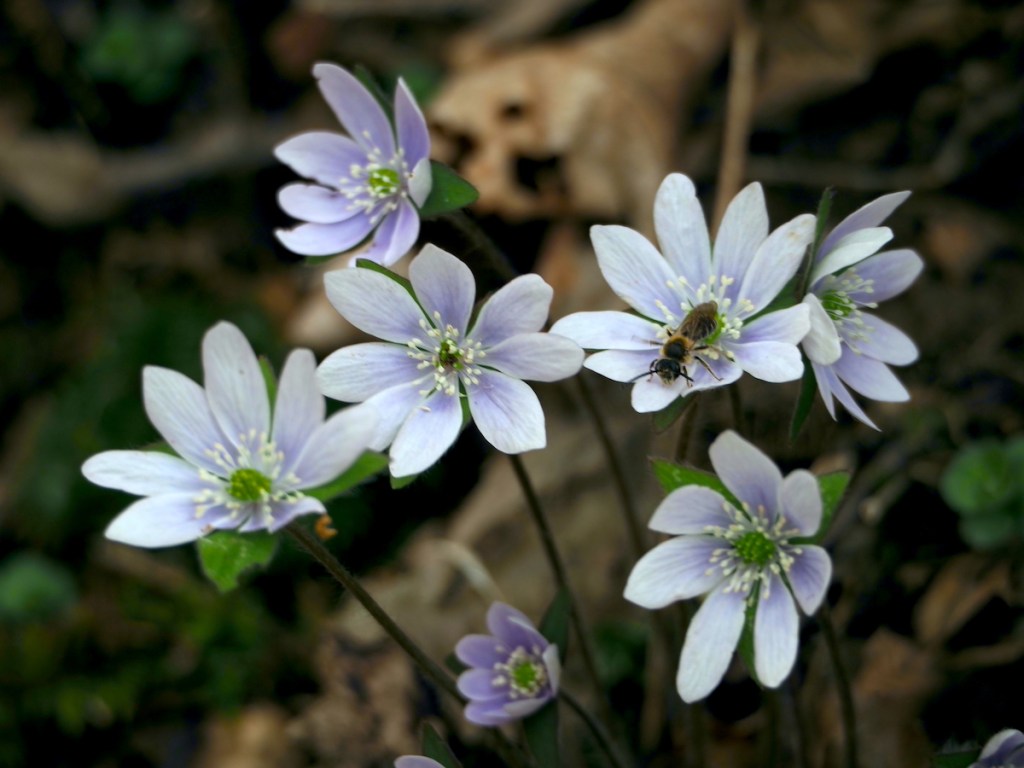
One of the earliest spring ephemerals to flower is Hepatica (aka Liverwort, Hepatica americana or Hepatica acutiloba), ranging in color from white, pink, blue, to lavender. While the big flush of spring ephemerals covers the forest floor in late April to late May, you need to make extra early trips in March to see Hepatica. Bloodroot (Sanguinaria canadensis) follows soon after Hepatica, brightening the forest flower with large white flowers with bright yellow anthers. Their seeds are disperse by ants who are attracted by a sweet fleshy appendage called an elaiosome, rich in fat and protein. The ants carry the seeds home, chew off the elaiosome, then discard the seeds nearby, thereby helpful to spread them through the forest. Three other beloved early spring bloomers include Dutchman’s Breeches (Dicentra cucullaria) and Squirrel Corn (Dicentra canadensis) with somewhat similar white flowers, and Bleeding Heart (Dicentra eximia) with pink, heart-shaped flowers. Dutchman’s Breeches flowers look like tiny pantaloons hanging upside down. Squirrel Corn flowers look more like hearts with wings and if you very gently pull away soil at the base of their stems, you’ll see little yellow corms that give it its common name.
May Apples (Podophyllum peltatum) shoot their tightly bundled leaves up in large numbers, opening umbrella-like over their bright white flowers. The fruit are a favorite turtle food, but not “good apples” for people. In the Mt. Rogers area, seeps support a much larger Umbrella-leaf (Diphylleia cymosa) that has beautiful bright clusters of white flowers instead of the single (and also lovely) larger flowers of May Apples.
Another beloved spring wildflower is Jack-in-the-pulpit (Arisaema triphyllum) whose bent flower seems to make a canopy for “Jack” the spadix jutting above the spathe (lily flower) to give its common name. The plants can transform from male to female over time as conditions change. Don’t be fooled by their bright red berries later in summer, they are not mammal-friendly fruits—they are full of tiny sharp crystals and phytochemicals that protect the seeds.
A little later in spring and into summer Golden Alexanders (Zizia aptera, Zizia aptera, and Zizia aurea) with tiny clusters of yellow blooms, various kinds of cinquefoil (Potentilla spp.), and Star Chickweed (Stellaria pubera) light up the forest floor with their bright flowers.
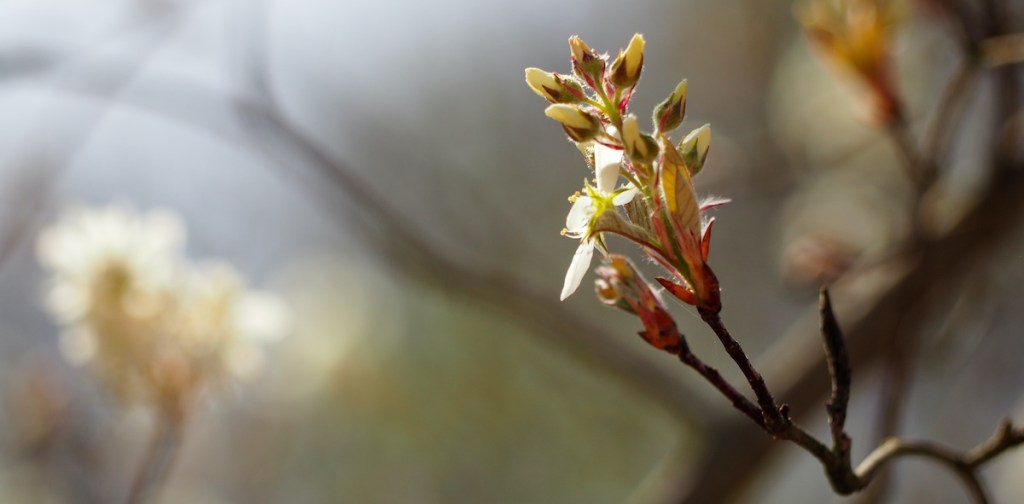
Among the early spring flowering trees, one of the first to bloom is Serviceberry (aka Shadbush, Juneberry, Amelanchier species). The beautiful white flowers are a welcome sign that spring has arrived! The delicious fruits ripen in June at higher elevations and earlier in others, ready to eat when red, but sweetest and most flavorful when a dark blue-purple. The fruit has been used by some indigenous peoples to make pemmican (a nutritious combination of berries and meat dried for eating through summer and over winter). Blooming so early, it cannot always rely on pollinators, but fruit set is better with visits from flies, bees, wasps, and beetles. Some flies tend to tolerate colder wetter conditions better than bees except for the large furry bumble bees, so are very important pollinators in our forests.
Other early blooms to look out for are the deep burgundy flowers of pawpaw (Asimona triloba), whose “meat-like” flowers attract carrion flies, but are visited by diverse pollinators. Stop and take a close look at these bell-like beauties when you have a chance–two sets of three petals surround a perfect globe of male parts below the protruding female stigmas. As soon as you see leaves emerging, keep an eye out for Zebra Swallowtail butterflies (Eurytides marcellus), whose caterpillars depend on pawpaw as their primary host plant. Truly one of our most beautiful butterflies–black and white stripes give it the name zebra and a pair of red spots add even more zing. The pawpaw fruit ripen in late summer into fall. In the Custard-Apple Family (Annonaceae), eating the fruit is like having a very fragrant creme-caramel custard or flan (best when not too ripe).
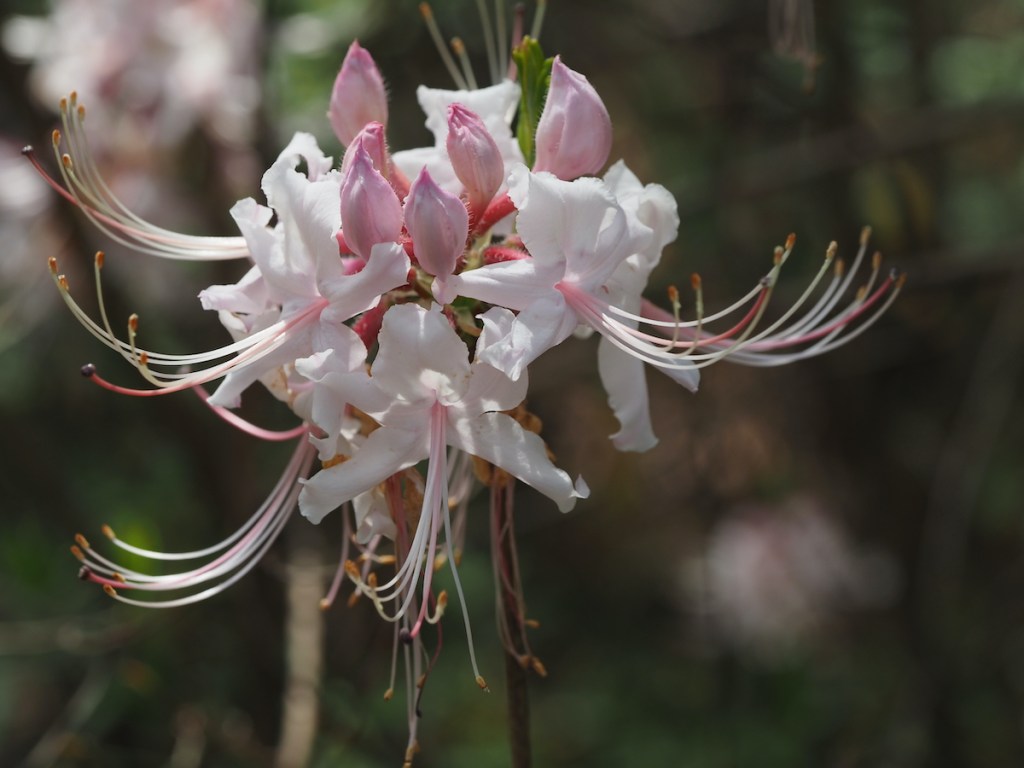
When you see Pinxterbloom Azalea (Rhododendron periclymenoides) in flower in early spring, keep an eye out for hummingbirds migrating north. Over millennia, the hummingbirds have matched their migration with these first flowers of spring, along with Coral Honeysuckle (Lonicera sempervirens). Though our native honeysuckle vine is more common in the Piedmont and Coastal Plain, you can find it in the mountains. Climate change has affected plant and animal life cycles, so one worry is that unseasonably warm or cold temperatures could cause a mismatch in bloom time if an animal is following (stimulated by) light signals more than temperature to start its migrations north or south, or emerge from hibernation, leading to starvation for the animals and less pollination for the plants.
Amidst the high elevation meadows common in the Mt. Rogers area due to grazing, there are many hawthorn trees (Crataegus spp.) that support diverse bees. In early spring, Small’s Ragwort (aka groundsel, Packera anonyma) creates carpets of yellow below the abundant white hawthorn flowers.
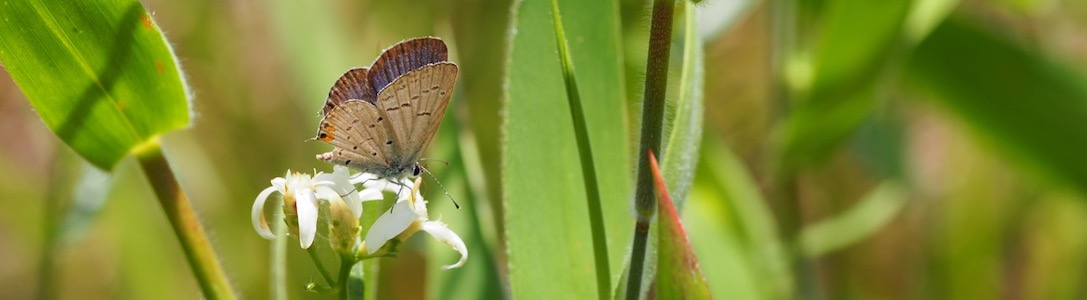
In May and June, the Flame Azaleas (Rhododendron calenmdulaceum) light up the mountains with their red, orange, and yellow flowers, inviting visitors from around the world to enjoy their fire. Along with hummingbirds, butterflies, moths, bees, and other pollinators will collect their nectar and pollen. A little later, many small bees and other insects find Black Cohosh (Actaea pachypoda), one of the few flowers blooming in the shade and hosts the Appalachian Azure butterfly (Celestrina neglectamajor). Higher up in the canopy, black locust (Robinia pseudoacacia) and sourwood (Oxydendrum arboreum) provide abundant nectar to feed diverse native bees, but also the European honey bee that many farmers manage for honey production in the mountains.
Summer
Several kinds of beebalm (Monarda) are found in the region, all tremendously important for bees, especially bumble bees, including the rare rusty patched bumble bee, Bombus affinis. In forests in the mountains, White Bergamot (aka Basil Beebalm, Monarda clinopodia) can be found in rich shady dry uplands, while the lavender flowered Wild Bergamot (Monarda fistulosa) can be found in sunnier roadside edges and clearings. Scarlet Beebalm (aka Oswego Tea, Monarda didyma) grows in wetter areas, in shade or sun, beckoning hummingbirds with its bright red flowers. Other summer plants hummingbirds and bumble bees love include Jewelweed (two species of Impatiens), beardtongues (Penstemon species), Cardinal Flower (Lobelia cardinalis), and garden and woodland phlox (Phlox species). Jewelweed provides a soothing balm for poison ivy (Toxicodendron radicans). Other summer bloomers that are especially valuable for bees, butterflies and other pollinators include blazingstars (Liatris species), Oxeye Sunflower (Heliopsis occidentalis), Tall Bellflower (Campanula americana), Wingstem (Verbesina alternifolia) and Crownbeard (Verbesina occidentalis), Great Blue Lobelia (Lobelia siphilitica), Black-eyed Susans (Rudbeckia species) and diverse native perennial sunflowers (Helianthus species). Lilies like Canada Lily (Lilium canadense) and Turk’s-cap Lily depend on butterflies for pollination, while vines like Dutchman’s Pipe (Isotrema macrophyllum) host the caterpillars of Pipevine Swallowtail Butterflies (Battus philenor), beautiful chocolate-brown velvety caterpillars with bright red dots warning predators they are toxic (from consuming Dutchman’s Pipe tissue).

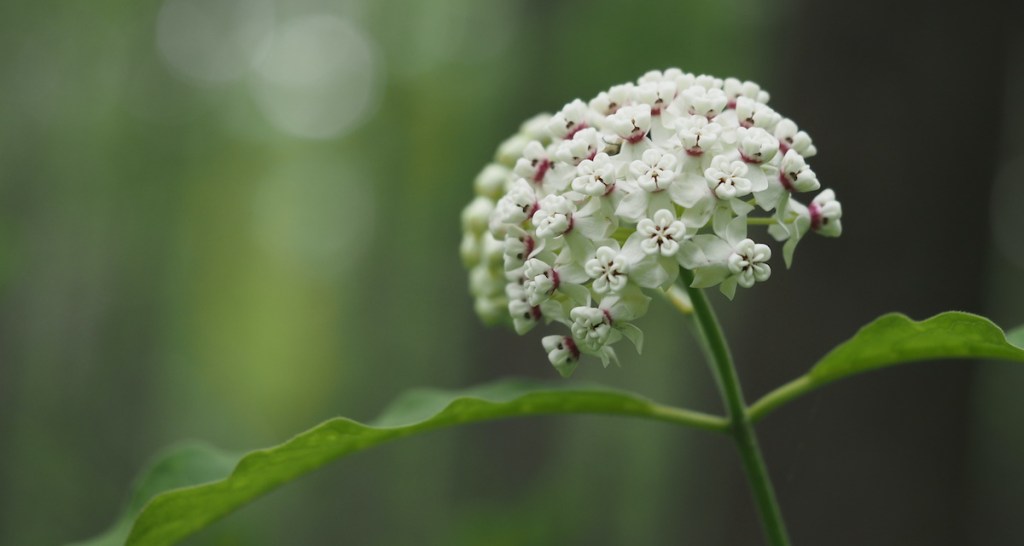
These wildflowers all support adult monarch butterflies with their nectar, but monarch caterpillars need their host plants: milkweed and milkweed vines, to grow from caterpillar into pupa, then transform into adult butterflies. Milkweeds common in the mountains include Butterfly Milkweed (Asclepias tuberosa), Common Milkweed (Asclepias syriaca), and Poke Milkweed (Asclepias exaltata). Climbing Milkweed Vine (Matelea obliqua) and White Milkweed (Asclepias variegata) are a little less common.
Some additional verbage removed:
In Virginia, the genus Aster includes only one species, Tartarian aster (Aster tataricus), introduced from Europe. Based on genetic research, most of our native asters are now in the genus Symphyotrichum, while others have long been in the genera Doellingeria, Eurybia, Ionactis, Oclemena, and Sericocarpus. Still others that have aster in their common name or look a lot like asters include Boltonia, Chrysopsis, and Helenium.
RESOURCES
Digital Atlas of the Virginia Flora http://www.nativerevegetation.org/era/ – Find the distribution and native status of plants for each county in Virginia.
Ecoregional Revegetation Application http://www.nativerevegetation.org/era/ – A national plant database organized by ecoregion, with all sorts of useful information, including known pollinators.
Native American Ethnobotany database naeb.brit.org
Pollen Specialist Bees of the Eastern US https://jarrodfowler.com/specialist_bees.html
Mom’s doing great
I’m redoing the blog site to be more work oriented, so changed the “About” page that had this photo. Things are still “in the works,” but hope to update bit by bit. The blog will be more ecology oriented though I will do at least one more re rest of time in Morocco. Mom is…

April 26, 2022
Couscous & Bridge Over Troubled Water
This is typical breakfast soup of crushed barley topped with olive oil called belboula. More than enough. Notice the ashtray. That’s the one thing about here that would make it hard or impossible for some to visit. Although several people have mentioned not using or at least reducing sugar in tea (and encourage me to…
July 11, 2021
Sea slug video clip
My first sea slug up close, so I googled to doublecheck. Many are brilliantly colored; search « sea slug images. » Even though not bright, still beautiful, aye? Still, try the google search if, like me, sea slugs are pretty new.
June 26, 2021
Open document settingsOpen publish panel
- Page

 Wild Bee Plantings
Nicely done, I’ll will have to read it again to focus on the wildflowers that are unfamiliar to me. As you mentioned the serviceberry, I’ve wanted one for a few years and finally this year I was able to get a couple and integrated them into the flower gardens. Im still working with my wildflower meadows and early successional areas. I have a few patches of common milkweed now and they are slowly spreading, I’m still a few years away from the population I want.
Take care,
Anthony
LikeLike
Thanks, Anthony. From what I’ve seen, I expect the rest of your garden is magnificent!
LikeLike